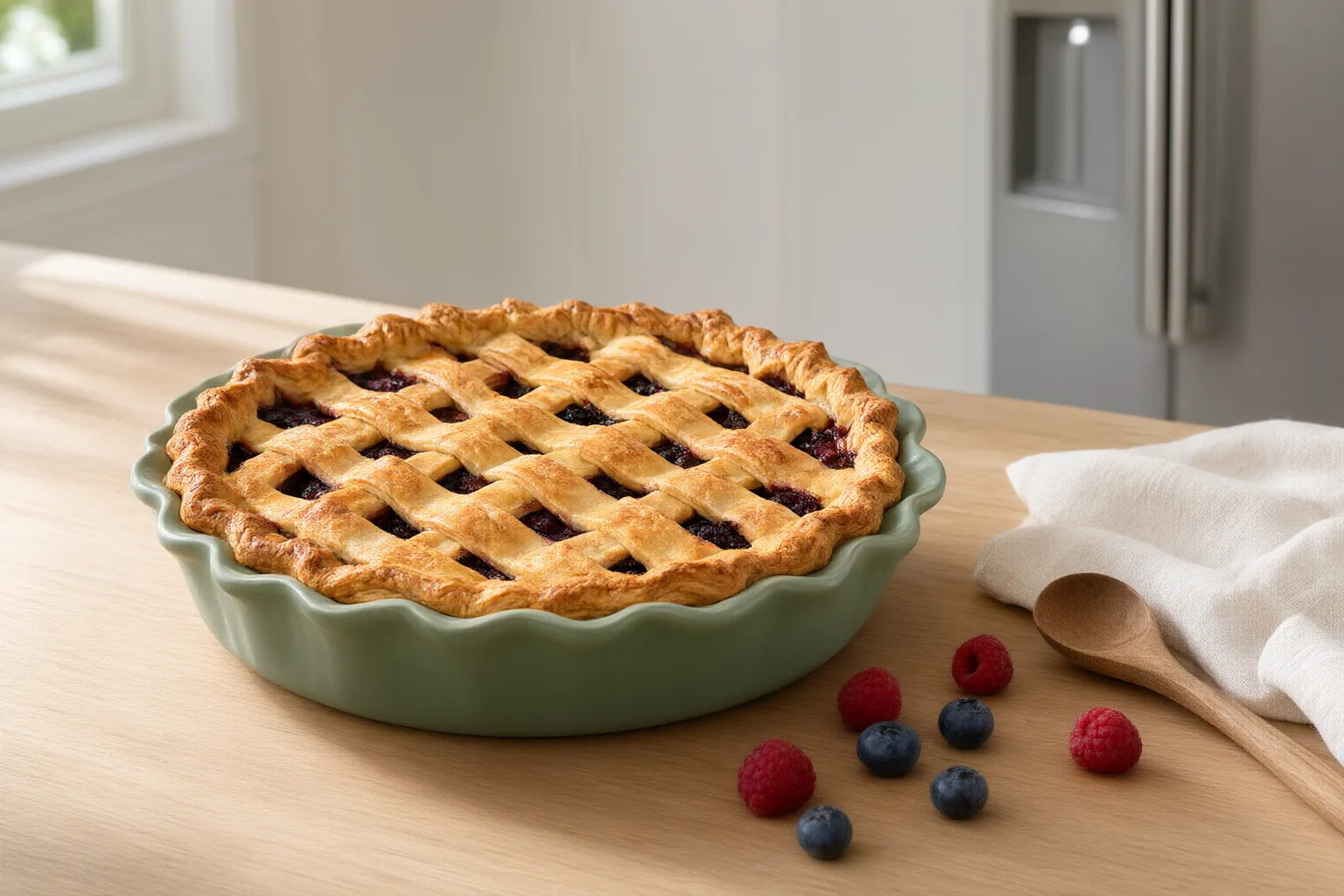
Check the filling first. Pies containing cream, custard, eggs, dairy, meat, or other savory fillings generally need refrigeration, while many conventional baked fruit pies without dairy or custard may stay covered at room temperature for about one to two days.
Start With the Filling Ingredients
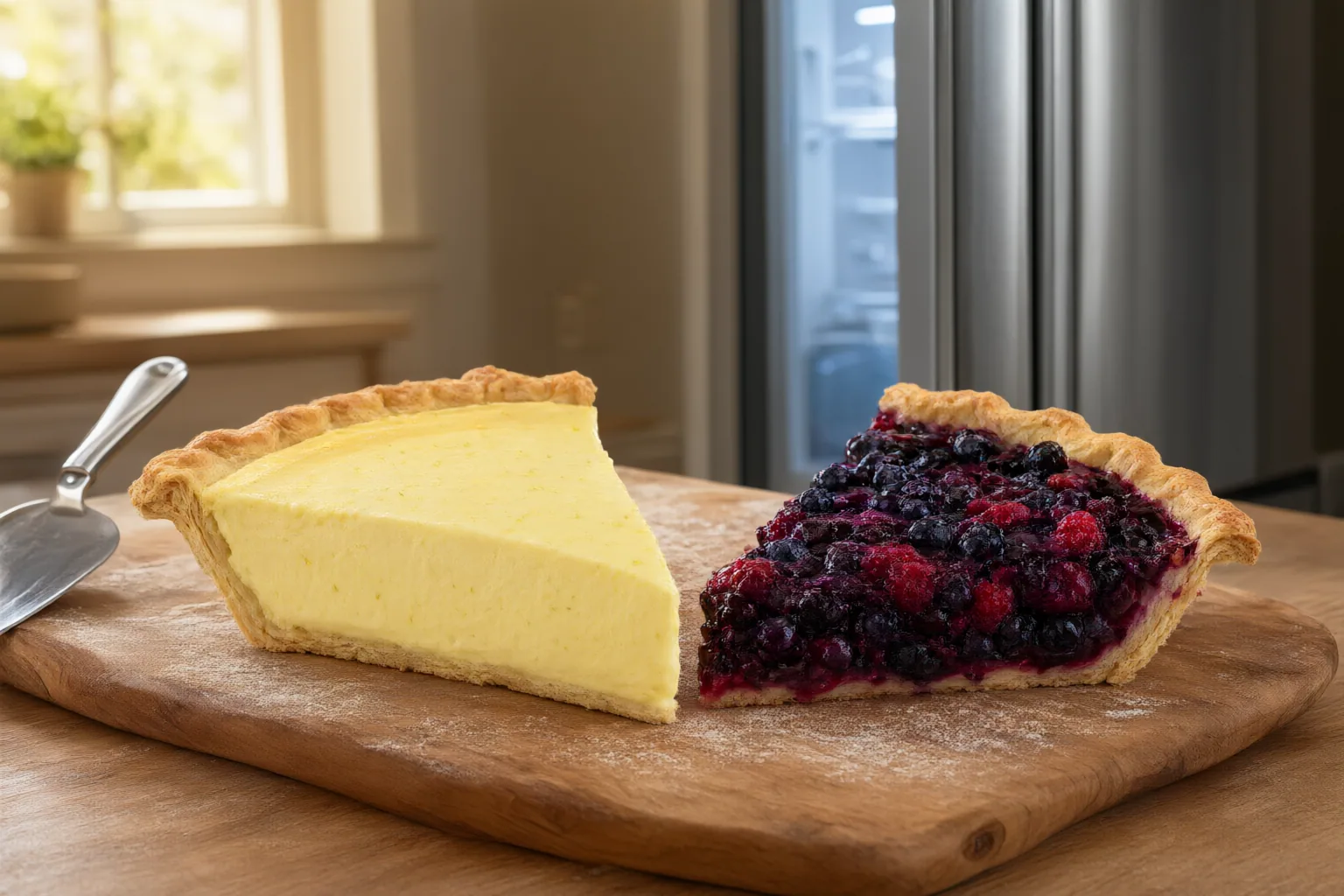
The filling is a more useful storage guide than the crust or the pie’s name. All three supplied sources say cream or custard pies containing eggs or dairy require refrigeration. The sources also identify pies with meat or other savory fillings as perishable and in need of refrigeration.
Many conventional baked fruit pies are different. When the baked filling does not contain dairy or custard, the sources generally allow the covered pie to remain at room temperature for about one to two days. That distinction does not extend automatically to every pie with fruit: cream, custard, eggs, dairy, or fresh uncooked fruit added to a filling can change the appropriate storage method.
When the ingredient list is unclear, use the more cautious storage choice instead of relying on the crust style or a broad category such as “fruit pie.”
Room-Temperature Limits and Longer Storage
Short-term counter storage and safe holding time for a perishable pie are not the same. Two supplied sources state that a pie requiring refrigeration should not remain at room temperature for more than two hours. Flavor365 reports a shorter limit of one hour when the temperature is above 90°F (32°C). These safety-critical limits come from secondary publications and should be checked against current official food-safety guidance.
For a conventional baked fruit pie without dairy or custard, the sources generally describe about one to two days of covered room-temperature storage. After roughly two days, they advise moving many such pies to the refrigerator for longer storage.
Conditions matter as well as the clock. AppliancesFirst notes that a warmer kitchen can reduce the practical margin for counter storage, particularly when dairy is present. Refrigerated cream or custard pies generally keep for about three to four days when properly stored, according to Flavor365 and AppliancesFirst.
Mixed Fillings, Cooling, and Store-Bought Pies
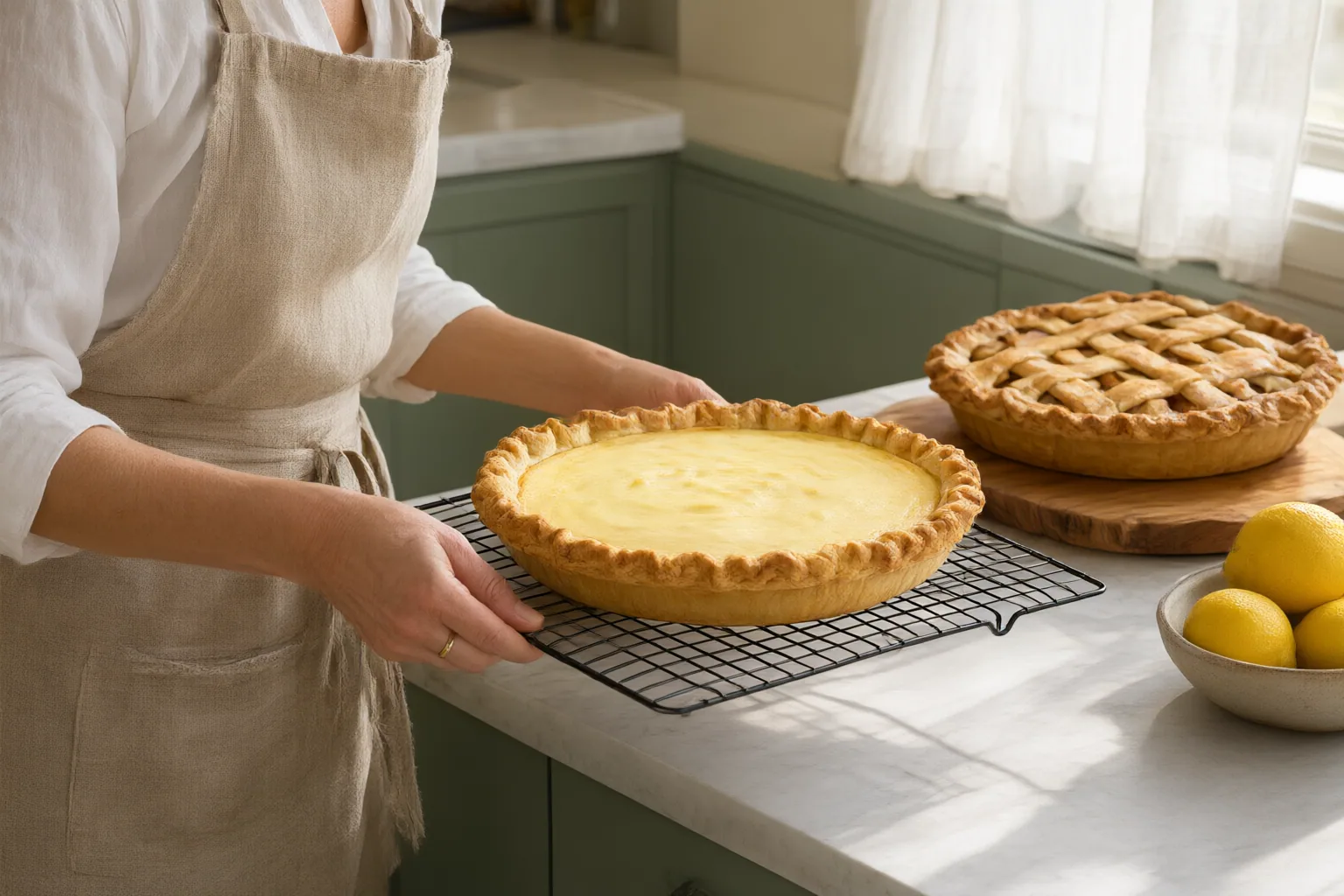
A mixed filling should be judged by all of its ingredients. Fruit does not make a pie suitable for the counter when the recipe also includes custard, cream, eggs, dairy, or another perishable component. The supplied sources also indicate that fresh uncooked fruit can alter the rule that might otherwise apply to a conventional baked fruit pie.
Cooling requires attention to two pieces of guidance reported by the sources: a perishable pie should be refrigerated promptly, but it should not be placed in the refrigerator while it is still hot. Plan the cooling and storage process with the reported room-temperature limit in mind rather than leaving the pie out indefinitely.
For a commercially prepared pie, follow the exact storage directions on its package. Flavor365 and AppliancesFirst advise using the label rather than applying a general homemade-pie rule. The supplied sources disagree about pecan and pumpkin pies, so those names alone do not support a reliable storage rule; check their ingredients and any package instructions.
Conclusion
Use a filling-first decision: cream, custard, eggs, dairy, meat, and other perishable additions point toward refrigeration, while many conventional baked fruit pies without dairy or custard allow only short-term covered counter storage. Treat the cited time limits as secondary-source guidance and consult current official food-safety guidance when needed. Before storing a pie, check every filling ingredient and any package directions, then refrigerate promptly when perishable ingredients are present.
Disclosures and limitations
- This article was prepared with AI assistance from the supplied research package and reviewed within its stated evidence boundaries. Its food-storage claims come from secondary web publications, not direct authoritative food-safety documents.