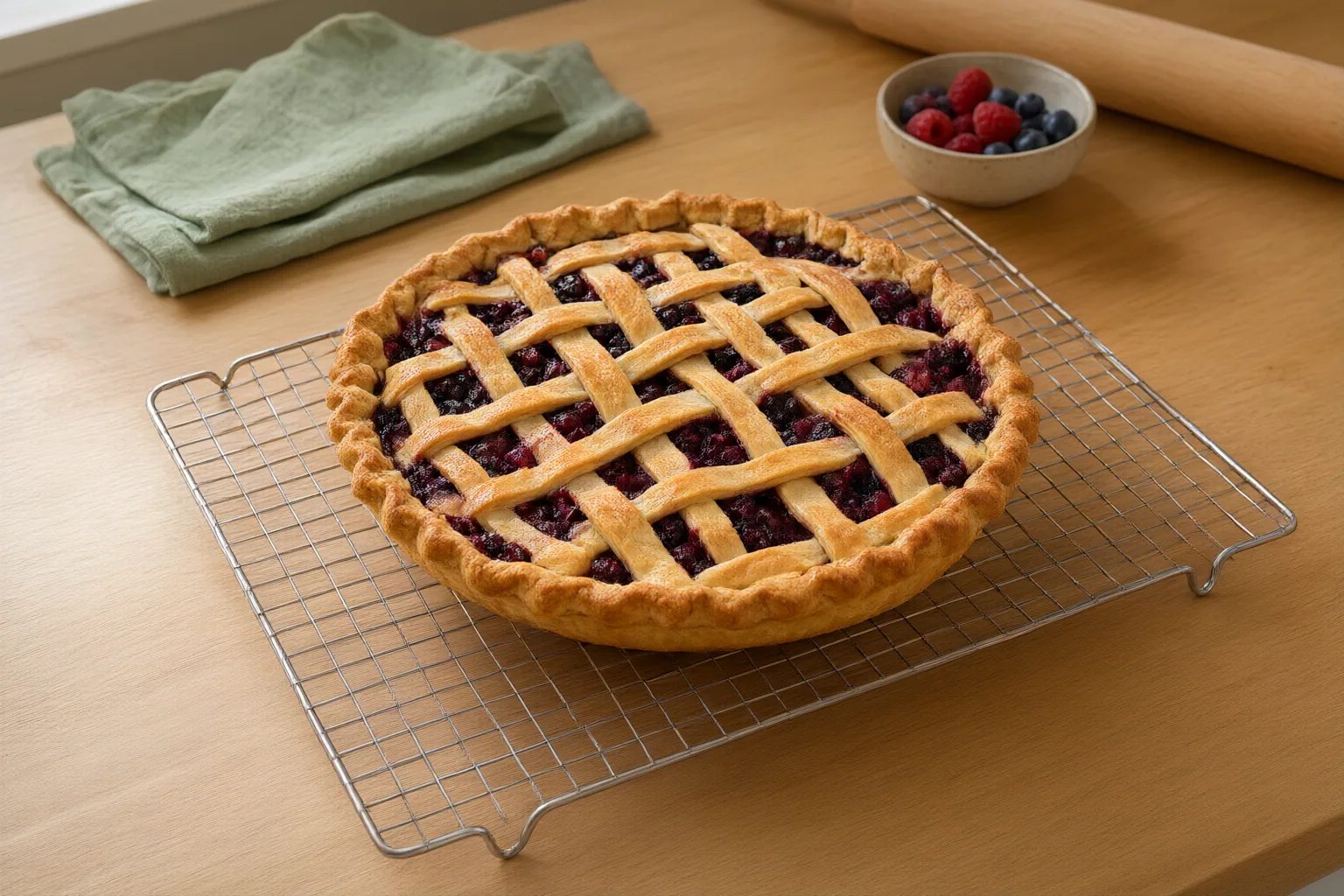
Let a fruit pie cool with air circulating around it, ideally on a wire rack, before covering or storing it. Wait until it is completely cool and no longer releasing visible steam or producing condensation. Because pie size, crust thickness, filling characteristics, and room conditions can affect cooling, use these observable signs instead of relying on one universal waiting time. For storage requirements, always follow the specific product label.
The short answer: cool the pie before covering it
After baking, place the fruit pie where air can circulate around it, such as on a wire rack. The supplied sources recommend airflow because it promotes more even cooling and can help limit the moisture that contributes to a soggy crust.
Leave the pie uncovered while it is still releasing steam. Covering it too early can trap that moisture, allowing condensation to form beneath the cover and soften the crust. Cooling also gives the fruit filling time to set. Cutting or storing the pie before that happens may lead to a runny filling and slices that do not hold their shape.
There is no single cooling time that applies to every fruit pie. The sources identify differences in pie size, crust thickness, filling characteristics, and surrounding room conditions as factors that can change how quickly cooling happens. Treat any precise time from a general source as an estimate, not a universal food-safety requirement.
How to tell when a fruit pie is ready to cover
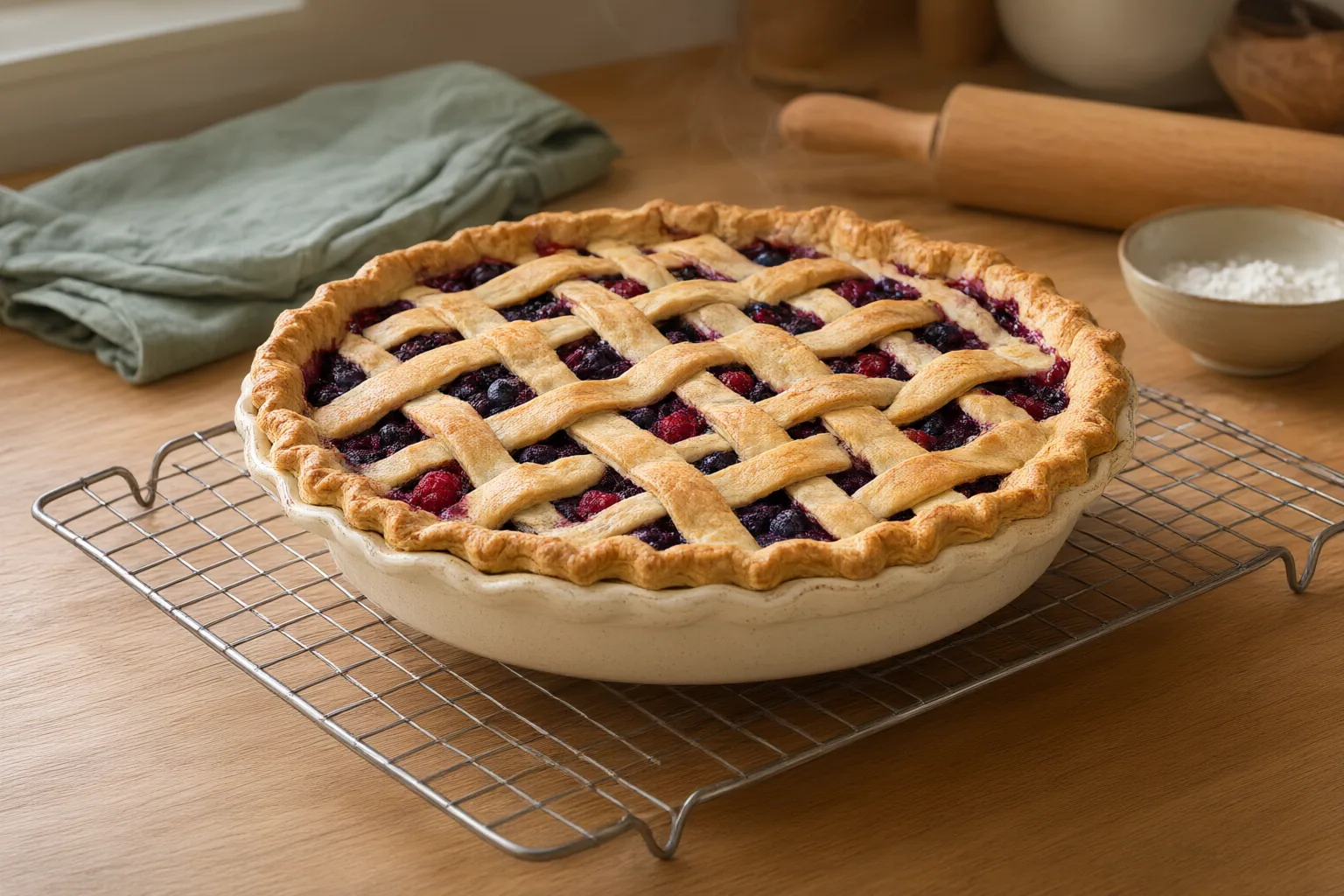
Use the condition of the pie rather than the clock as your main guide. MyCookingTown advises waiting until the pie is completely cool and is no longer producing steam or condensation before covering it. Check for visible steam rising from the filling and moisture beginning to collect where a cover would sit. If either is present, the pie needs more uncovered cooling time.
Keep air moving naturally around the pie by leaving it on a wire rack. A larger pie, a thicker crust, or a particular filling may retain heat longer, while ambient room conditions can also affect the pace of cooling. These variables are why a fixed waiting period cannot reliably describe every pie.
Once the pie is cool and steam and condensation have stopped, it can be covered. That observation addresses readiness to cover, but it does not establish where or how long a particular pie may be stored. If the pie came with a product label, use its storage directions rather than inferring refrigeration or room-temperature requirements from general guidance.
Common cooling and storage questions
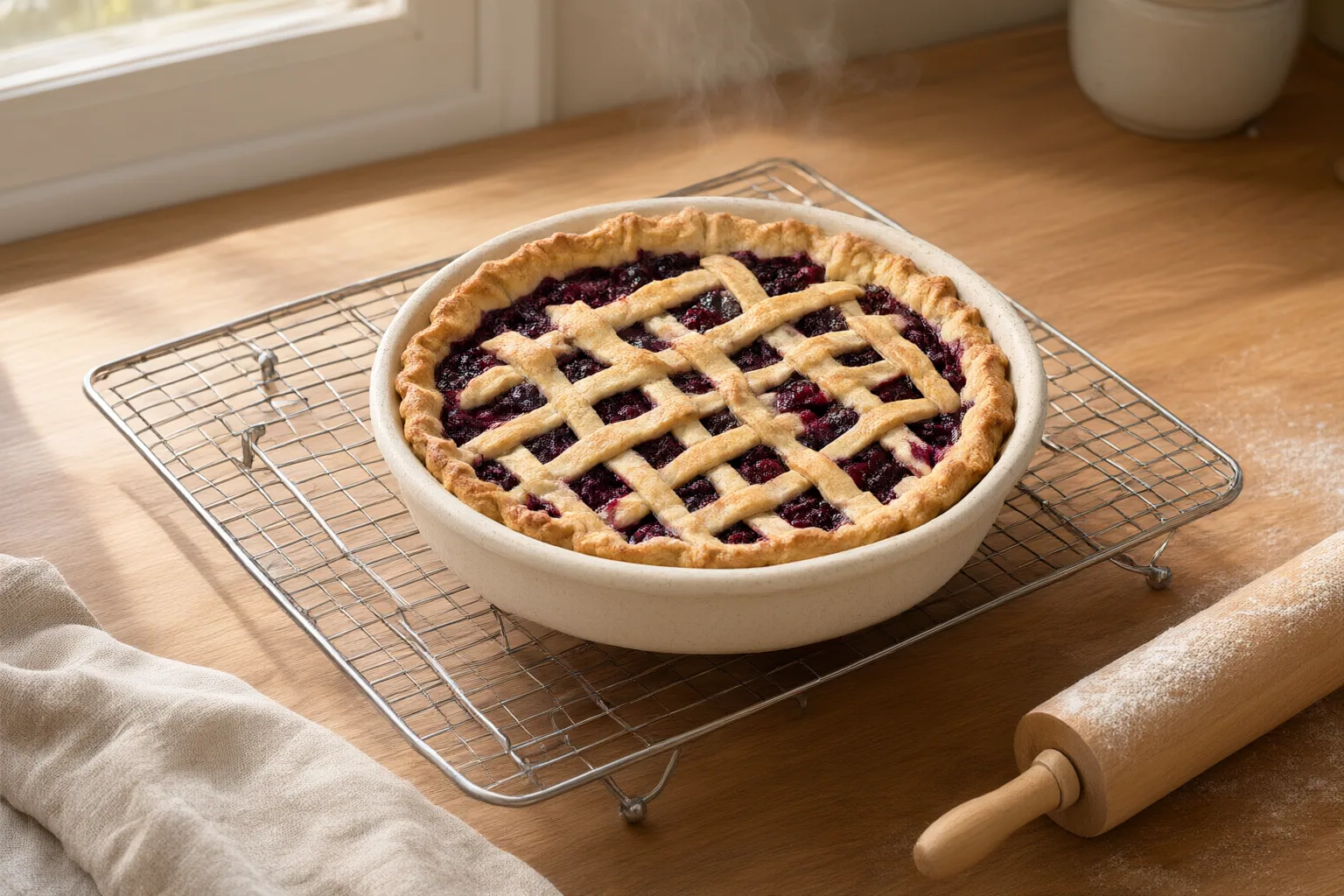
Two concerns drive the cooling process: protecting the crust from trapped moisture and allowing the filling to set. A cover placed over a warm pie can hold in steam, which may become condensation and soften the crust. Moving a pie into storage before it has cooled can therefore affect both texture and slicing.
Refrigeration requires similar care. TableAndSpoon states that a warm fruit pie should be allowed to cool somewhat before refrigeration because placing it in the refrigerator while warm can make the crust soggy. This is general quality guidance from the supplied blog source, not a universal storage rule or product-specific safety instruction.
The appropriate storage method for a particular pie cannot be determined from these sources alone. No product label was supplied, so they do not support assumptions about whether a specific pie must be refrigerated, how long it may be kept, or what exact cooling period it requires. Follow the label whenever product-specific directions are available.
Conclusion
Give a fruit pie room to cool with air circulating around it, preferably on a wire rack. Keep it uncovered while it releases steam so moisture is less likely to collect beneath a cover and soften the crust. Cooling also gives the filling an opportunity to set before slicing or storage.
Do not assume that every pie will be ready after the same amount of time. Check the pie itself: wait until it is completely cool and visible steam and condensation have stopped. Then consult the product label before choosing how to cover, refrigerate, or otherwise store it. Your next step is simple: inspect both the pie and its label before covering or refrigerating it.
Disclosures and limitations
- This article was prepared with AI assistance from the supplied MyCookingTown and TableAndSpoon source material. Those sources are blogs, not authoritative food-safety agencies or product labels, so their guidance should not replace instructions on a specific pie’s label.
- No products are recommended or linked for purchase in this article; no affiliate relationship is represented.
Related reading
Sources
- The Pie Cooling Conundrum: How Long Should You Wait Before Covering? — MyCookingTown
- How Long to Let a Fruit Pie Cool: The Ultimate Guide to Perfecting Your Baked Masterpiece – TableAndSpoon — TableAndSpoon
- Do Leftovers Need to Cool Before Refrigerating? The Ultimate Guide – AppliancesFirst — AppliancesFirst