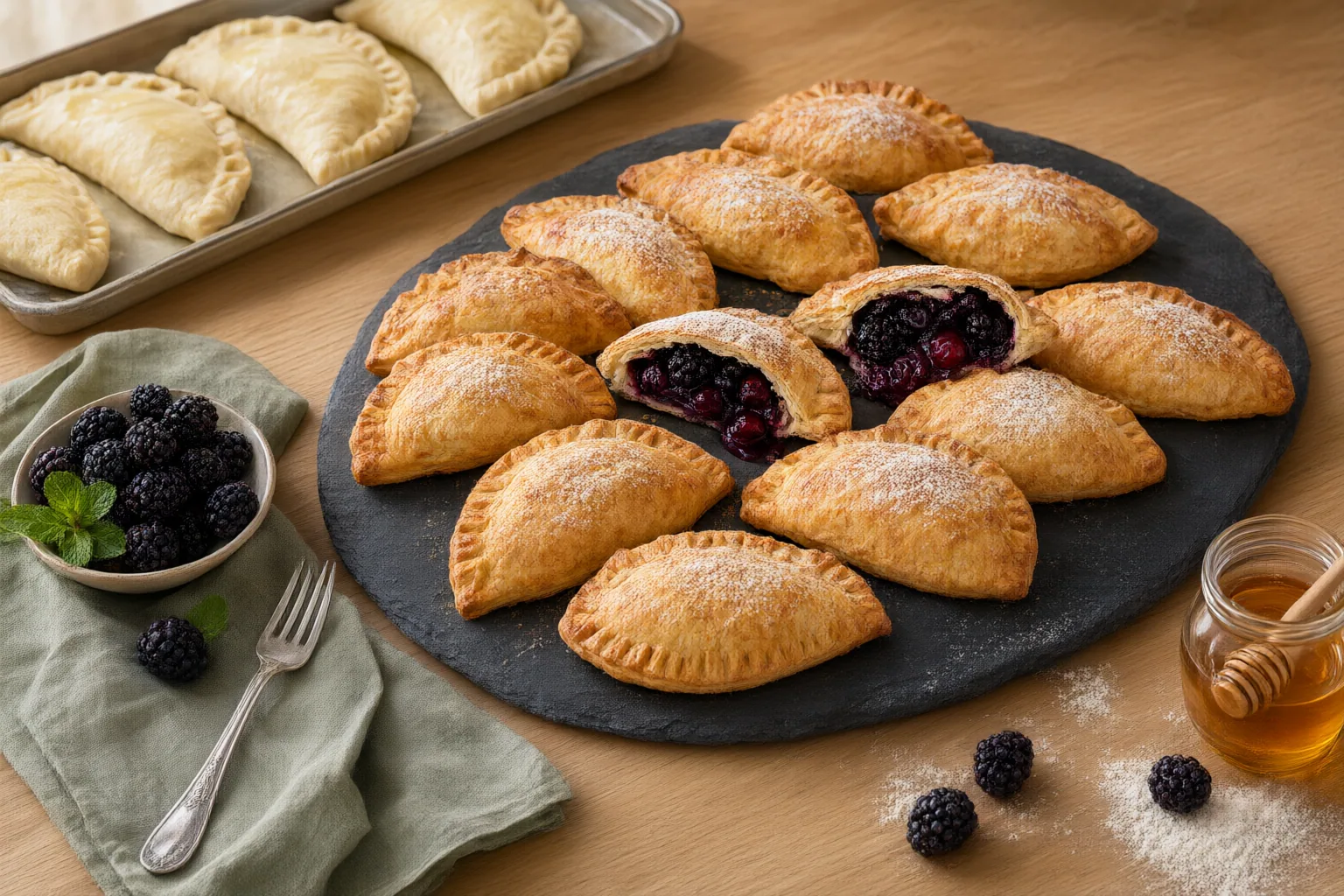
Start with your guest count, then adjust for the way dessert will be served, the rest of the menu, expected appetites, and whether hand pies will share the table with other sweets. Add a modest buffer and round the result to the yield of the recipe or package you are actually using.
Start With the Guest Count and Serving Format
Begin by counting the people you expect to serve. One third-party dessert calculator suggests one serving per guest as a starting point for a plated dinner. Treat that figure as planning guidance, not a universal portion standard: the appropriate number can change with the gathering.
Consider how dessert fits into the event. Guests may want less after a substantial meal and may approach portions differently when dessert is a central feature. The planning sources also identify appetite, event length, the presence of children, dessert style, and backup portions as relevant inputs. A seated dessert course and an informal help-yourself table therefore do not necessarily call for the same estimate.
Write down your baseline before making adjustments. Keeping the initial guest count separate from later additions makes it easier to see whether the final total reflects the actual gathering instead of an arbitrary servings-per-person rule.
Adjust the Hand Pie Count for Dessert Variety
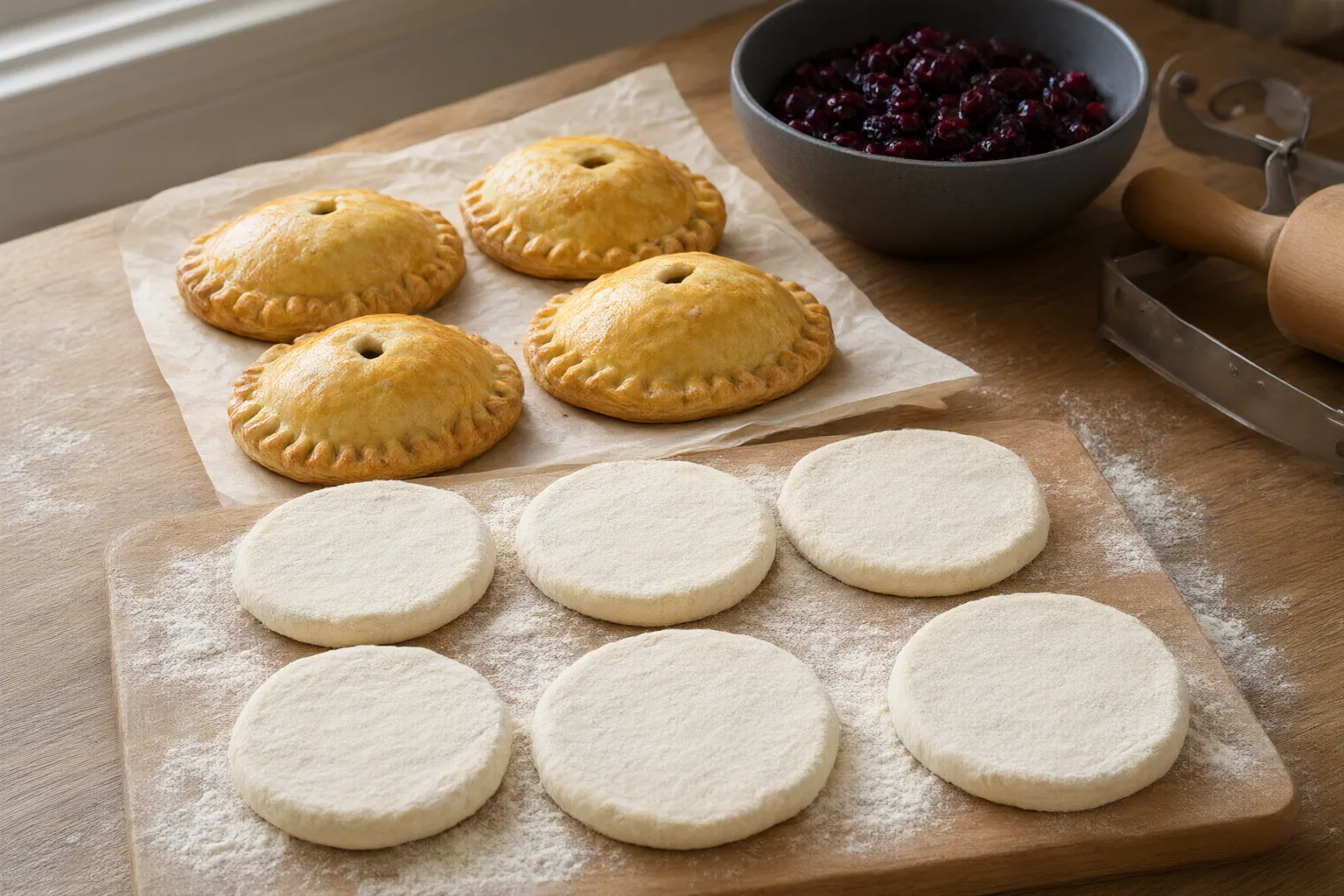
Next, decide whether hand pies are the only dessert or one choice among several. If they are the sole option, a one-serving-per-guest baseline can provide a straightforward starting estimate. Hand pies are especially easy to count as individual portions: the cited apple hand-pie recipe describes them as handheld, grab-and-go desserts that need neither a fork nor a knife.
A mixed dessert table needs a different calculation. Both planning sources note that people may sample several desserts instead of taking a full portion of every offering. Consequently, planning one complete hand pie plus one complete serving of each additional dessert for every guest may produce more food than the baseline implies.
There is no sourced universal fraction for reducing each item, so base the adjustment on your menu rather than inventing a fixed rule. Consider how many alternatives will be available and whether hand pies are the featured dessert or a supporting choice. Record the hand-pie estimate separately from the quantities for the other sweets.
Add a Buffer and Convert the Estimate Into Batches
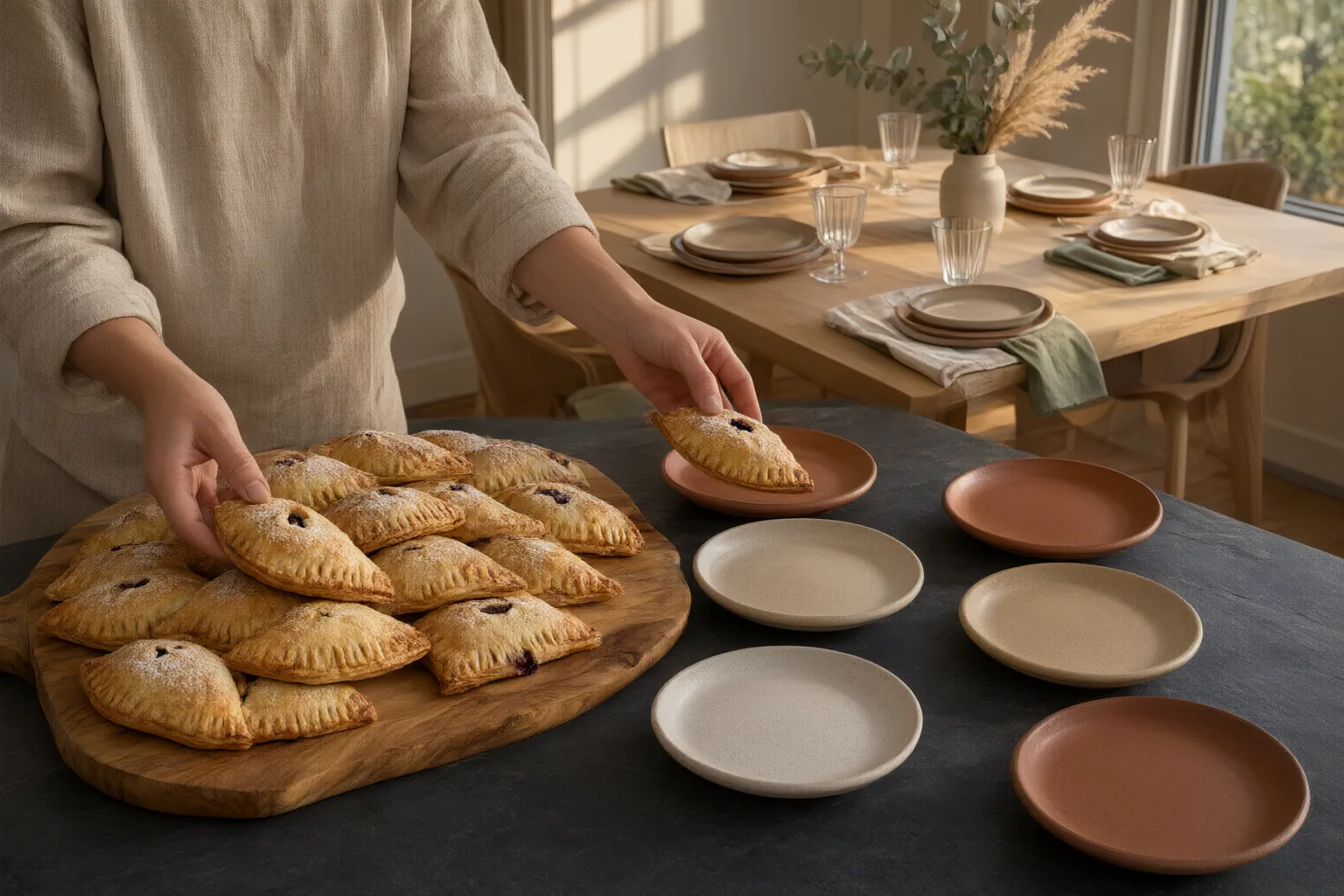
After adjusting the baseline, allow for a small margin. One dessert calculator recommends adding 5–10% for unexpected guests or serving mistakes. This is third-party planning advice rather than an authoritative requirement, but it offers a defined way to protect against coming up slightly short. Choose the lower or upper end according to how certain your attendance and menu are.
Then translate the buffered total into the actual yield of your recipe. The cited apple hand-pie recipe makes six pies from six pastry squares and two cups of diced apples. Its six-pie yield is useful as a worked example, but it is not a universal yield for every hand-pie recipe or packaged product.
For example, a baseline of 10 pies with a 10% buffer becomes 11 pies. If using that particular six-pie recipe, two complete batches would make 12. Check the recipe before shopping because a different recipe may have a different yield. For a packaged product, use its label rather than applying the six-pie example.
Conclusion
A practical hand-pie plan moves through four decisions: count the guests, consider the serving format and appetite, reduce or redistribute quantities when several desserts will be offered, and add a modest buffer before rounding to a whole batch. This sequence helps balance having enough dessert against creating avoidable leftovers.
If leftovers remain from the specific cited homemade apple hand-pie recipe, its author directs readers to store them in an airtight container at room temperature for up to two days or in the refrigerator for up to four days. Those directions belong only to that recipe. They do not establish storage rules for every homemade pie, and they must not replace the instructions on a packaged product.
Now count your guests, select a starting estimate, adjust it for the meal and dessert selection, apply an appropriate 5–10% planning buffer, and round the result using the yield stated by your chosen recipe or product label.
Disclosures and limitations
- This article was prepared with AI assistance from the supplied research package. Portion estimates come from third-party planning sources, and the cited yield and storage directions apply only to the identified homemade apple hand-pie recipe; always follow the recipe or packaged-product label you are using.
Related reading
Sources
- Desserts Per Person Calculator – Miss Vickie — Miss Vickie
- Dessert Calculator – Estimate Dessert Portions for Any Event — roboculator.com
- Homemade Apple Hand Pies — An Italian in my Kitchen