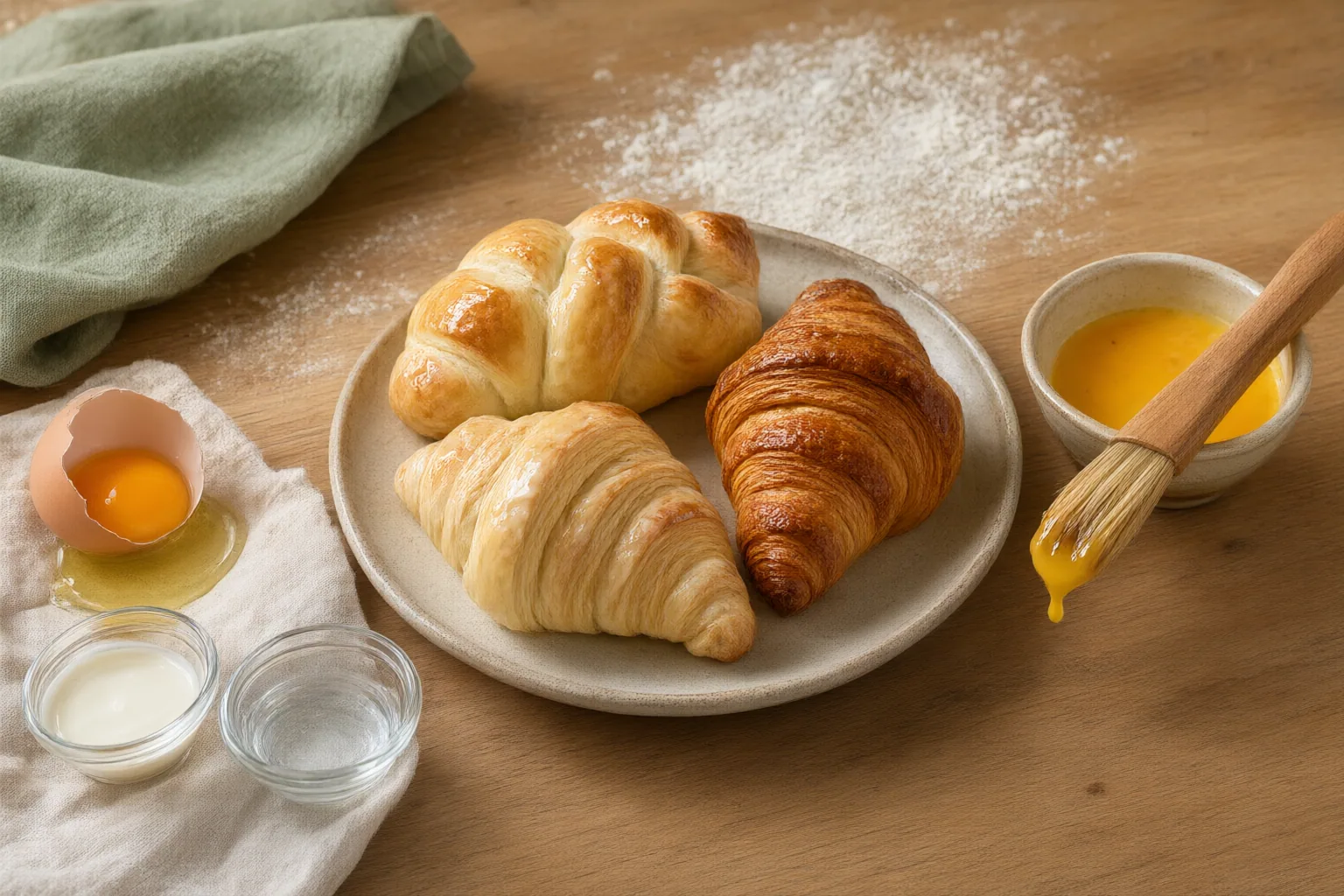
Choose a pastry egg wash by the finish you want: egg white emphasizes shine with relatively little browning, while whole egg or yolk creates a more golden surface. If your recipe specifies a mixture, follow it.
What a Pastry Egg Wash Does
A pastry egg wash is made from whole egg, yolk, or white, sometimes whisked with water, milk, or cream. Brushed onto dough before baking, it changes the surface color and shine. It can also help sugar or other toppings adhere and can join or seal pastry pieces and edges.
The wash is usually an appearance and assembly tool rather than a requirement for making the pastry edible. Skipping it can leave the surface paler, duller, and more matte, but the pastry remains edible. Because different recipes are designed around different doughs and finishes, use the specified wash and application timing whenever the recipe provides them.
Compare Egg Washes by Color and Shine
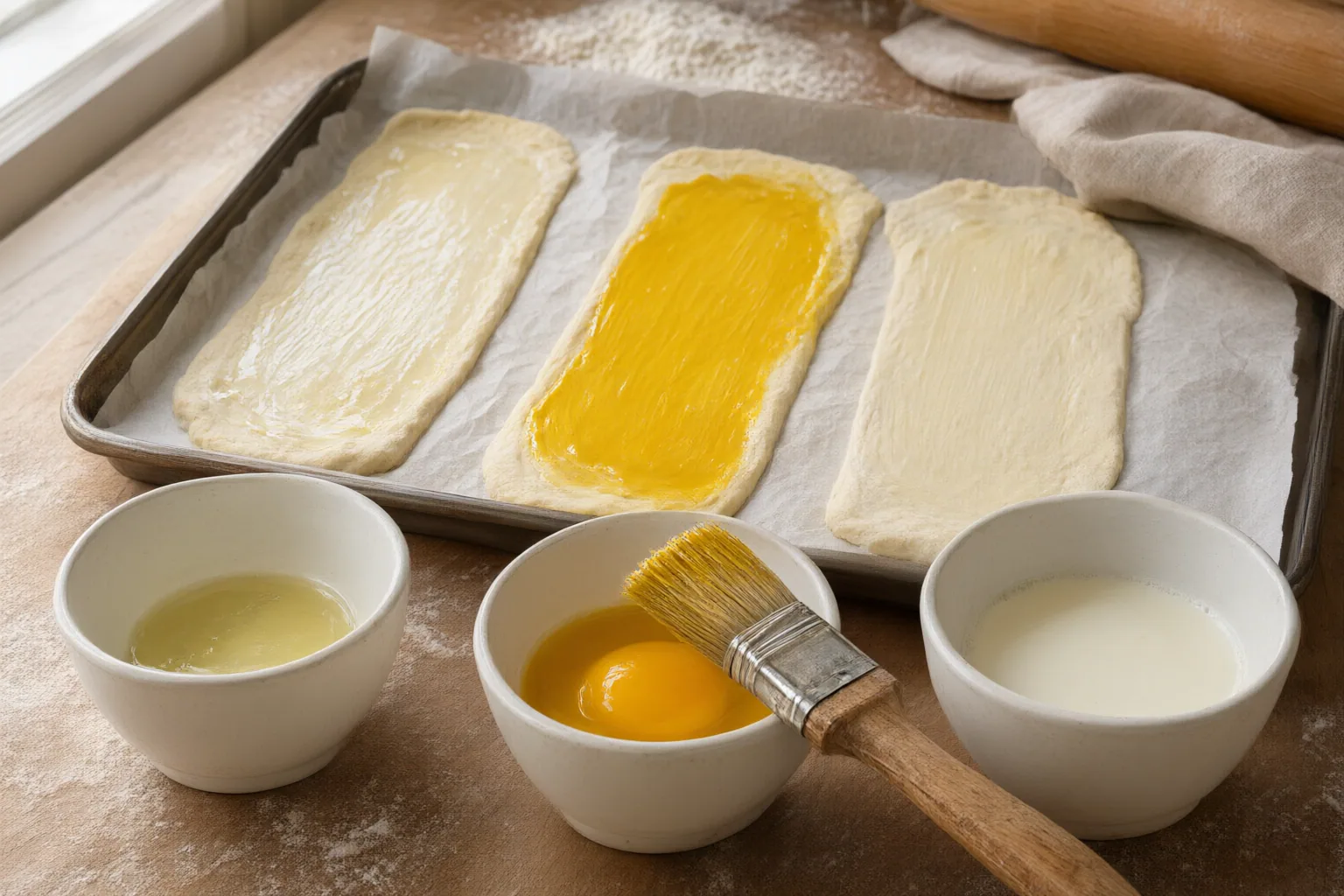
Start with the visual result you want, then choose among the documented tendencies:
- Egg white: A useful choice when pronounced shine matters more than deep color. The cited guides associate it with strong shine and relatively little browning.
- Whole egg: Produces a more golden finish than egg white alone. Whole egg mixed with water is described as an all-purpose option, giving a golden-brown or light golden-brown surface with moderate or some shine.
- Egg yolk: Favors a richer golden appearance. Like whole egg, it is generally associated with more color than an egg-white wash.
- Water: Thins the egg mixture and is used in the documented all-purpose whole-egg wash. It supports a balance of color and shine rather than maximizing only one quality.
- Milk or cream: Either can replace water. Dairy-containing washes add shine and affect browning, but the cited sources do not fully agree about their relative color intensity. Treat any precise ranking of milk versus cream as recipe-dependent rather than universal.
These are practical tendencies, not guarantees for every pastry. Dough composition, baking directions, and the wash named in a recipe still matter. If no wash is specified, choose egg white to prioritize shine with limited browning, or whole egg or yolk when a more golden surface is the main goal.
How to Apply Egg Wash Without Uneven Browning
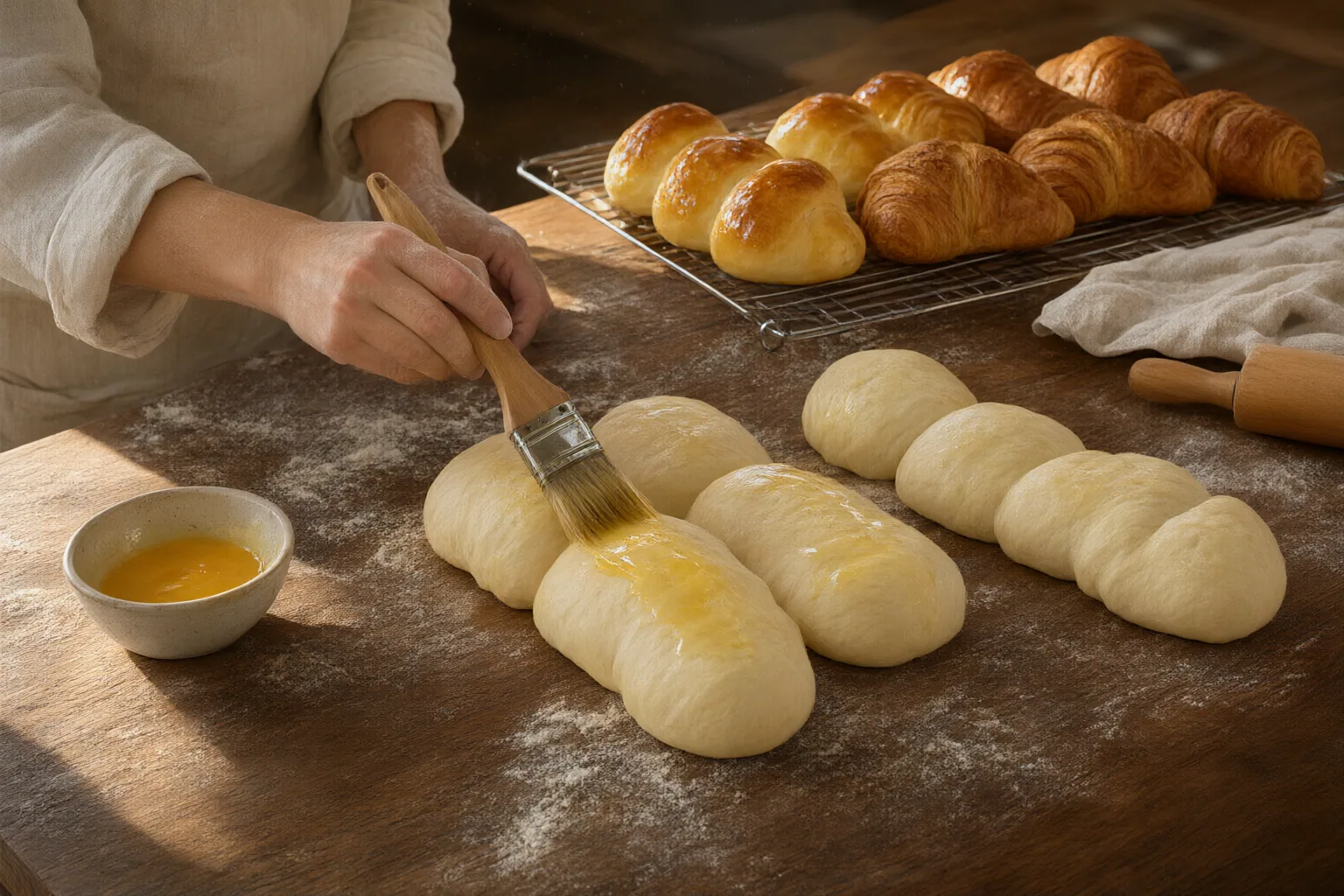
Whisk the wash thoroughly so the egg and added liquid are evenly combined. Brush a thin, even coat over the intended surface. A heavy layer or wash allowed to pool can produce streaky color, dark spots, or burnt patches instead of a uniform finish.
Take extra care with laminated dough. Keep the wash away from exposed cut layers because it can bind them together and interfere with their separation and rise. On decorative pie crust, egg wash may be applied to lattice strips, cutouts, twists, or diamond-shaped toppings before baking. One documented decoration example uses one egg whisked with one tablespoon of water, but the pie is then baked according to its own recipe.
Egg wash does not protect a crust from burning. If a crust browns before the interior is finished, the cited guidance recommends using foil or a pie shield rather than relying on additional wash.
When eggs are unavailable, alternatives reproduce only some effects. Cream can promote browning but does not provide the same shine described for egg wash. Melted butter can help coarse sugar adhere, yet it does not create the same shiny, browned finish. Follow the pastry recipe whenever it names a substitute or gives specific glazing directions.
Conclusion
Match the wash to your visual goal: use egg white when you want stronger shine with relatively little browning, or choose whole egg or yolk for a more golden finish. Milk and cream also influence shine and browning, but their exact results vary across the cited guidance. Follow your recipe when it specifies a wash; otherwise, select the finish you want, whisk the mixture well, brush on a thin and even layer, and bake according to the recipe.
Disclosures and limitations
- This article was prepared with AI assistance from the supplied baking-source research. It contains no product recommendation or affiliate offer; readers should follow their pastry recipe’s specific preparation directions.
Related reading
Sources
- Pie Inspiration — King Arthur Baking
- How to Make an Egg Wash — Taste of Home
- How to Make an Egg Wash for a Glossy, Golden Brown Finish — The Pioneer Woman
- 1-Minute Egg Wash Recipe For Pies, Puff Pastry, Bread, and More — Spatula Desserts
- How to Make (and Use) an Egg Wash — Everyday Pie