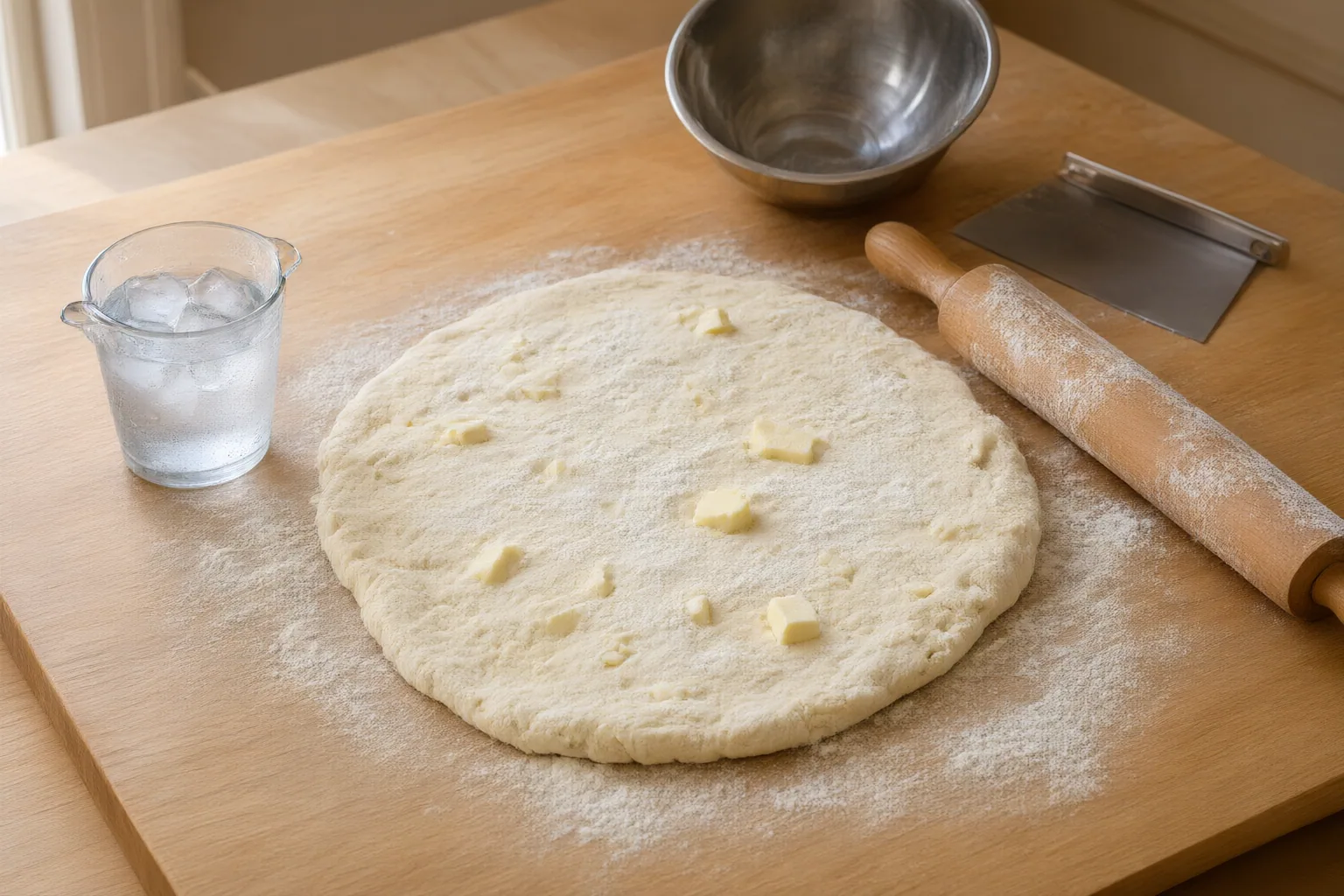
Keep hand pie dough manageable by starting with cold butter and very cold water, mixing only until the dough begins to come together, and allowing time for refrigeration before rolling. During assembly, limit unnecessary handling and use any additional chilling step specified by the recipe you have chosen.
Start With Cold Ingredients and Recognizable Butter Pieces
Both hand-pie tutorials begin with the same practical foundation: cold or chilled butter and very cold or ice water. Prepare those ingredients before mixing so they are ready when needed rather than leaving the dough waiting while you organize the recipe.
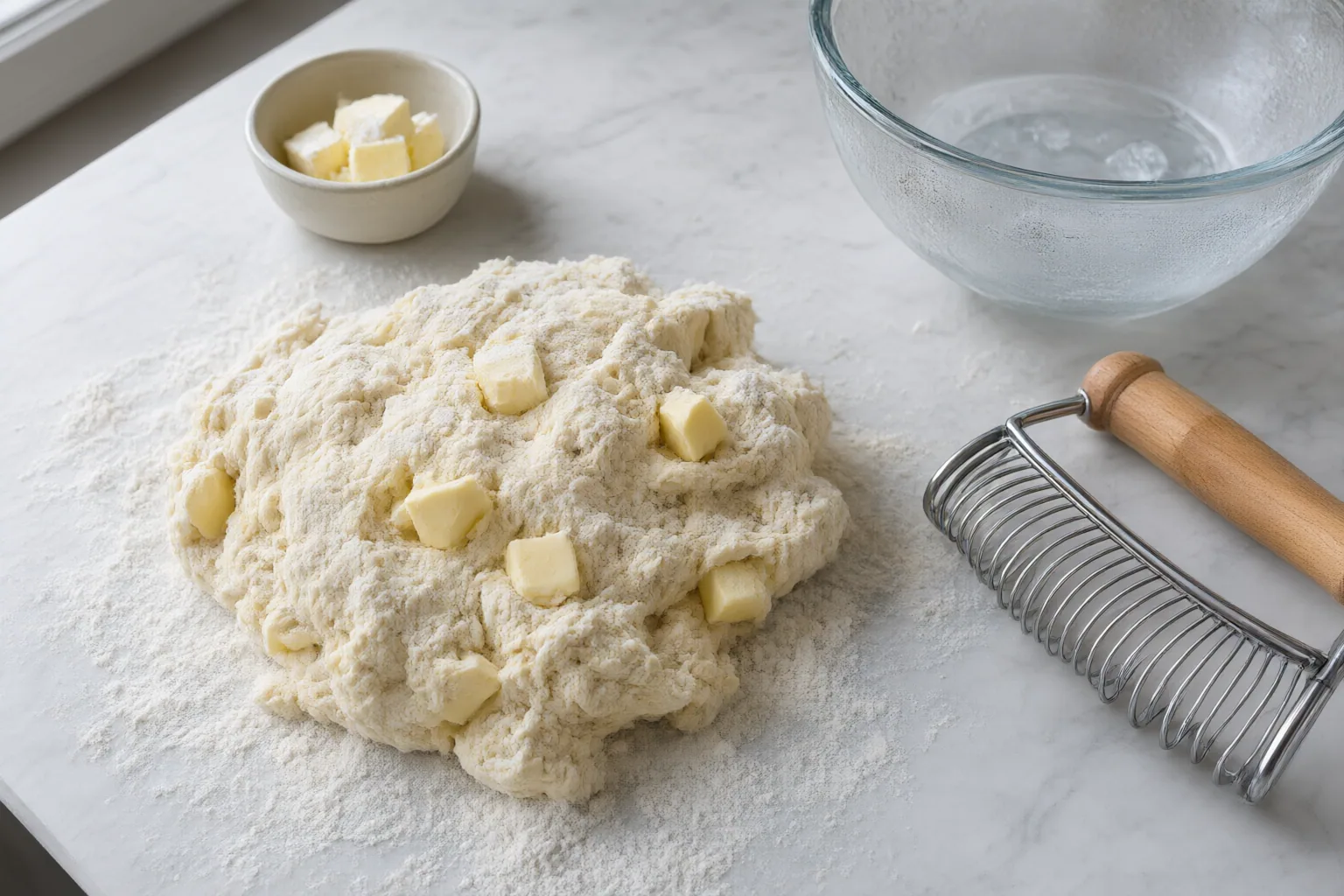
The appearance of the flour-and-butter mixture is also an important cue. Both sources recommend retaining visible pieces of fat that are roughly pea-sized instead of working the mixture until it becomes completely smooth. This gives home bakers a more useful stopping point than continued mixing based only on elapsed time.
Treat these shared principles as handling guidance, not as a combined recipe. The tutorials use different formulas and methods, so take the measurements from one chosen recipe and follow them consistently. Cold ingredients and recognizable butter pieces are the common ideas; the exact quantities remain recipe-specific.
Mix Gently and Stop When the Dough Comes Together
When adding liquid, aim to bring the mixture together without erasing the visible pieces of butter. Doughnut Lounge advises adding ice water gradually and mixing gently until the dough starts to come together. Its instructions specifically caution against overmixing so that small butter pieces remain in the dough.
Better Baker Club describes a similarly restrained process from a different angle: gently fold the liquid into the flour-and-fat mixture, briefly bring the dough together, then cover and chill it. Together, these approaches suggest a practical sequence—add or fold in the liquid carefully, watch the dough rather than pursuing a perfectly smooth texture, and stop once it can be brought together.
More mixing is not presented as an improvement in either tutorial. If roughly pea-sized pieces of fat are still recognizable as the dough becomes cohesive, that matches the visual guidance supplied by both sources. Continue with the resting directions in your selected recipe rather than trying to standardize the texture through extra handling.
Plan Chilling Breaks Around Rolling and Assembly
Build the refrigerated rest into your schedule before you begin. Both tutorials chill the dough before rolling, but they do not provide one universal timetable. Better Baker Club specifies a 30-minute rest. The Doughnut Lounge material includes guidance ranging from 30 minutes to at least one hour, and one of the sources recommends starting about an hour early. Follow the particular passage and recipe you selected rather than averaging these times or moving instructions between formulas.
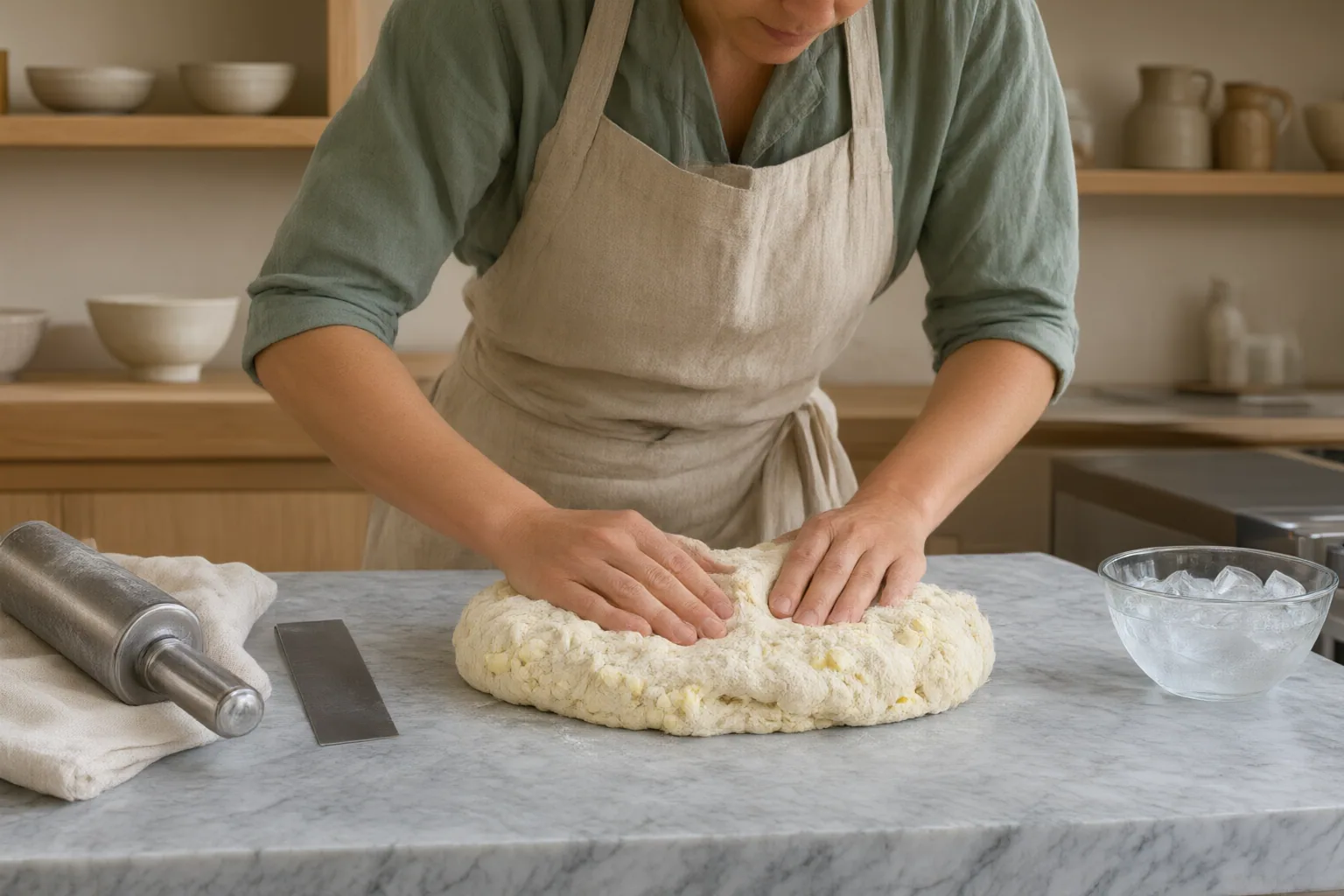
Assembly deserves the same attention. Shaping individual hand pies can take long enough for warmth from the baker’s hands to soften or melt butter-based dough. Work with purpose and avoid unnecessary handling; the practical objective supported by the tutorials is to preserve the cool dough and the small pieces of butter established during mixing.
One tutorial provides an additional pause after shaping: Better Baker Club chills assembled hand pies for 10 minutes before venting and baking them. That is a recipe-specific step, not a universal requirement established by both sources. Use it when following that tutorial, and otherwise rely on the exact assembly and chilling schedule in your chosen recipe. The sources differ in formula, technique, rolling thickness, and baking directions, so their separate timelines should not be merged into a new schedule.
Conclusion
A supported workflow for hand pie dough is straightforward: begin with cold butter and very cold or ice water, leave recognizable pieces of fat in the mixture, bring the dough together gently, and refrigerate it before rolling. During shaping, remember that extended handling can warm butter-based dough, and use a post-assembly chill only when your selected recipe calls for one.
Before starting your next batch, prepare the cold butter and ice water and reserve enough time for refrigeration. Then follow one recipe’s exact measurements, resting period, assembly steps, and chilling schedule instead of combining directions from different tutorials.
Disclosures and limitations
- This article was prepared with AI assistance from the supplied research package and is based on two independent hand-pie tutorials identified by the listed source IDs. Their guidance supports pastry handling, not food-safety conclusions.
- No products are recommended in this article. Readers should follow one selected recipe’s exact formula and timing because the cited tutorials differ and should not be combined into an untested recipe.
Related reading
Sources
- Hand Pie Dough Recipe: Perfectly Buttery and Flaky for Sweet or Savory Fillings — Doughnut Lounge
- Easy Hand Pie Crust Recipe (tutorial and video) – Better Baker Club — Better Baker Club