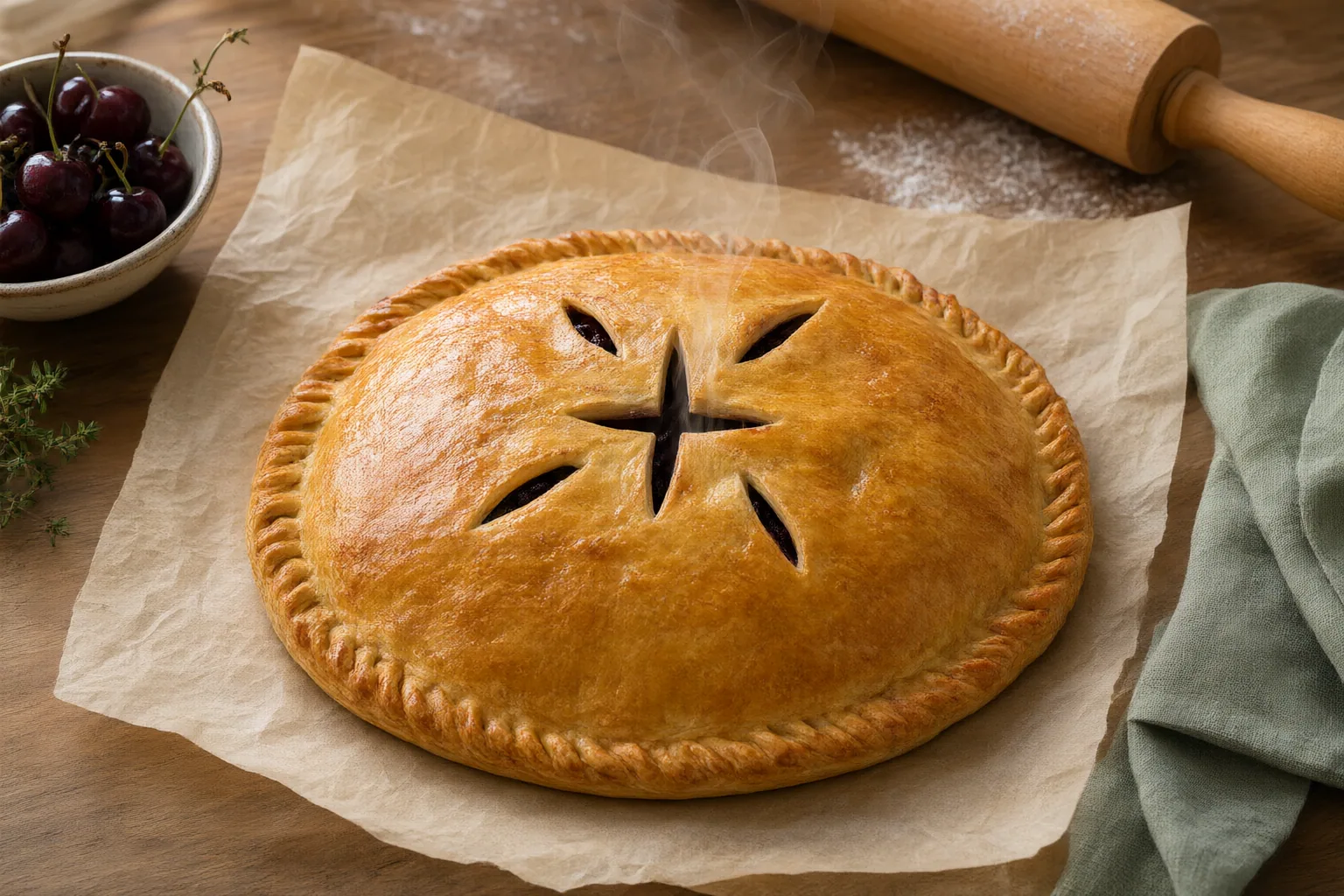
Steam vents should be clear openings cut completely through the top pastry of a sealed fruit pocket pie. Several small cuts distributed across the top can provide escape paths, but available sources do not establish a pocket-pie-specific shape, count, size, or exact layout.
Why Fruit Pies Need Steam Vents
A sealed fruit pie needs openings in its top pastry so steam can escape during baking. PastryWiz warns that steam trapped beneath an unvented top crust can lift the crust or contribute to sogginess underneath. Recipenly likewise directs bakers to cut several small vents completely through the top pastry after sealing the crust.
These sources address full-size double-crust fruit pies rather than individual pocket pies. They support the purpose of venting and the need to cut through the pastry, but they do not establish how many openings a pocket pie needs or how large each opening should be. For a pocket pie, the evidence-backed principle is therefore limited but useful: a sealed top should have unobstructed paths through which steam can escape.
Vent Shapes and Positioning Principles
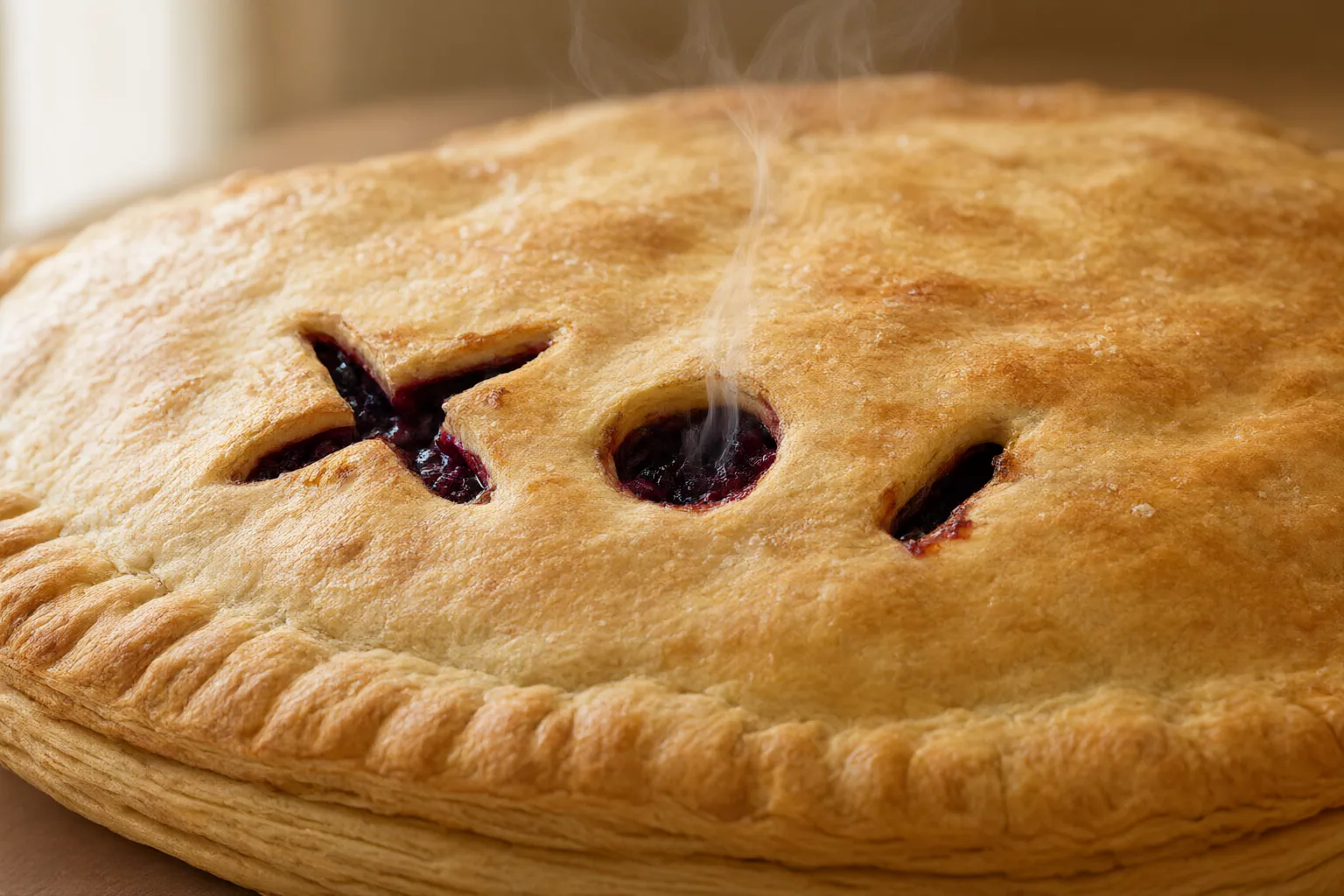
The cited guidance allows more than one vent style. Recipenly recommends several small openings cut all the way through the top pastry. PastryWiz gives two options for a full-size fruit pie: four 2-inch slashes arranged in a fan pattern or an open lattice top. Both approaches create multiple routes through the upper crust rather than leaving the filling fully enclosed.
For fruit pocket pies, use those examples as general design principles, not as measurements to scale down mechanically. Small cuts may be straight, angled, or arranged decoratively, provided they remain genuine openings through the top pastry. Distributing the openings across the top follows the broader guidance represented by several vents, a fan of slashes, or a lattice. However, neither source compares pocket-pie vent shapes or identifies an ideal position, count, or spacing for small pies.
The most defensible approach is to make the openings after the pocket pie is sealed, confirm that each cut passes through the top pastry, and defer to any recipe- or label-specific directions. The full-size recommendation of four 2-inch slashes should not be treated as a tested specification for pocket pies.
Two Common Questions About Pocket-Pie Vents
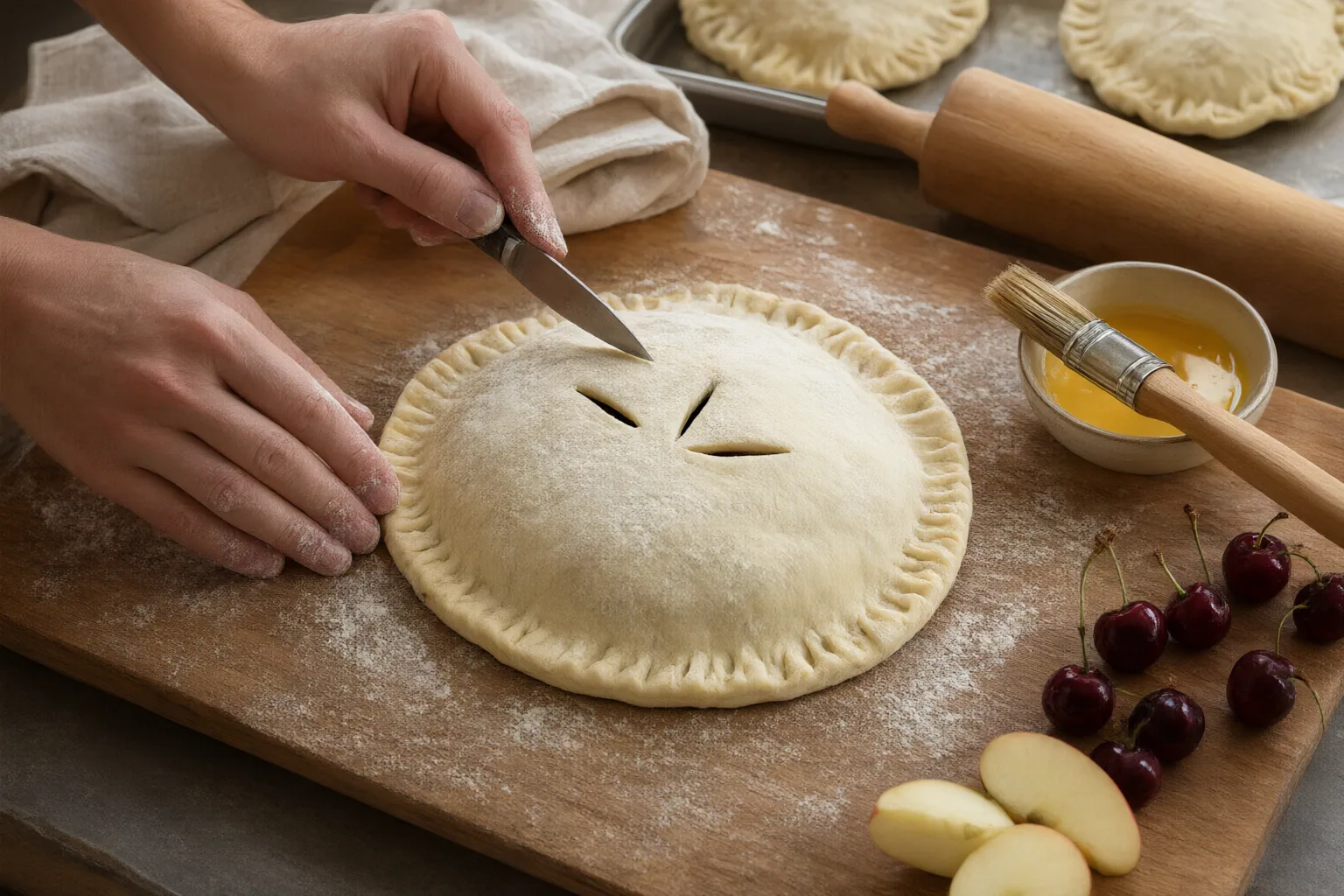
Shape matters less than whether an opening provides a complete path through the top pastry. The sources support small vents, fan-arranged slashes, and lattice openings for fruit pies, but they do not compare decorative designs or test their performance on pocket pies.
A vent may also serve a second practical purpose. Recipenly notes that small top openings can provide access for checking whether fruit has softened without tearing a larger hole in the crust. That observation supports using an existing vent as an inspection point, although it does not establish when a particular pocket-pie filling will be tender. Any preparation or doneness directions supplied by a recipe or product label should remain controlling.
Conclusion
Fruit pocket pies should have clear openings through the top pastry so steam has a way out. Several small vents are consistent with the cited general guidance, while a fan of slashes and a lattice are documented alternatives for full-size fruit pies. Those examples show that the openings can vary in shape and arrangement; they do not prove an exact layout for pocket pies.
Before baking, cut small openings completely through the top pastry of each sealed pocket pie. Check the applicable recipe or product label for any pie-specific preparation, venting, and doneness directions instead of treating full-size pie dimensions as universal.
Disclosures and limitations
- This article was prepared with AI assistance and is based only on the two cited browser-acquired sources. Those sources discuss full-size double-crust fruit pies, not pocket-pie-specific testing.
- This independent guide contains no product recommendation or affiliate offer. Readers should follow the exact recipe or product label for pie-specific preparation instructions.
Related reading
Sources
- Fruit Pie Recipes (Apple, Cherry, Berry + Technique) — PastryWiz
- Homemade Apple Pie Recipe | Recipenly — Recipenly