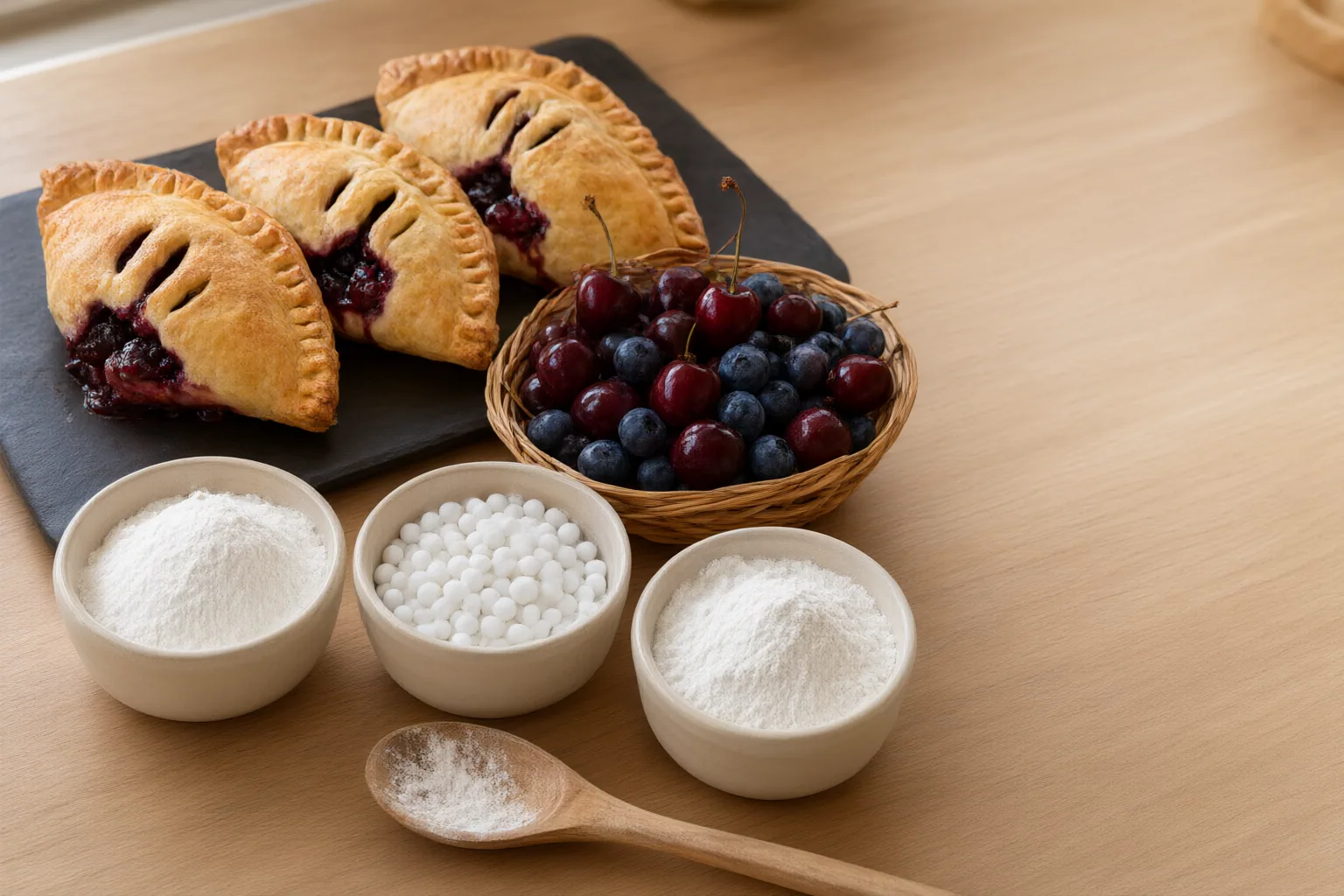
The best starch thickener for a fruit pocket pie depends on the fruit’s juiciness, acidity, condition, and intended storage. Compare each starch’s heat requirements, texture, clarity, and freezing performance instead of assuming one option works best in every filling.
Why pocket-pie fillings need controlled free liquid
Pocket pies need enough thickening support to keep fruit juice from escaping and softening the seams, but an excessively thick filling can become gummy or obscure the fruit’s texture. The right balance varies with the filling: juicy berries generally need more support than less-juicy, higher-pectin fruits such as apples, while frozen fruit usually releases more liquid than fresh fruit.
Thickener choice should therefore be considered alongside the fruit’s condition, elevation, and crust design. Because the available guidance covers full-size pies more extensively than pocket pies, use these factors as a selection framework rather than as a universal pocket-pie formula.
How the main starch thickeners compare
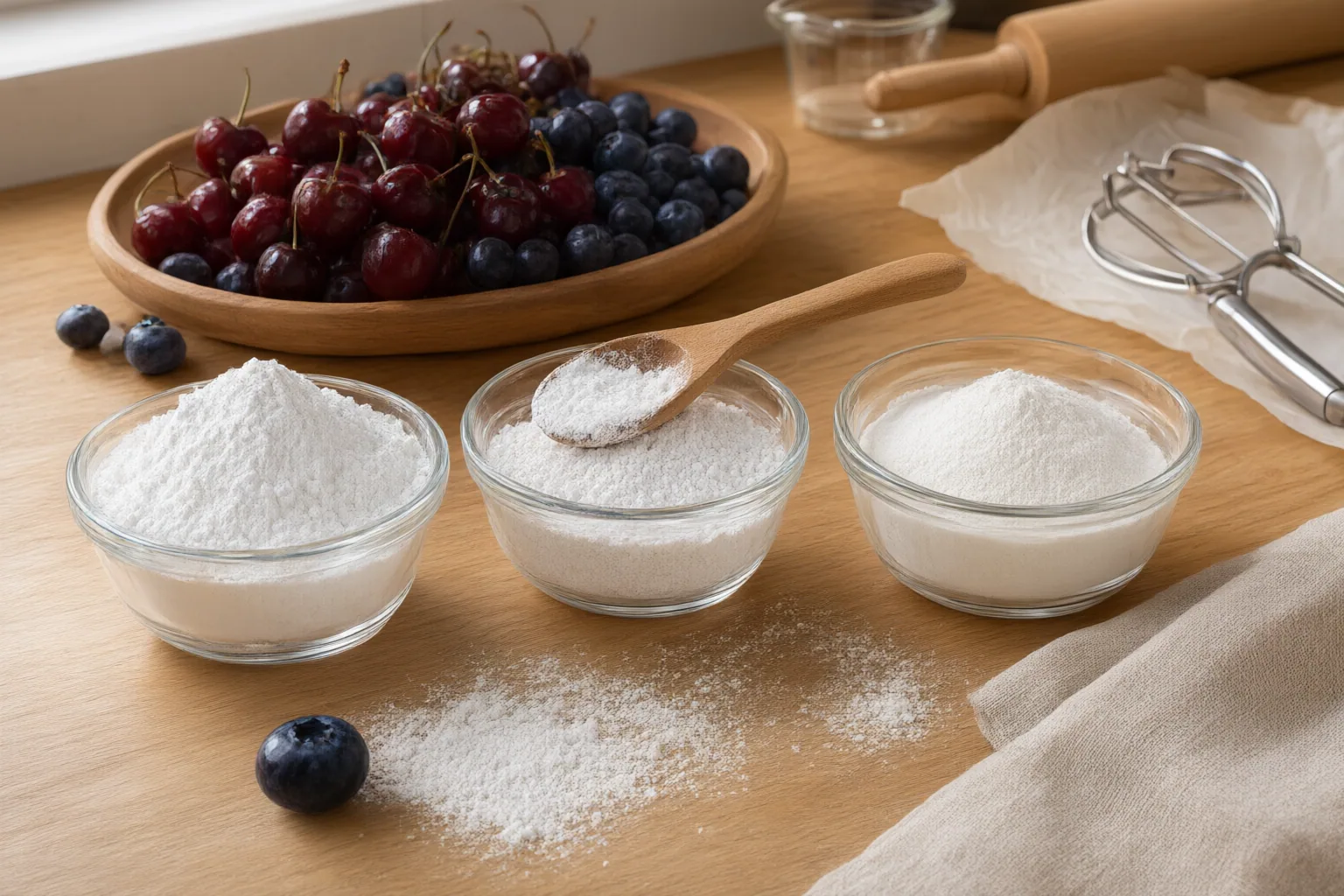
Each common option offers a different balance of setting power, appearance, and handling:
- All-purpose flour thickens at relatively low temperatures and is widely accessible, but it is less efficient than purer starches. It may produce a cloudier, softer, or slightly gummy filling.
- Cornstarch creates effective, glossy thickening when it receives sufficient heat. Acidic ingredients can weaken its performance, and a cornstarch-thickened filling may become spongy after freezing and thawing.
- Quick-cooking tapioca activates at a lower temperature than several alternatives, has a neutral flavor, and performs well in frozen fillings. It needs time to hydrate, however, and poor handling or overcooking can produce visible, stippled, or gluey results.
- Arrowroot tolerates acidic ingredients and freezing, making it useful when those conditions matter. It can become slimy when combined with dairy.
- Instant Clear Jel is identified by Taste of Home as a versatile option that tolerates changing temperatures and acidic ingredients, has a neutral flavor, produces a clear filling, and can be frozen.
None is universally superior. Flour may suit a filling where clarity is unimportant, while cornstarch favors adequate heat, arrowroot accommodates acidity, and tapioca or Instant Clear Jel may better fit some freezing plans.
Match the thickener to the fruit and baking plan
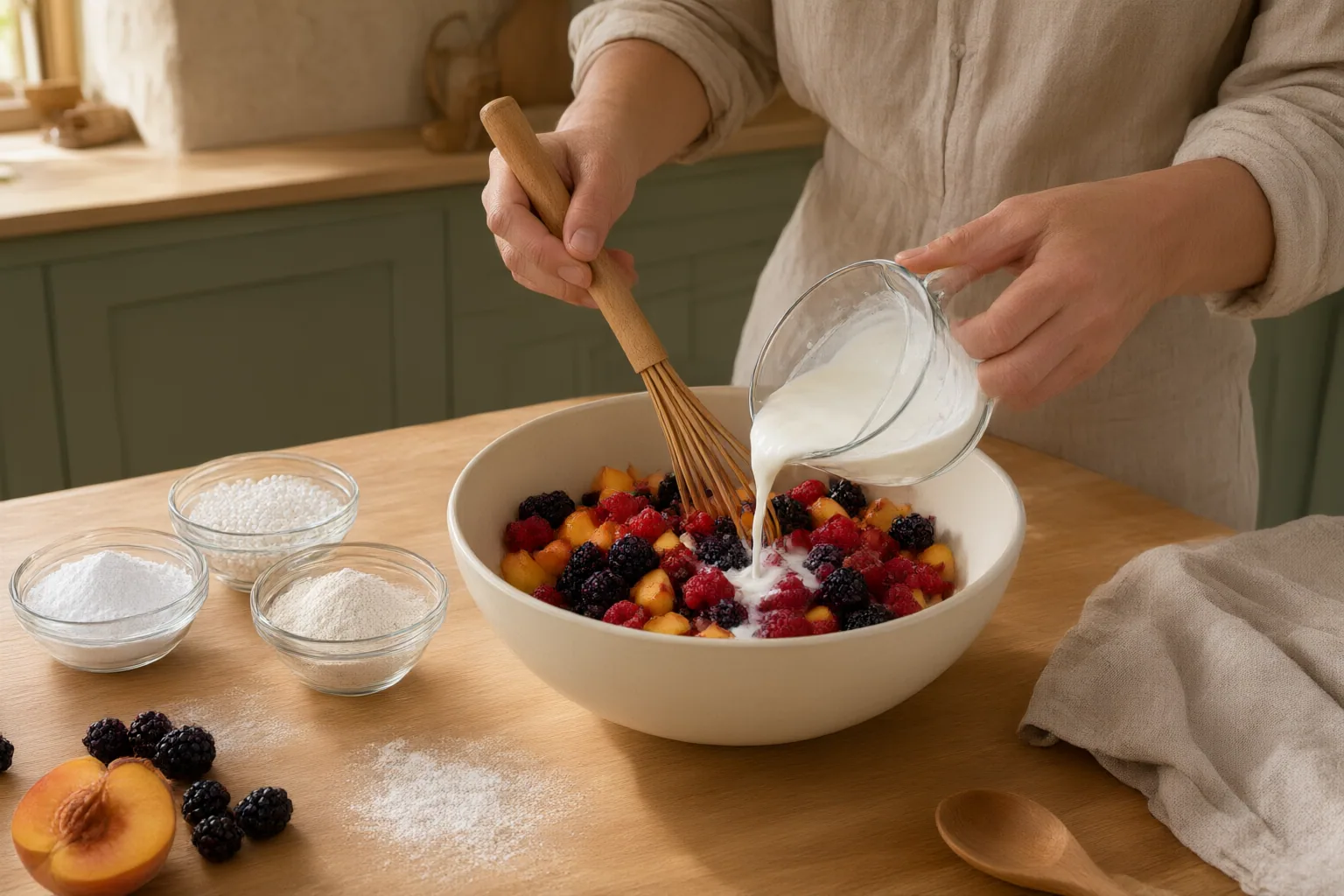
Start with moisture. A juicy berry filling generally needs more thickening support than a less-juicy apple filling. If substituting frozen fruit in a formula developed for fresh fruit, account for the additional juice frozen fruit commonly releases rather than assuming the original balance will remain suitable.
Next, consider the filling environment and desired result. For acidic ingredients, cornstarch may be less dependable, while arrowroot and Instant Clear Jel tolerate acidity. If the filling will be frozen, consider the documented freezing performance of tapioca, arrowroot, or Instant Clear Jel and the possibility that cornstarch may become spongy after thawing. For a clear appearance, flour’s cloudier result may be less desirable.
Finally, distinguish similarly named products. Regular cook-type Clearjel and Instant Clearjel are not interchangeable. The cited canning guidance uses regular Clearjel in tested home-canned fruit-pie fillings; the instant form thickens without heat and is not suitable for canning. For canning, follow an applicable tested recipe rather than substituting one form for the other.
Conclusion
Choose starch thickeners by matching their documented behavior to the filling, not by looking for a universal winner. Moisture, acidity, freezing plans, desired clarity, and acceptable texture all matter. Before baking, identify whether the fruit is especially juicy, acidic, fresh, or frozen; then select a compatible thickener and follow the applicable recipe or exact product-label directions.
Disclosures and limitations
- This article was prepared with AI assistance from the supplied research sources and was not based on personal product testing. No product records or affiliate recommendations were supplied.
Related reading
Sources
- Best thickener choices for fruit pies at altitude — highaltitudelife.com
- How to Thicken Pie Filling — Taste of Home
- Clearjel Starch Thickener — Healthy Canning in Partnership with Facebook Group Canning for beginners, safely by the book
- Buy Food Thickeners Online | Food Thickeners Bulk Supplier — VedaOils
- Thickeners — CooksInfo