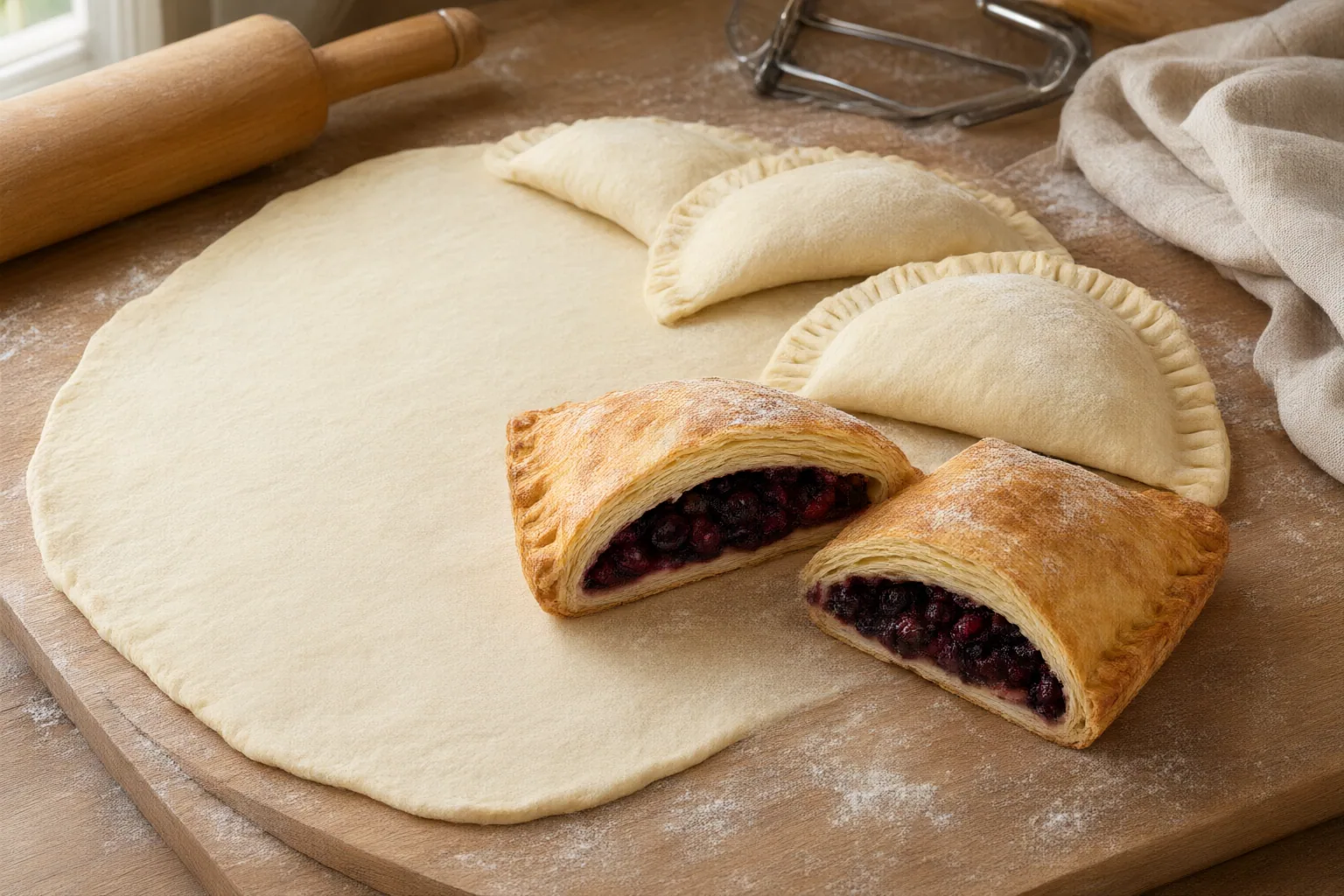
Uniform pastry thickness helps a pocket-pie wrapper bake more consistently from edge to center. The practical goal is an even height—not an unsupported universal measurement—combined with gentle handling, adequate resting, and appropriate temperature control.
Why Even Thickness Matters for Pocket Pies
When one area of a pastry wrapper is thinner than another, the two areas can bake at different rates. That difference may make it harder to achieve a consistent structure across a pocket pie. Rolling to a uniform height reduces this source of variation and gives the pastry a more consistent starting point before it enters the oven.
Uniformity matters more here than reaching a supposedly ideal measurement. The available sources do not establish a universal target thickness for pocket pies or provide a controlled comparison between specific thicknesses. Instead, they support a simpler principle: aim for an even sheet of dough so one section is not substantially thinner or thicker than the rest.
Thickness is also only one contributor to the outcome. Handling, dough temperature, resting, ingredient ratios, gluten development, and oven conditions can all influence how pastry holds its shape and bakes.
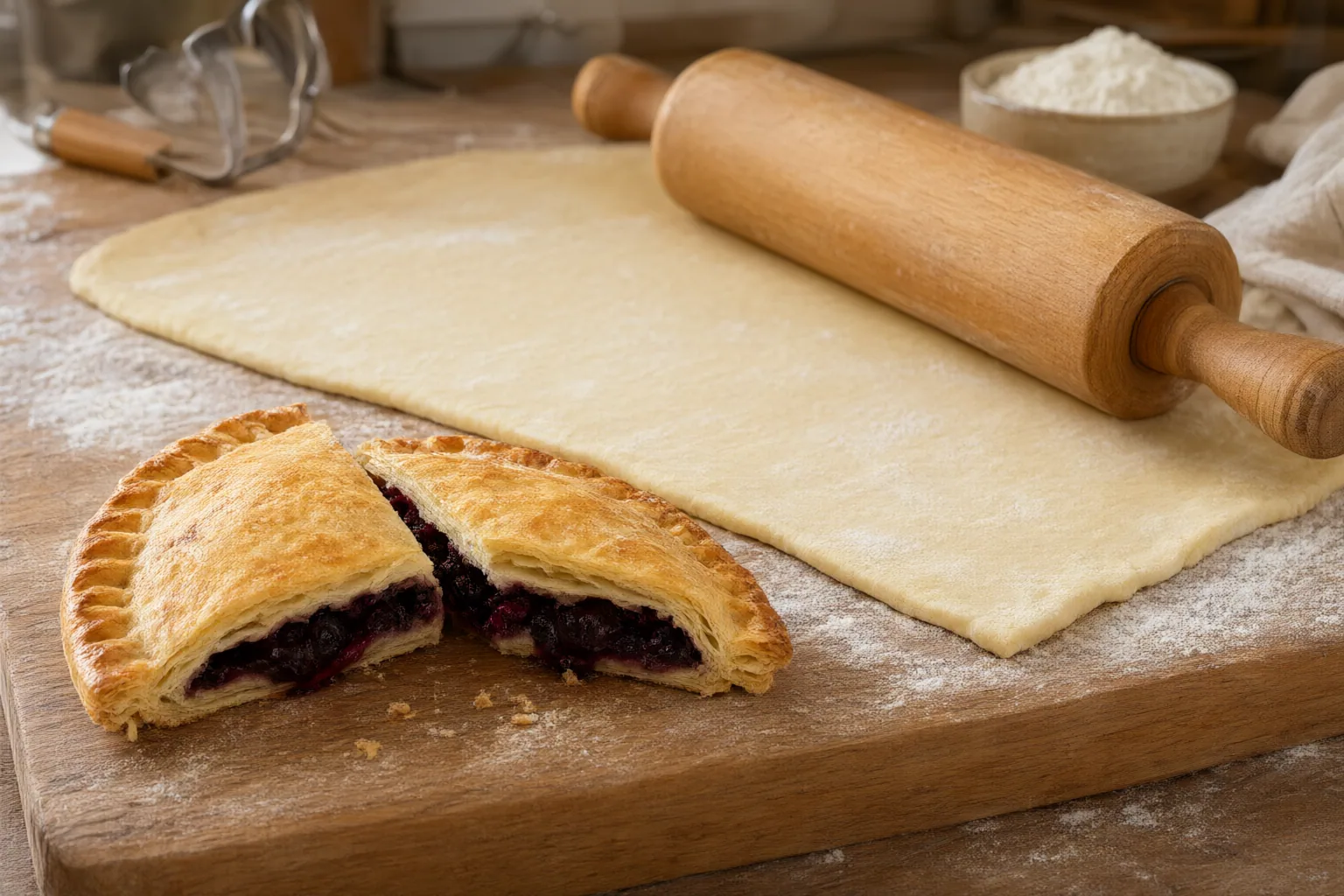
How to Roll Pastry More Evenly
Begin with controlled, even pressure rather than forceful or repeated rolling. Work across the dough gradually and check more than one area for consistency. Avoid pulling or stretching the sheet to make it fit a desired shape: stretching creates tension, which can contribute to contraction during baking.
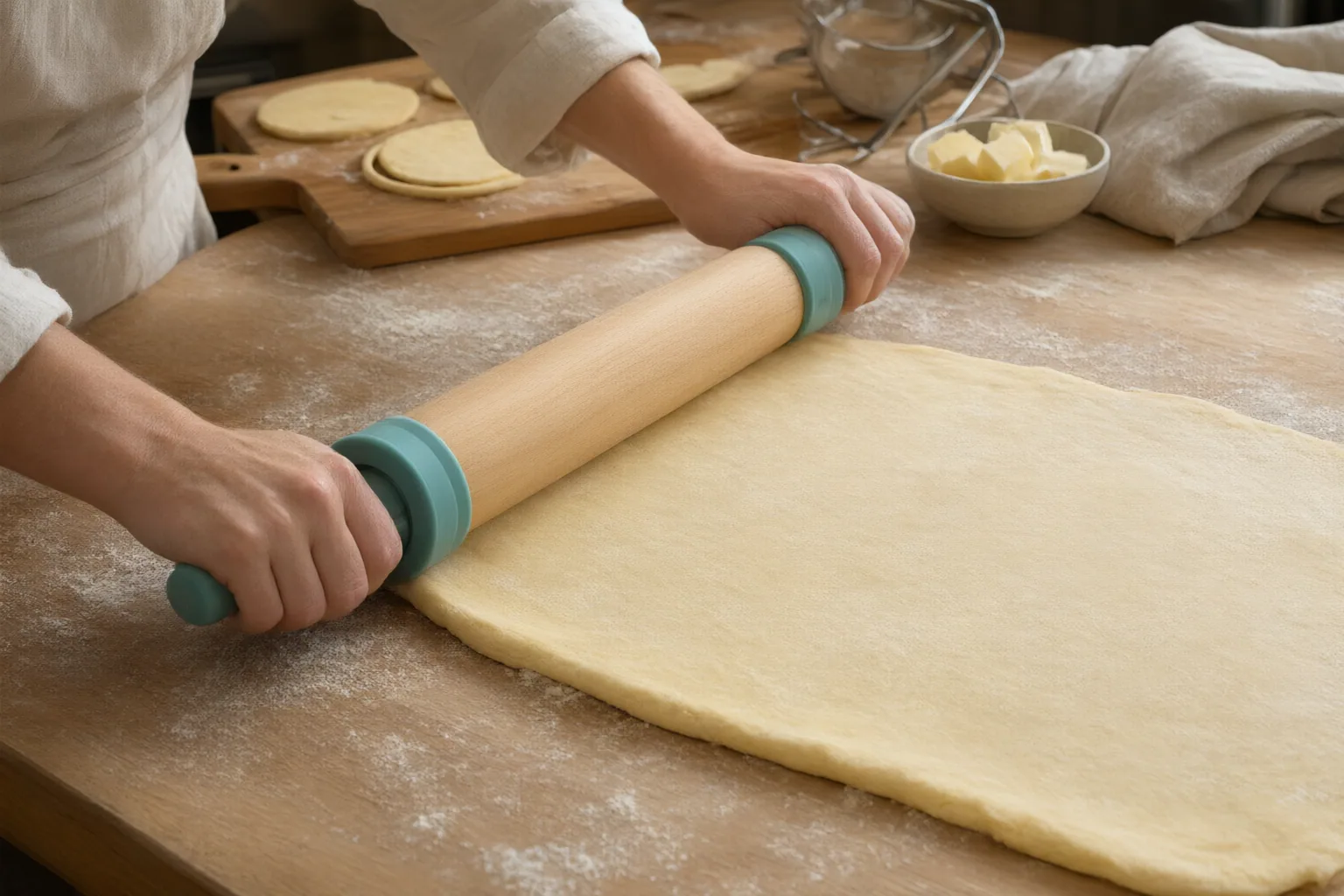
If judging height by eye is difficult, rolling aids can provide a fixed reference. Rings fitted to a rolling pin, separate rolling guides, and rigid strips are all designed to help maintain a consistent dough height. Separate guides sit on either side of the dough; once the rolling pin reaches them, they limit how much farther the dough can be compressed. These tools reduce guesswork, but they do not establish which thickness a particular recipe requires.
Stop once the sheet is evenly rolled rather than continuing to work it unnecessarily. Cut and shape the wrappers without tugging their edges. Before adding filling, compare the center, perimeter, and opposite sides of each wrapper for obvious variations in height. Follow the recipe or product label for any preparation instructions specific to that pastry.
When Thickness Is Not the Only Cause
An uneven bake does not automatically prove that pastry thickness was the sole cause. Oven temperature and fat temperature can affect pastry results, while ingredient ratios and gluten development also influence the dough’s behavior. These factors should be considered alongside the uniformity of the rolled sheet.
Mixing is another potential source of trouble. Excessive mixing of shortcrust pastry can create a tougher texture and raise the risk of shrinkage. Repeated or aggressive rolling may likewise work against controlled handling. If the dough resists shaping, applying more force may stretch it and create tension rather than solve the underlying problem.
Resting provides a different approach. It allows moisture to distribute through the dough and developed gluten to relax, which can make rolling easier and help reduce shrinkage. Resting should still follow the applicable recipe rather than an invented universal schedule.
For troubleshooting, consider the process as a connected system. Check whether the dough was mixed excessively, rested as directed, stretched during shaping, or exposed to unsuitable temperature conditions. Then examine whether the wrapper was rolled evenly. Treating all of these variables together offers a more responsible explanation than blaming thickness for every structural problem.
Conclusion
For pocket pies, prioritize uniform pastry thickness rather than chasing a universal numerical target that the available evidence does not support. Roll with controlled pressure, avoid stretching, and use height guides when a repeatable reference would help. If the pastry still shrinks or bakes unevenly, also review mixing, resting, temperature, and oven conditions. As a final check, compare the height across every wrapper before filling and baking it.
Disclosures and limitations
- This article was prepared with AI assistance and is based only on the two sources identified in the accompanying source list.
- No products are recommended here, and this article makes no claims about prices, ratings, availability, affiliate offers, or product-specific performance.
Related reading
Sources
- Perfect Pastry Dough: Techniques and Common Fixes — Celesteyum
- Perfect Pie Crusts? Rolling Pin Thickness Guides to the Rescue! — Master Every Job with Step-by-Step Guidelines