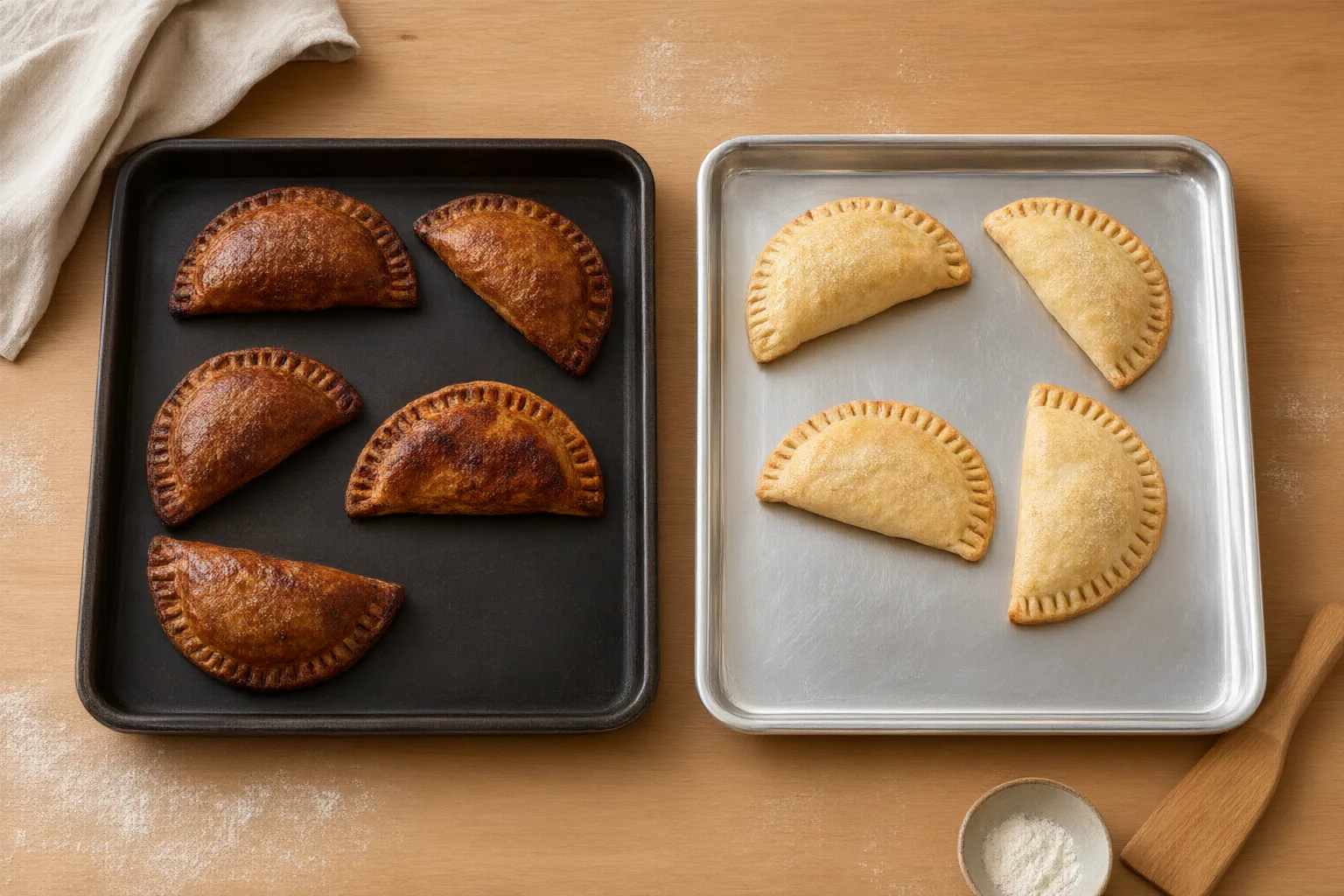
Dark baking sheets absorb heat more readily than reflective bare aluminum, so they may brown the bottoms of pocket pies faster. However, material, thickness, condition, and accumulated seasoning also influence how a sheet performs, and the supplied research does not include a direct pocket-pie comparison.
The short answer: darker sheets promote faster browning
A baking sheet’s surface can change how quickly baked food browns. Wirecutter states that a darker surface absorbs heat better than reflective bare aluminum, leading to more browning. Cookie Insights similarly says that dark or dark nonstick sheets absorb radiant heat more aggressively than light aluminum sheets and can brown the bottoms of baked goods faster.
For pocket pies, the practical implication is that a dark sheet may intensify bottom-crust browning before the top looks equally dark. This is a cautious application of general heat-absorption evidence, not the result of a direct pocket-pie test: the supplied sources discuss general browning behavior and cookie baking rather than comparing pocket pies on light and dark sheets.
The preferred finish therefore depends partly on the intended result. Wirecutter notes that extra browning from a darkened surface can help with roasting but may be undesirable for delicate cookies. A baker seeking a deeply browned pocket-pie bottom may welcome stronger heat absorption, while someone trying to limit bottom browning may prefer a reflective sheet and closer observation. The evidence does not support a universal change to oven temperature or baking time.
Why sheet material and thickness also matter
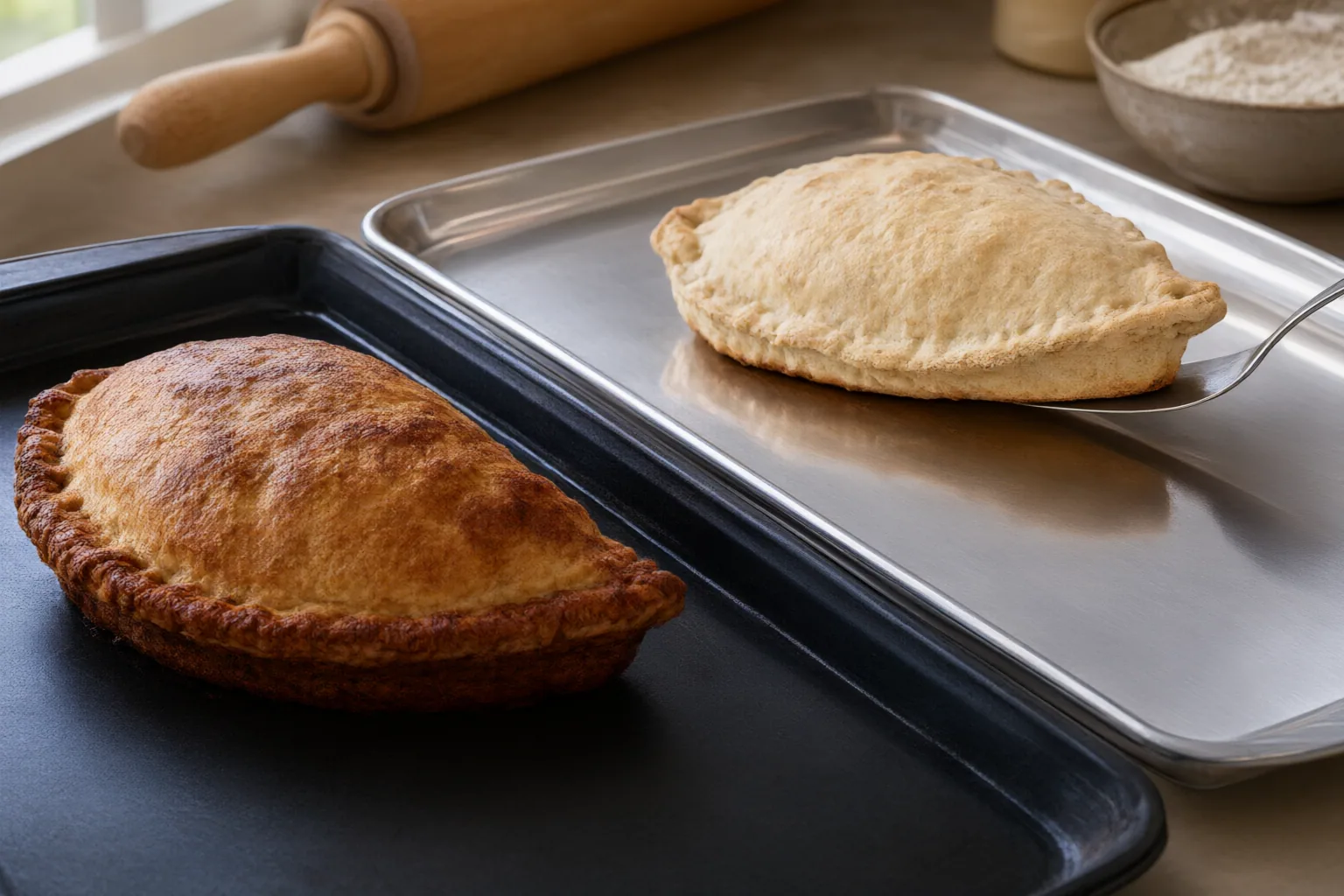
Color is only one part of baking-sheet performance. Wirecutter reports that bare aluminum conducts heat efficiently, heats evenly, and cools quickly. In its testing, a long-term bare-aluminum top pick baked cookies to an even golden brown, although a comparable aluminum runner-up darkened oven chips slightly faster. That difference illustrates why two sheets made from the same broad material category need not produce identical results.
Thickness also matters. Wirecutter says thicker pans tend to be more durable and bake more evenly than thinner pans, while thin sheets can char cookie undersides. A thin, warped, or otherwise inconsistent sheet may therefore complicate a light-versus-dark comparison. If pocket-pie bottoms brown unevenly, the finish should not automatically receive all the blame; construction and condition may be contributing factors.
Reflective bare aluminum is a reasonable starting point when even browning is the priority, but it cannot guarantee identical results across pans or recipes. The supplied evidence supports comparing the actual sheets in use rather than assuming that every light sheet behaves alike. It does not establish a single temperature or timing correction for pocket pies.
How use and seasoning can change a sheet’s behavior
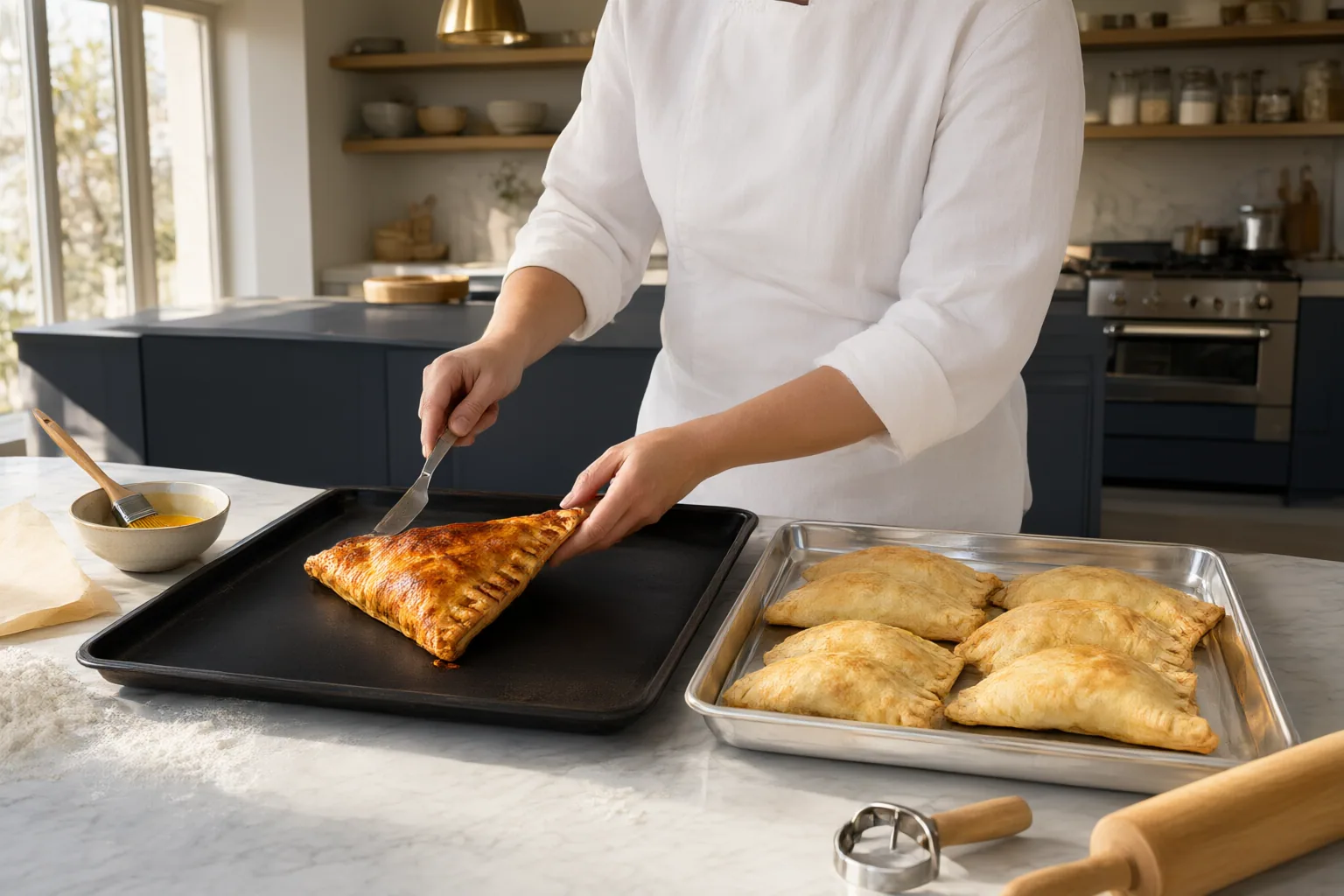
A sheet’s appearance and heat absorption can change with use. Wirecutter describes seasoning as layers of polymerized oil baked onto a pan over time. This accumulated coating creates a darker surface that absorbs heat better than reflective bare aluminum, so an older, heavily seasoned sheet may encourage more browning than a newer sheet that was originally similar.
That helps explain why two nominally matching pans can produce different bottom color. One may remain relatively reflective, while the other has developed a darker seasoned surface through repeated use. Comparing only the original product description or base material can miss this difference.
Seasoning should not be confused with dirt. Wirecutter distinguishes the baked-on coating from removable grease, burnt food, and debris, which should still be washed away. A darkened surface also is not automatically defective: greater browning may be useful for some foods and less desirable for others. For pocket pies, inspect the actual cooking surface before baking and treat its present finish—not merely its original color—as one factor that may affect the crust.
Conclusion
Dark baking sheets and dark nonstick finishes absorb heat more aggressively than light, reflective aluminum and can accelerate bottom browning. Bare aluminum is associated with efficient conduction and even heating, while thicker pans generally bake more evenly than thinner ones. A sheet’s accumulated seasoning can further darken its surface and change how readily it absorbs heat.
These findings provide a useful framework for pocket pies, but they are not a pocket-pie-specific test. Material, thickness, warping, surface condition, oven behavior, and the recipe can all affect the final crust, so sheet color alone cannot predict every result. The supplied evidence also does not justify a universal adjustment to baking time or temperature.
Before the next batch, identify whether the sheet is reflective, dark, or heavily seasoned. During baking, monitor the bottoms as well as the tops of the pocket pies. Record the pan used and the resulting browning for that recipe so the next batch can be evaluated against a repeatable reference.
Disclosures and limitations
- This article was prepared with AI assistance using only the supplied research package. Material claims are attributed through the listed source IDs, and no direct pocket-pie test was represented as having been performed.
- This independent explanation contains no product recommendation or purchase link; readers should not interpret it as a claim about current prices, availability, or affiliate offers.
Related reading
Sources
- How to Clean Baking Sheets — Wirecutter: Reviews for the Real World
- Light vs. Dark vs. Insulated Baking Sheets for Cookies: Which is Best? — Cookie Insights
- The Best Baking Sheet — Wirecutter: Reviews for the Real World