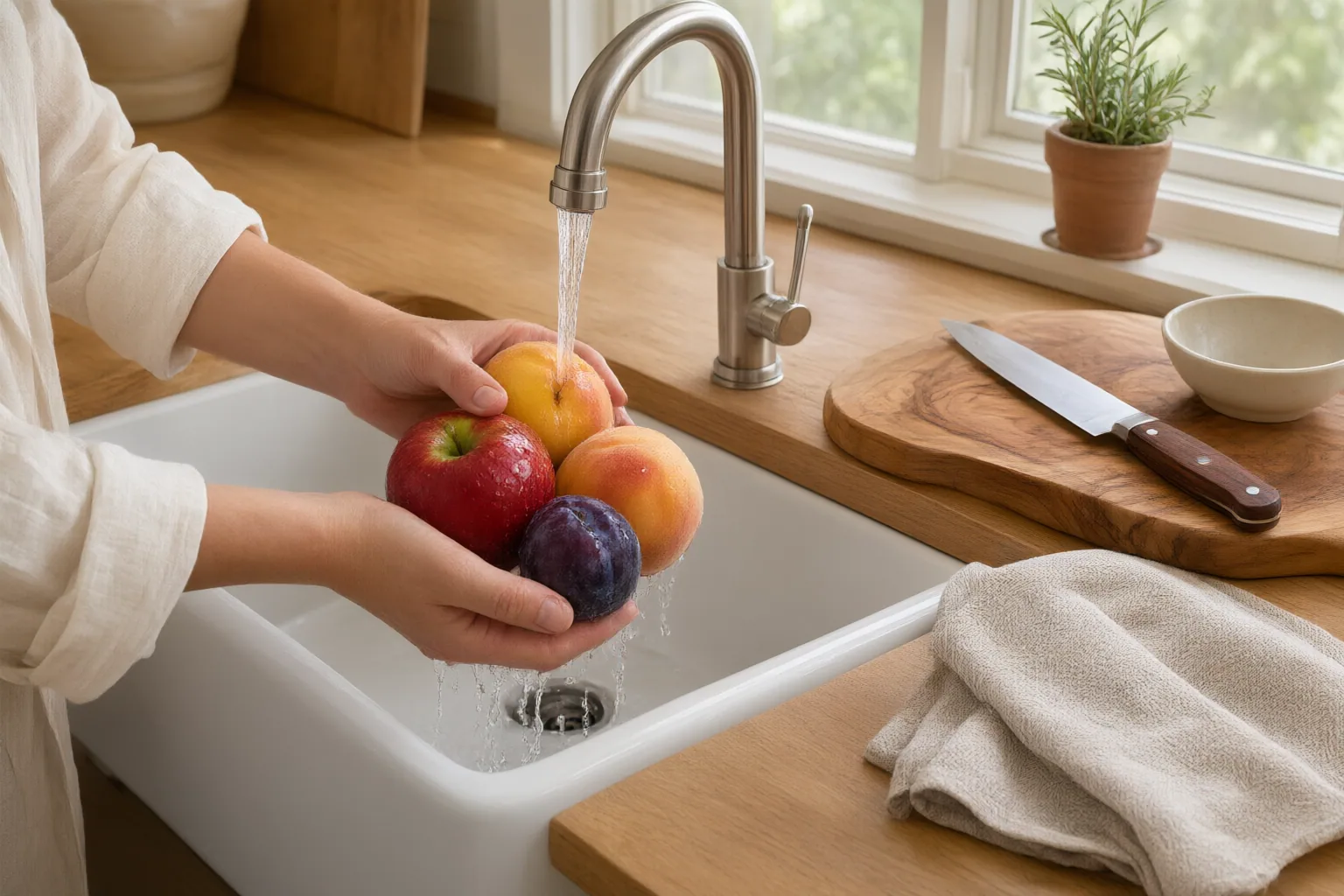
Wash fresh fruit thoroughly under running water immediately before preparing the pie filling—even if you plan to peel it. Use clean hands and equipment, dry the fruit with a clean towel, and never use soap or detergent.
Wash Fruit Immediately Before Pie Preparation
Fresh fruit should be washed under running water before it is cut, peeled, or otherwise prepared for a pie filling. Washing matters even when the skin will not be eaten because dirt and bacteria on the surface can be carried inward during peeling or cutting.
For household pie preparation, washing close to the time you will use the fruit is a practical approach. University of Minnesota Extension notes that rinsing during postharvest handling can severely shorten the shelf life of some fruits, including berries and tomatoes. That guidance concerns commercial postharvest practices, but it helps explain why washing those fruits well ahead of preparation may be undesirable. Keep them unwashed until you are ready to prepare the filling, then rinse them as directed by FDA guidance.
A Safe Step-by-Step Washing Routine
Begin by washing your hands with soap and warm water for at least 20 seconds. Inspect the fruit before proceeding: cut away bruised or damaged areas, and discard any fruit that looks rotten.
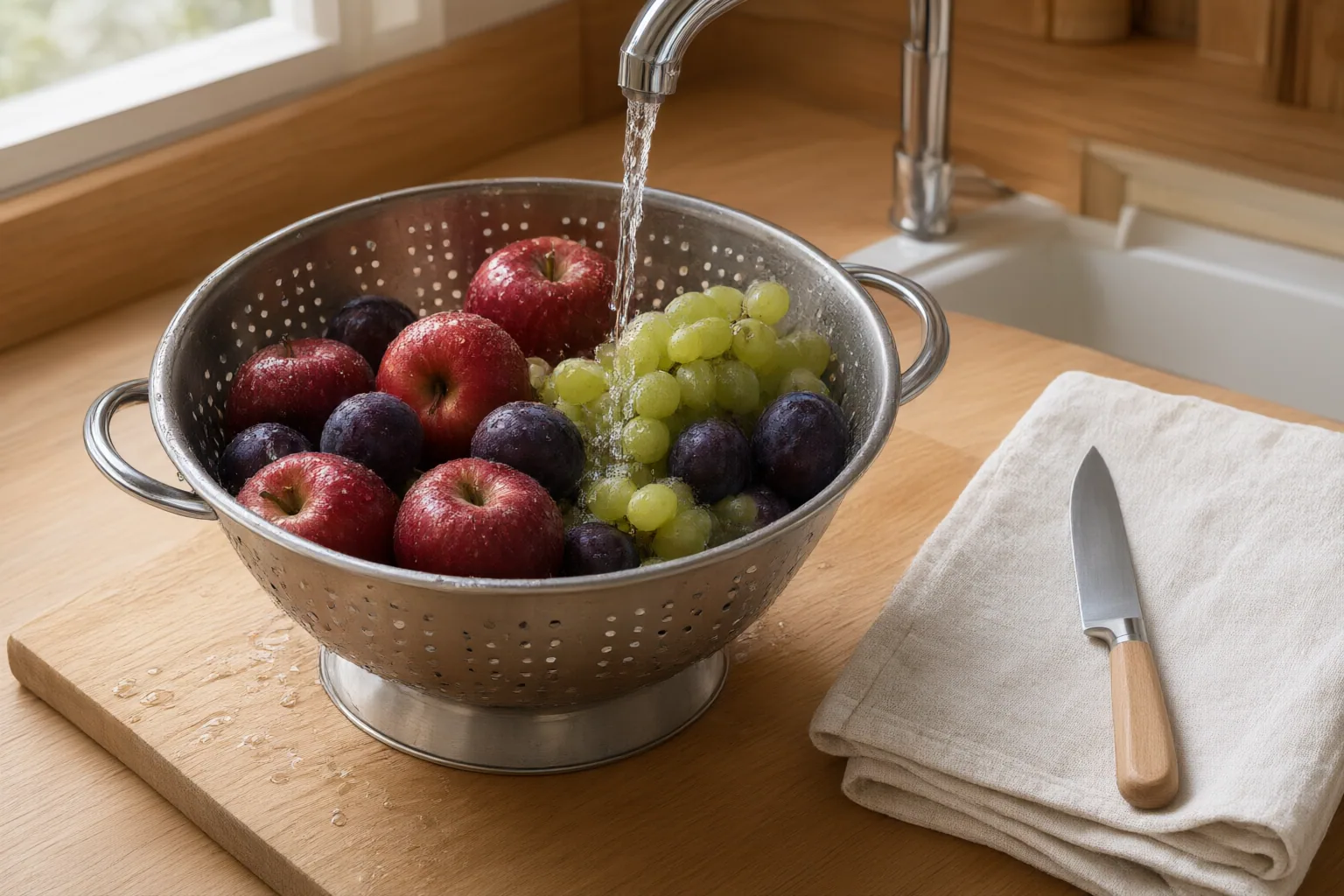
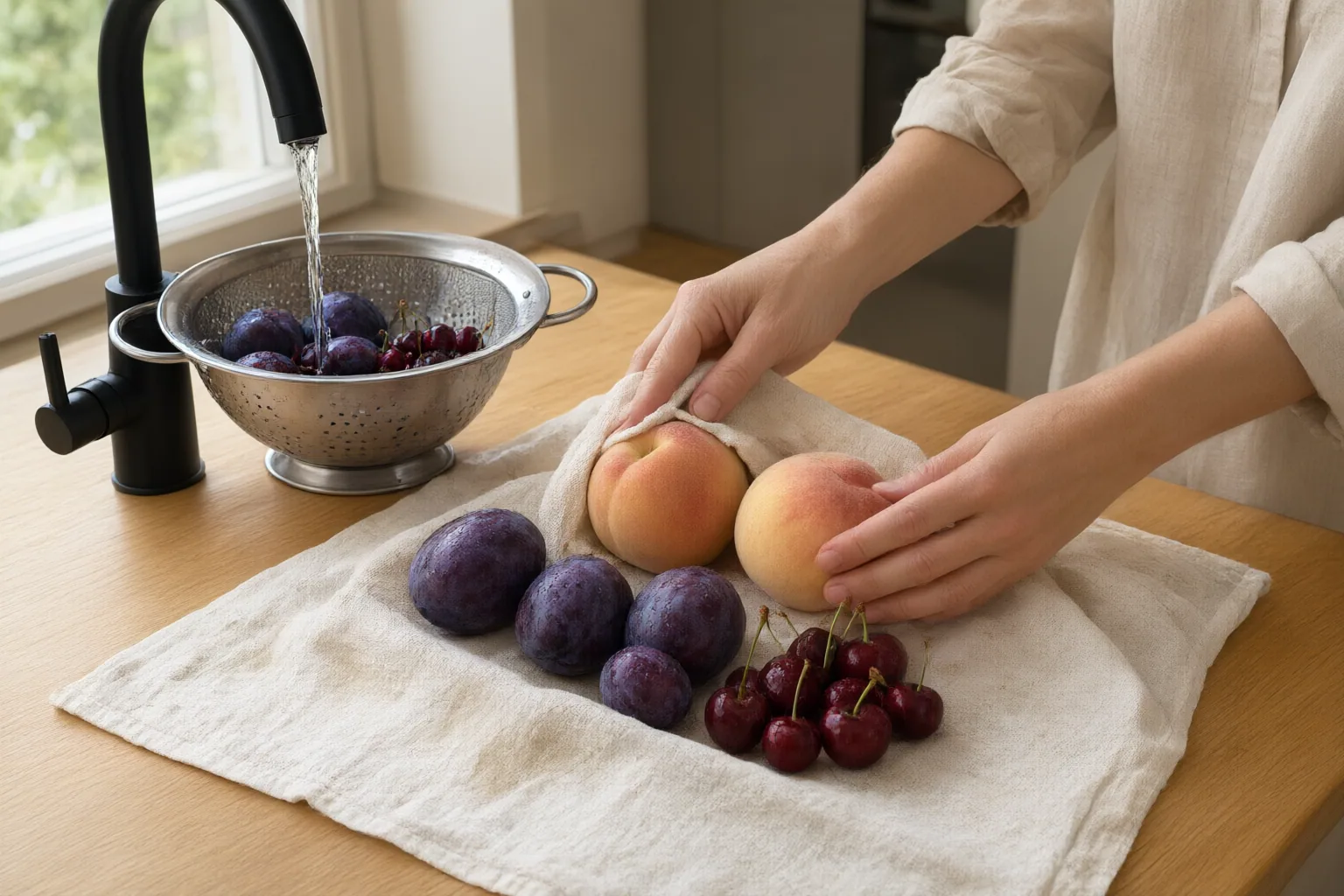
Rinse the fruit thoroughly under running water. Firm produce, such as melons, should be scrubbed with a clean produce brush. This is important even if the rind will be discarded, because cutting can move material from the surface toward the edible flesh. After washing, dry the fruit with a clean cloth towel or paper towel; FDA guidance says drying can further reduce bacteria on the surface.
Fruit labeled “pre-washed” or “ready-to-eat” can be used without another wash. If you choose to rinse it again, protect it from contact with unclean hands, utensils, counters, or cutting boards. Once the fruit is clean and dry, use clean equipment to peel, trim, and cut it for the filling.
Avoid Soap, Produce Washes, and Cross-Contamination
Do not wash fruit with soap, detergent, or a commercial produce wash. FDA guidance explains that porous produce can absorb soap or detergent, while the safety and effectiveness of residues from commercial produce washes are not established in that guidance. Running water is the recommended method.
Washing can reduce bacteria on fruit, but it does not eliminate them. Clean handling therefore remains important after rinsing. Keep fruit and the equipment used to prepare it separate from raw meat, poultry, and seafood. If a cutting board, dish, utensil, countertop, or other surface has been used for those raw foods, wash it with soap and hot water before it touches the fruit.
Clean hands also remain part of the routine. Wash them before preparing the fruit and again after preparation, particularly when moving between fruit and other kitchen tasks.
Conclusion
Wait until you are ready to make the filling, then inspect the fruit, rinse it thoroughly under running water, and dry it with a clean cloth or paper towel. Use a clean produce brush for firm fruit such as melons, but do not use soap, detergent, or commercial produce wash.
Before cutting the fruit, clear and clean the workspace. Wash your hands for at least 20 seconds, set out clean utensils and a clean cutting board, and keep raw meat, poultry, and seafood away from the preparation area.
Disclosures and limitations
- This article was prepared with AI assistance using the supplied FDA and University of Minnesota Extension research. The Extension material concerns commercial postharvest handling and is used only to clarify washing timing.
Related reading
Sources
- Brazilian Desserts — Rio & Learn
- Selecting and Serving Produce Safely — U.S. Food and Drug Administration
- Postharvest handling of fruit and vegetable crops in Minnesota — extension.umn.edu
- How to Keep Fruit Fresh | How to Freeze Fruit | Food Saver — Foodsaver