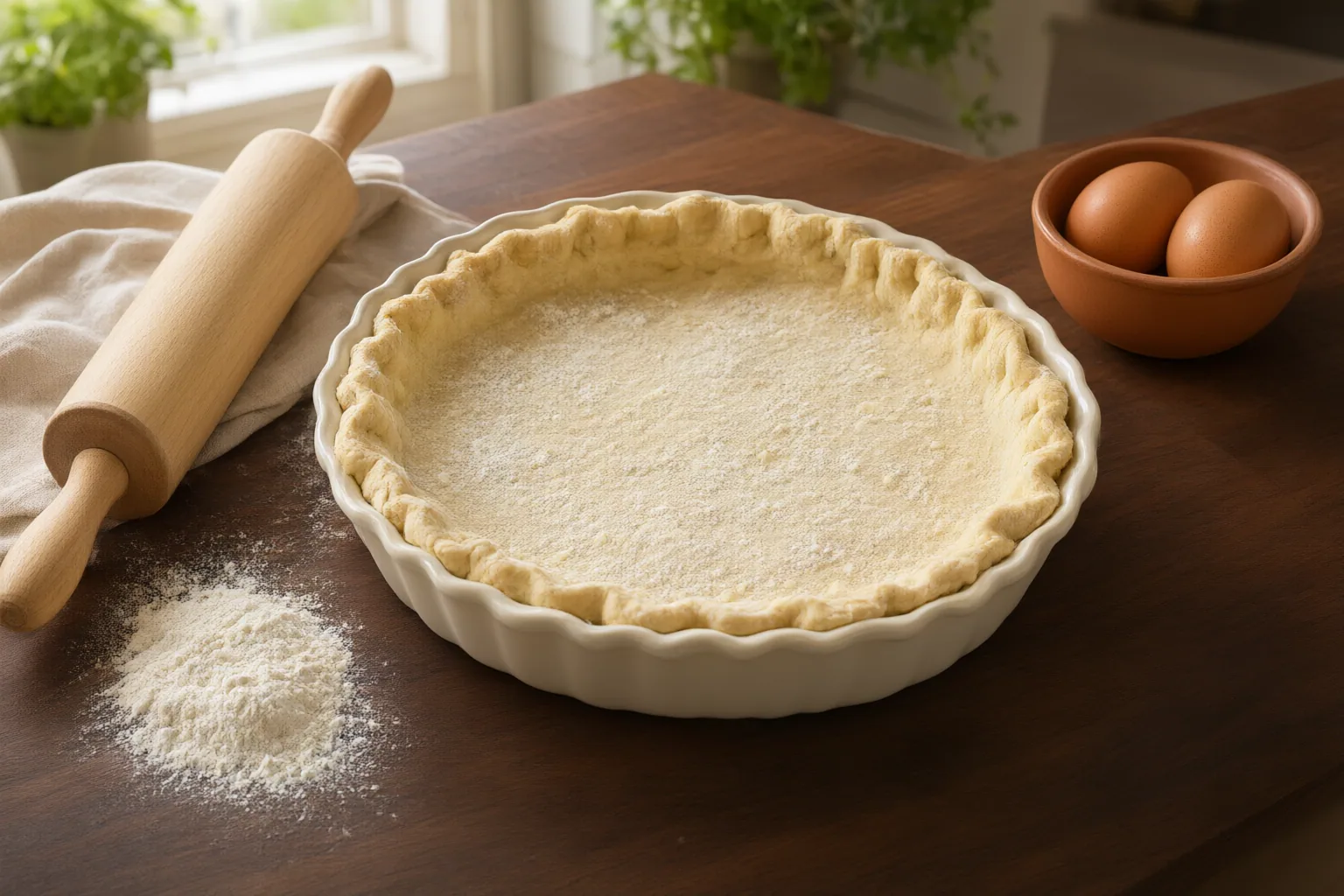
Do not taste ordinary raw pie dough before baking. Most flour is untreated and may carry food-poisoning germs, and dough containing raw egg can present an additional Salmonella risk. Follow the recipe or package directions and bake the dough for the specified time and temperature.
Why raw pie dough can carry harmful germs
Flour may not look like a raw ingredient, but the CDC says most flour is raw because it has not been treated to kill germs that can cause food poisoning, including E. coli and Salmonella. Contamination can occur before flour reaches the kitchen, and neither grinding grain nor bleaching flour kills harmful germs. Baking or cooking the flour is the step that kills them.
Eggs can create another hazard in recipes that use them. Raw or lightly cooked eggs may contain Salmonella, so tasting dough before it is baked can expose a baker to risks from both flour and eggs. The absence of an unusual smell, color, or texture does not change the raw status of those ingredients.
The CDC specifically lists pie crust among the doughs and batters that should not be eaten before baking. A small taste is still an exposure, so tasting is not an appropriate way to check flavor, seasoning, or readiness. Use the written recipe or package directions to determine the required baking time and temperature instead.
When “raw pie crust” does—and does not—mean edible
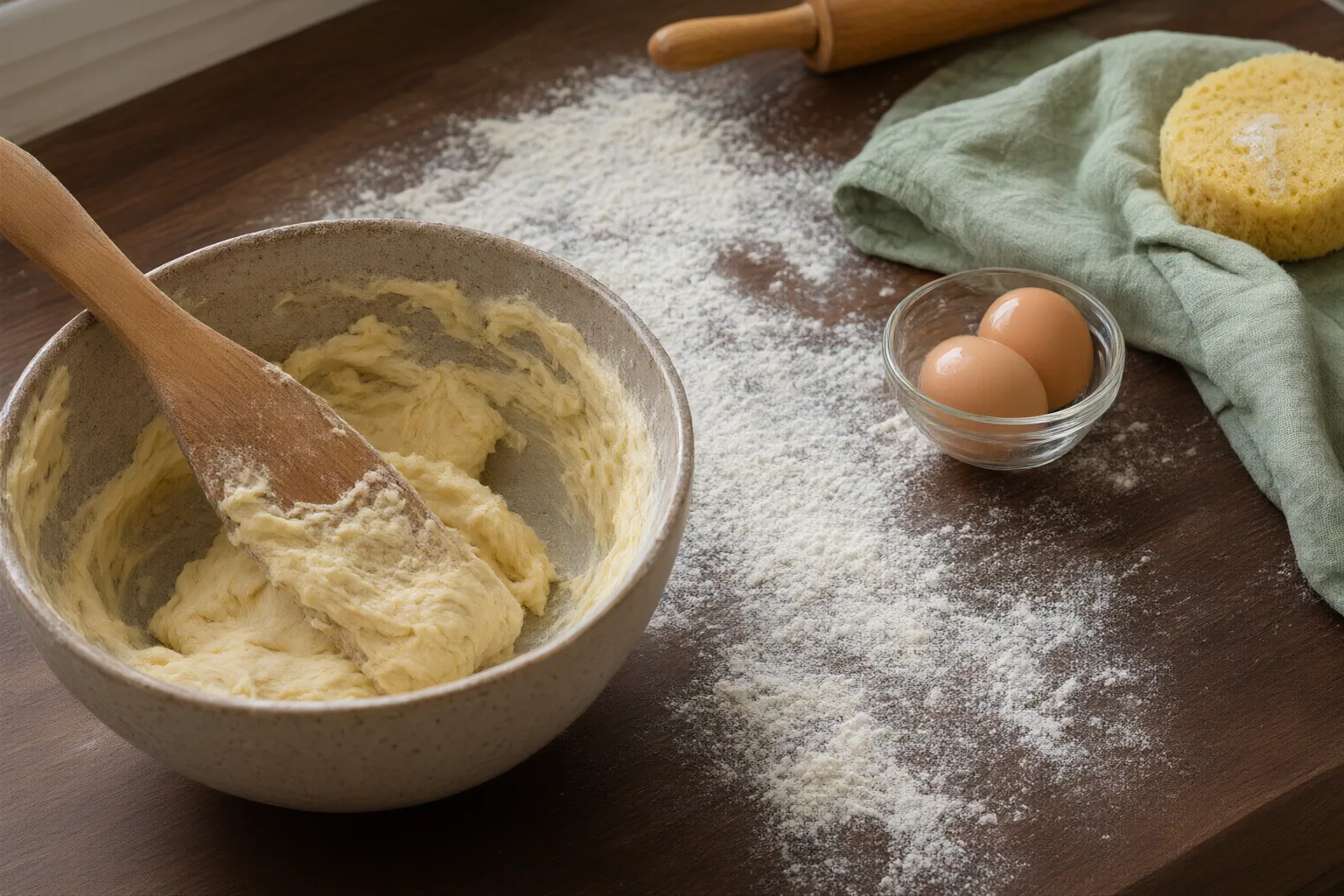
The phrase “raw pie crust” can be ambiguous. It may mean an ordinary flour-based crust that is still waiting to be baked, but some recipe publishers also use “raw pies” and “raw pie crust” for a separate raw-food recipe category. The phrase alone therefore does not establish that a dough is safe to eat without cooking.
Check the ingredient information, recipe instructions, and product label. Ordinary dough made with untreated flour should remain uncooked only temporarily on its way to the oven; it should not be sampled at that stage. If eggs are included, they add the separate concern associated with raw or lightly cooked eggs.
A commercially prepared dough intended to be eaten uncooked should be identified that way on its label. The CDC notes that edible dough products may be made with heat-treated flour and pasteurized eggs, or they may contain no eggs. Do not assume that a conventional refrigerated or homemade pie dough has those features. Unless the labeling specifically identifies it for uncooked consumption, follow its baking directions.
How to handle unbaked pie dough safely
Safe handling begins before the crust enters the oven. Follow the recipe or package directions for baking temperature and time rather than tasting the dough to decide whether it is ready. These directions—not appearance or a sample—provide the preparation guidance for that recipe or product.
Keep raw flour, eggs, and dough separate from foods that are ready to eat. Flour is powdery and can spread easily, so avoid letting it reach nearby foods or food-contact surfaces unnecessarily. After working with flour, eggs, or raw dough, wash your hands with soap and water.
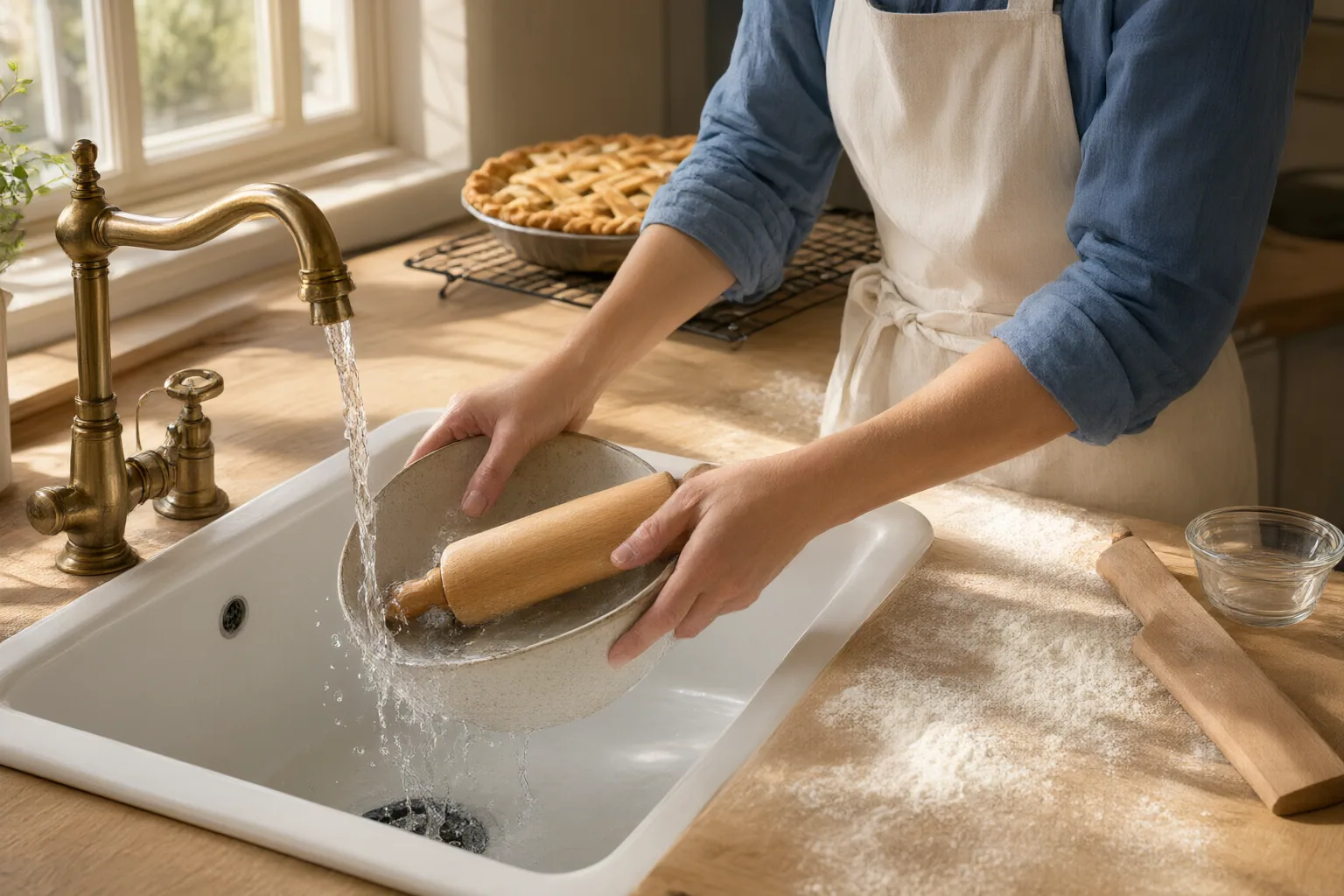
Clean every contacted item and surface as well. The CDC recommends washing bowls, utensils, countertops, and other surfaces with hot, soapy water after they have touched raw flour, eggs, or dough. This helps address flour that may have scattered beyond the mixing bowl.
Treat cleanup as part of the recipe rather than as a task to postpone. Put away raw ingredients, keep them apart from ready-to-eat food, wash your hands, and clean the work area after the dough is prepared. These steps reduce opportunities for raw ingredients to spread to food that will not receive a later cooking step.
Conclusion
Ordinary raw pie dough should not be judged safe by how it looks, smells, or feels. Most flour is untreated, and dough may also contain raw egg; baking or cooking is the control identified by the CDC for germs in flour. An exception should be based on explicit labeling that identifies a product as intended for uncooked consumption, not on the words “raw pie crust” alone.
Before serving your next crust, check its label and recipe, bake it for the specified time and temperature, then wash your hands and clean every surface and utensil that contacted the raw flour, eggs, or dough.
Disclosures and limitations
- This article was prepared with AI assistance from the supplied research package. Food-safety claims are based on the cited CDC source; the additional recipe source is used only to explain terminology.
- No products are recommended here, and no affiliate relationship influenced this guidance. Always follow the exact recipe or product-label directions.
Related reading
Sources
- Raw Flour and Dough — Food Safety
- The Rawtarian: Raw pie crust recipe — The Rawtarian: Simple, Satisfying Raw Recipes
- The Rawtarian: Easy raw pies — The Rawtarian: Simple, Satisfying Raw Recipes