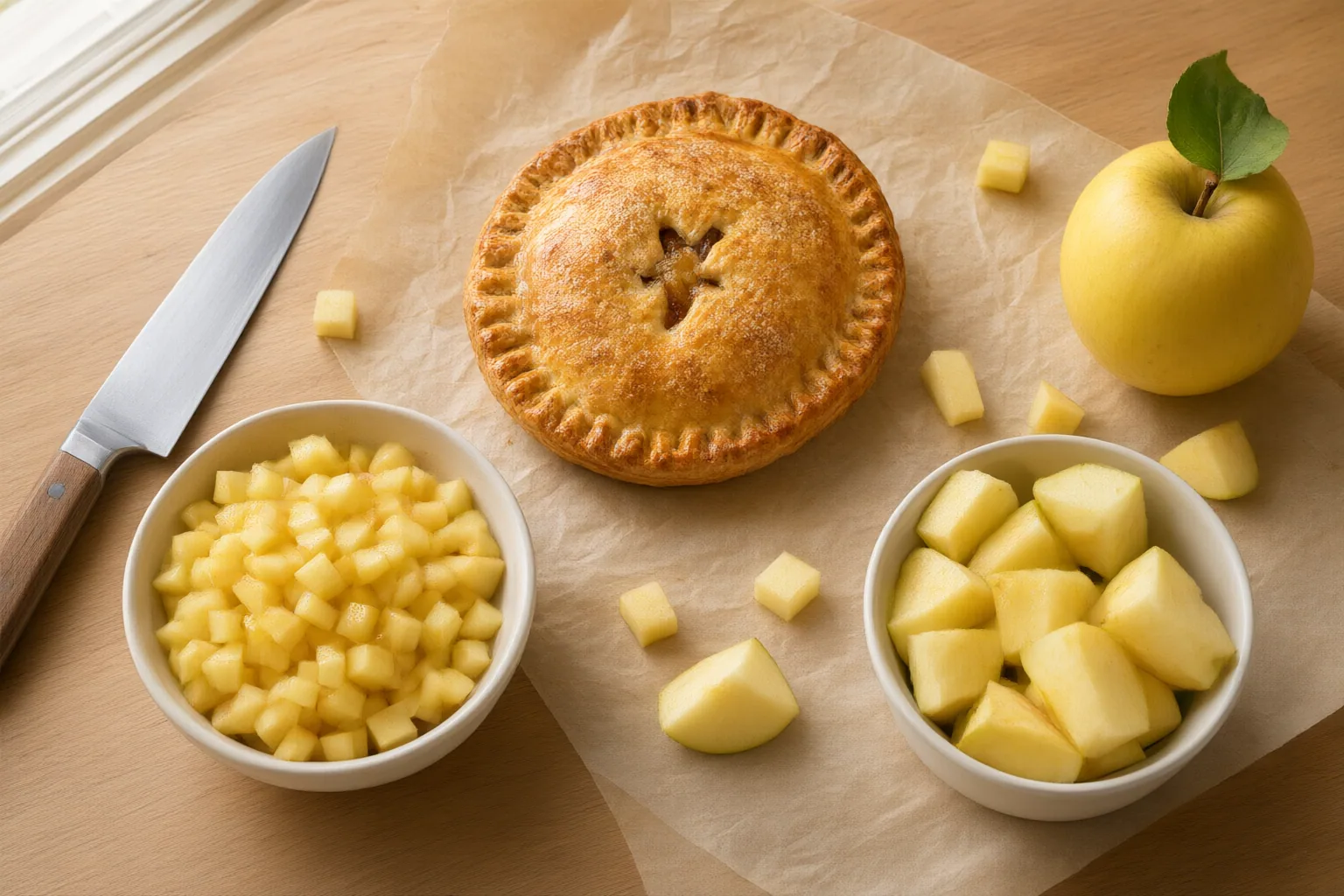
Fruit cut size can help shape how evenly a filling is distributed and how distinct each bite feels. Smaller pieces may support consistency, while larger pieces may create a more noticeable texture, but available sources do not establish an ideal size for pocket pies.
The Core Texture Tradeoff
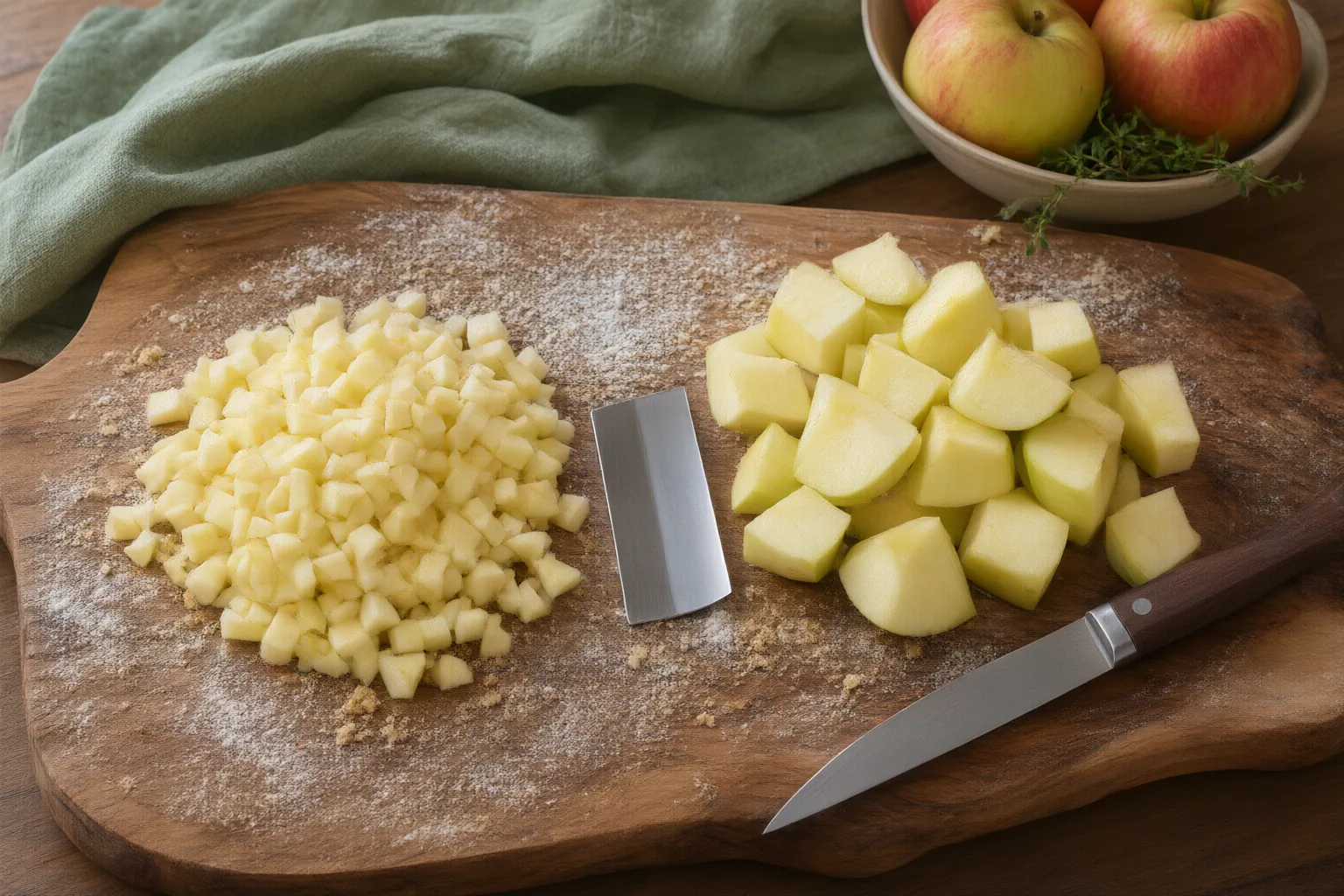
Choosing a fruit cut size involves balancing even distribution against a clearly recognizable bite. Bakery-filling guidance based on almond inclusions reports that smaller pieces distribute more evenly and create a more consistent bite, while larger pieces provide a stronger crunch cue. This offers a useful framework for thinking about pocket pie filling texture: a finer cut may favor uniformity, whereas a coarser cut may make individual pieces more apparent.
That evidence is not a direct test of fruit in pocket pies, however. Almonds and fruit differ, and the sources do not compare finished pocket pies made with several fruit cuts. The documented tradeoff should therefore guide cautious experimentation rather than serve as a proven formula for selecting a fruit-piece size.
Why Smaller and Larger Pieces Behave Differently
The bakery-filling guidance connects smaller pieces with greater surface area. In the almond example, that can accelerate moisture pickup and softening. Very fine particles can also contribute to a pasty mouthfeel. Although these outcomes have not been demonstrated for fruit pocket pies by the cited sources, they identify useful qualities to watch when assessing a finer cut: whether pieces remain perceptible, whether the bite feels consistent, and whether an abundance of fines obscures the intended texture.
Larger almond pieces create a stronger crunch cue, but the same source associates them with greater risks of breakage, segregation, and depositor clogging. Those handling concerns come from bakery-filling production and should not be treated as direct findings about home-prepared fruit. Still, the comparison highlights the central decision for a baker: prioritize a more evenly distributed inclusion or a more pronounced piece-by-piece texture. Neither direction is universally better, and the evidence does not supply a fruit-specific threshold separating “small” from “large.”
Consistency Matters Beyond the Target Cut
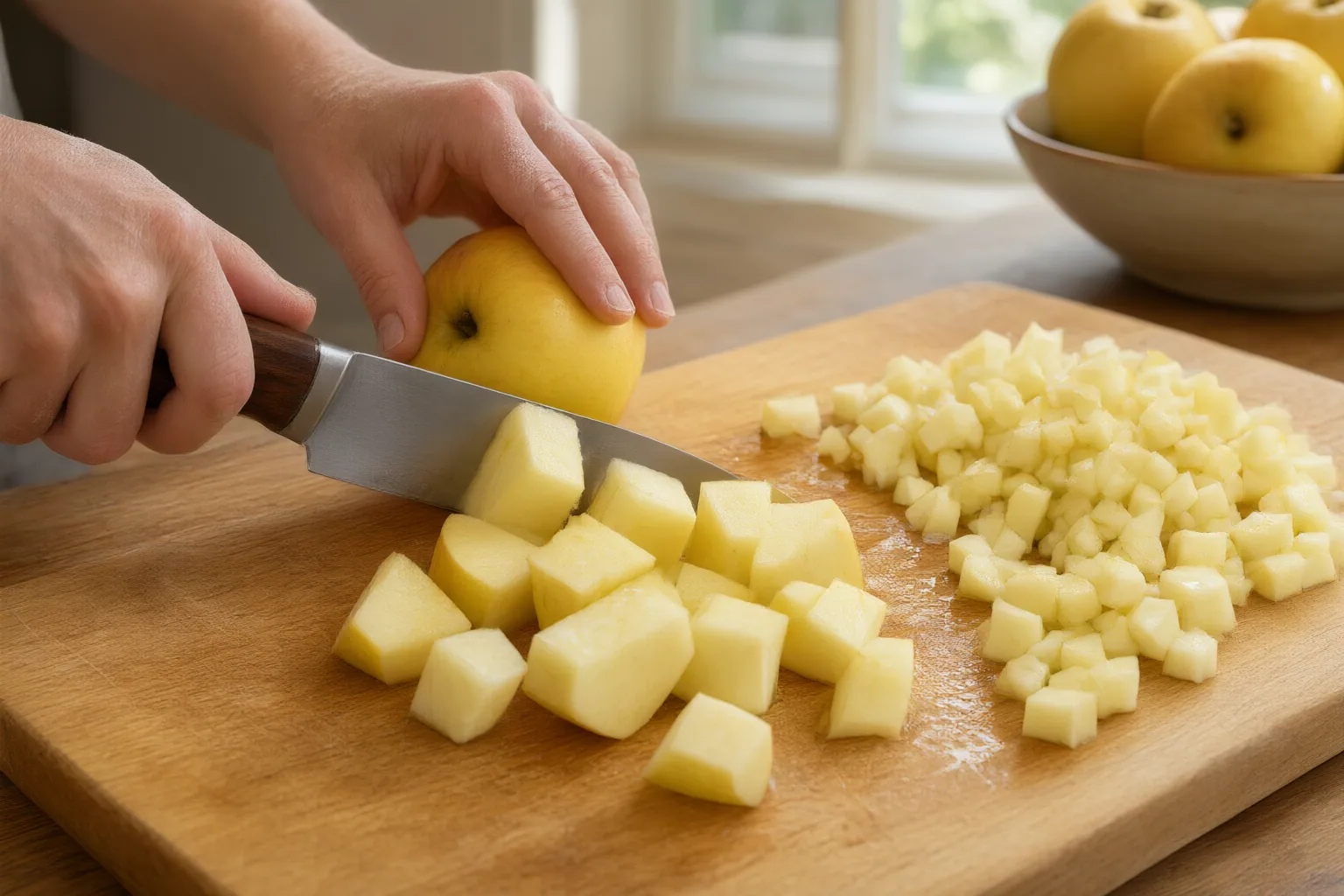
A target measurement alone does not describe an entire batch. Bakery-filling guidance recommends evaluating the distribution of piece sizes because controlled sizing can reduce texture variation and handling problems. A mixture containing many fines alongside much larger pieces may produce less consistent bites than a batch clustered more closely around one intended cut. For practical preparation, reasonable uniformity may therefore matter as much as the nominal size selected.
Process-specific instructions also need to stay in context. One canned peach pie-filling recipe directs cooks to cut peach slices no thicker than 1 centimeter, or 1/2 inch. Its stated concern is that thicker slices can retain too much air, which may escape during canning and contribute to overflow. That limit is relevant to the cited canning method; it is not evidence that a 1-centimeter slice produces the best baked pocket pie texture. It should not be converted into a universal pocket-pie rule.
Conclusion
Use fruit cut size as a controlled preparation choice, not as a guaranteed texture fix. If even distribution is the priority, begin with a relatively smaller, reasonably uniform cut while limiting extreme fines. If a more distinct piece is the priority, choose a larger cut while avoiding unusually oversized pieces and watching for uneven distribution. These are cautious applications of broader inclusion-size guidance, not fruit-specific pocket-pie test results.
The available evidence does not identify an ideal fruit cut size or quantify how much a size change will alter a finished pocket pie. A useful next step is to choose one target cut, keep the batch as uniform as practical, and record the result after baking. On the next batch, change only the cut size and compare the texture rather than changing several preparation choices at once.
Disclosures and limitations
- This article was prepared with AI assistance from the supplied research package and was limited to the cited bakery-filling guidance and canned peach pie-filling source. The sources do not report a controlled fruit cut-size comparison in pocket pies.
Related reading
Sources
- Canned Peach Pie Filling — Healthy Canning in Partnership with Facebook Group Canning for beginners, safely by the book
- Using Almond Pieces in Bakery Fillings: Migration Control and Texture | Atlas Nut Academy — almondsandwalnuts.com