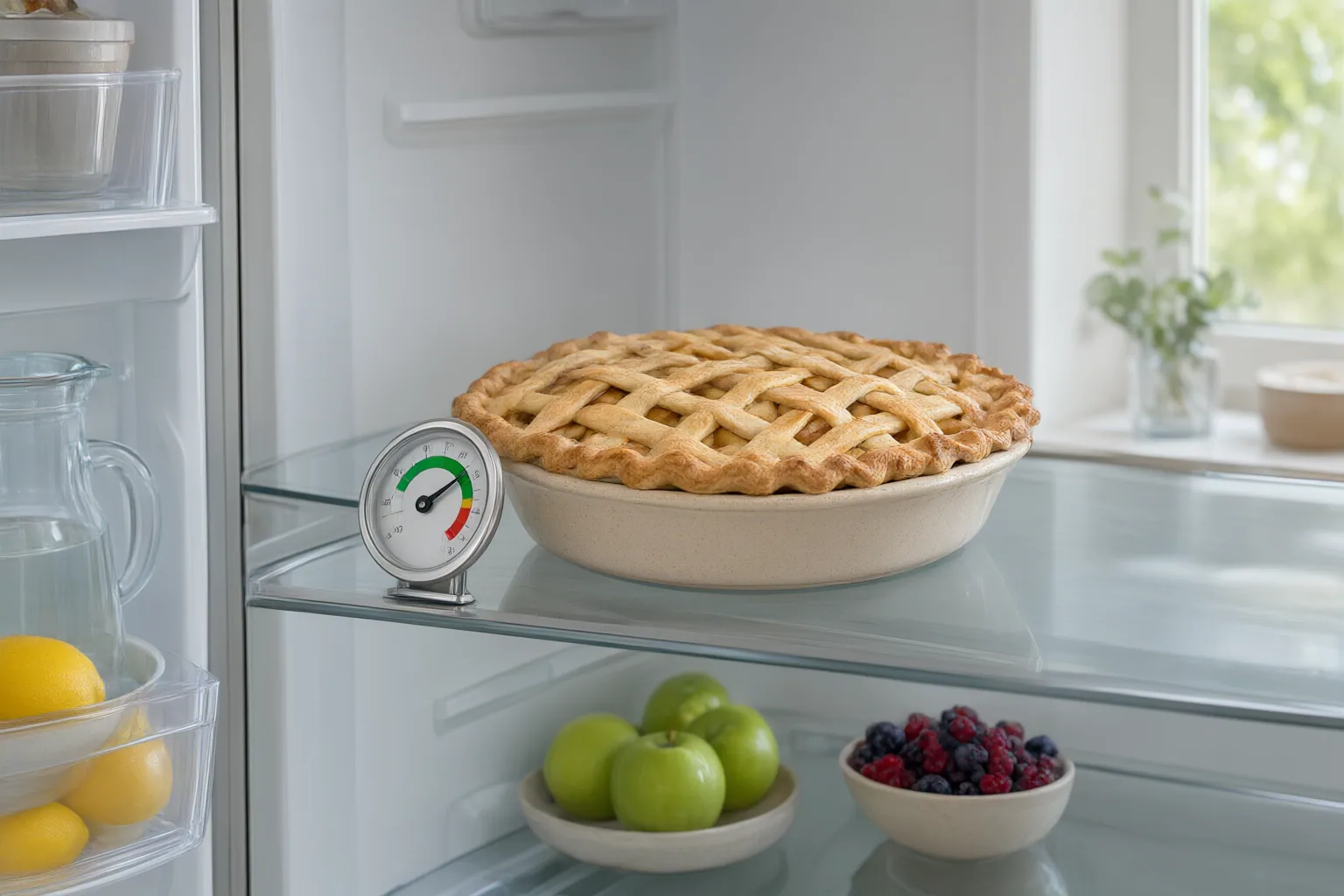
Before storing a homemade pie, check the actual refrigerator or freezer temperature with a separate appliance thermometer. Aim for 40 °F or below in the refrigerator and 0 °F in the freezer, leave space for cold air to circulate, and follow the pie’s recipe or label for its specific storage requirements.
Check the Actual Temperature, Not Just the Control Setting
An appliance control setting does not necessarily tell you the actual temperature inside its food-storage compartment. The FDA recommends using freestanding appliance thermometers: place one in the refrigerator and another in the freezer so that each compartment can be checked independently.
Read both thermometers before putting away a homemade pie. This provides a direct measurement of the storage conditions instead of relying only on a numbered dial or other control. Check the readings often and adjust the appliance settings when needed. Regular monitoring also helps reveal a temperature change that might otherwise go unnoticed.
This check establishes whether the appliance has reached the general targets for cold food storage. It does not determine how a particular pie should be packaged, whether it belongs in the refrigerator or freezer, or how long it can be kept. Those decisions should follow the pie recipe or product label, especially when the filling contains perishable ingredients.
Use the FDA Refrigerator and Freezer Targets
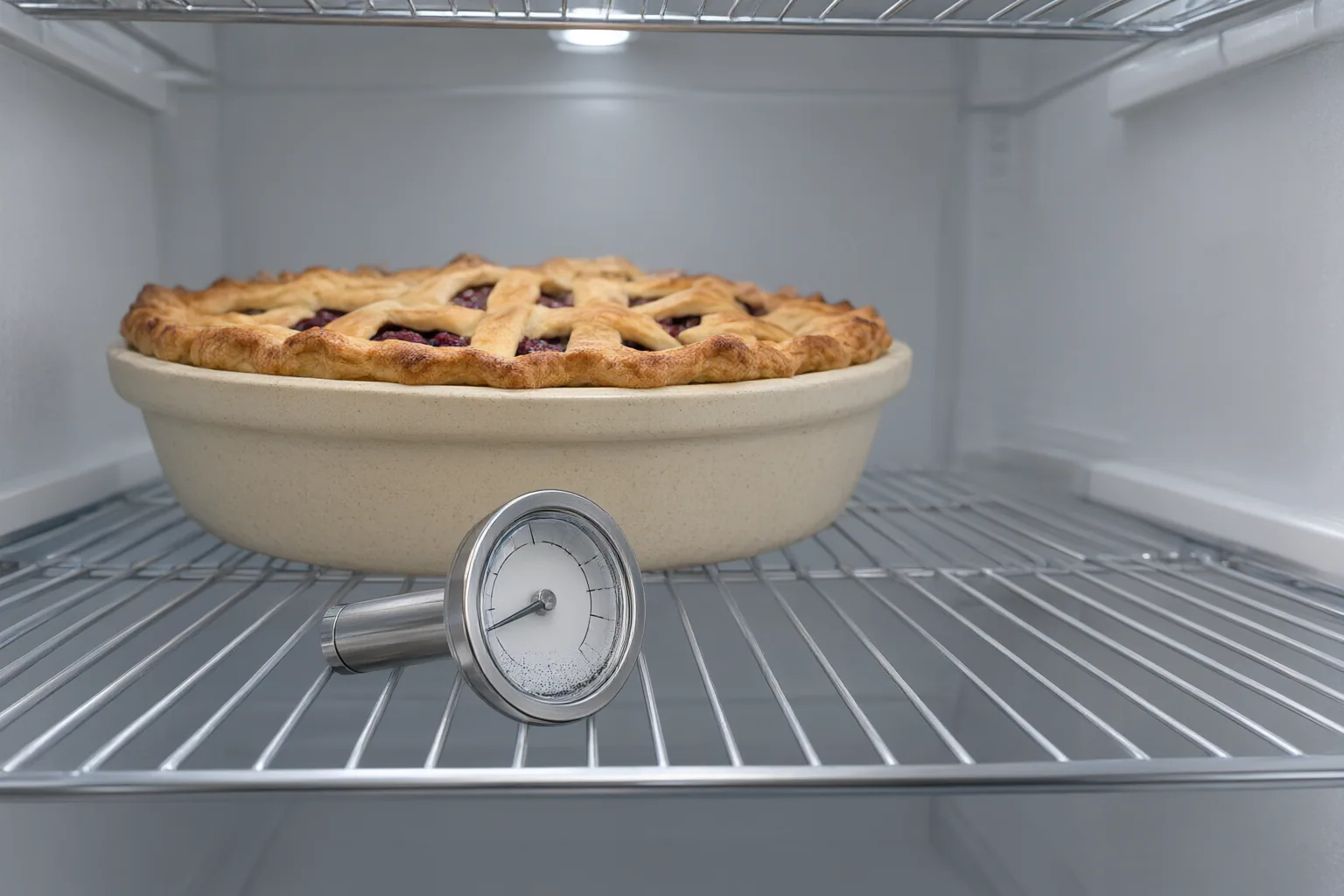
The FDA says a refrigerator should be kept at 40 °F or below and a freezer at 0 °F. TCL likewise identifies 0 °F (-18 °C) or below as the freezer target. Compare the separate thermometer in each compartment with the appropriate target rather than assuming that the appliance setting has produced the intended temperature.
If a reading is too warm, adjust the appliance controls as necessary and continue monitoring the thermometer. TCL also advises monitoring and regularly calibrating refrigerator/freezer thermometers so their readings remain accurate. A thermometer therefore works best as an ongoing check, not as a one-time confirmation made only when a pie is ready for storage.
These temperatures are general cold-storage benchmarks from the supplied sources. They do not provide pie-specific storage times or override recipe directions. Once the compartment is at its target, use the recipe or label to decide the correct storage method and duration for the homemade pie.
Leave Space for Cold Air to Circulate
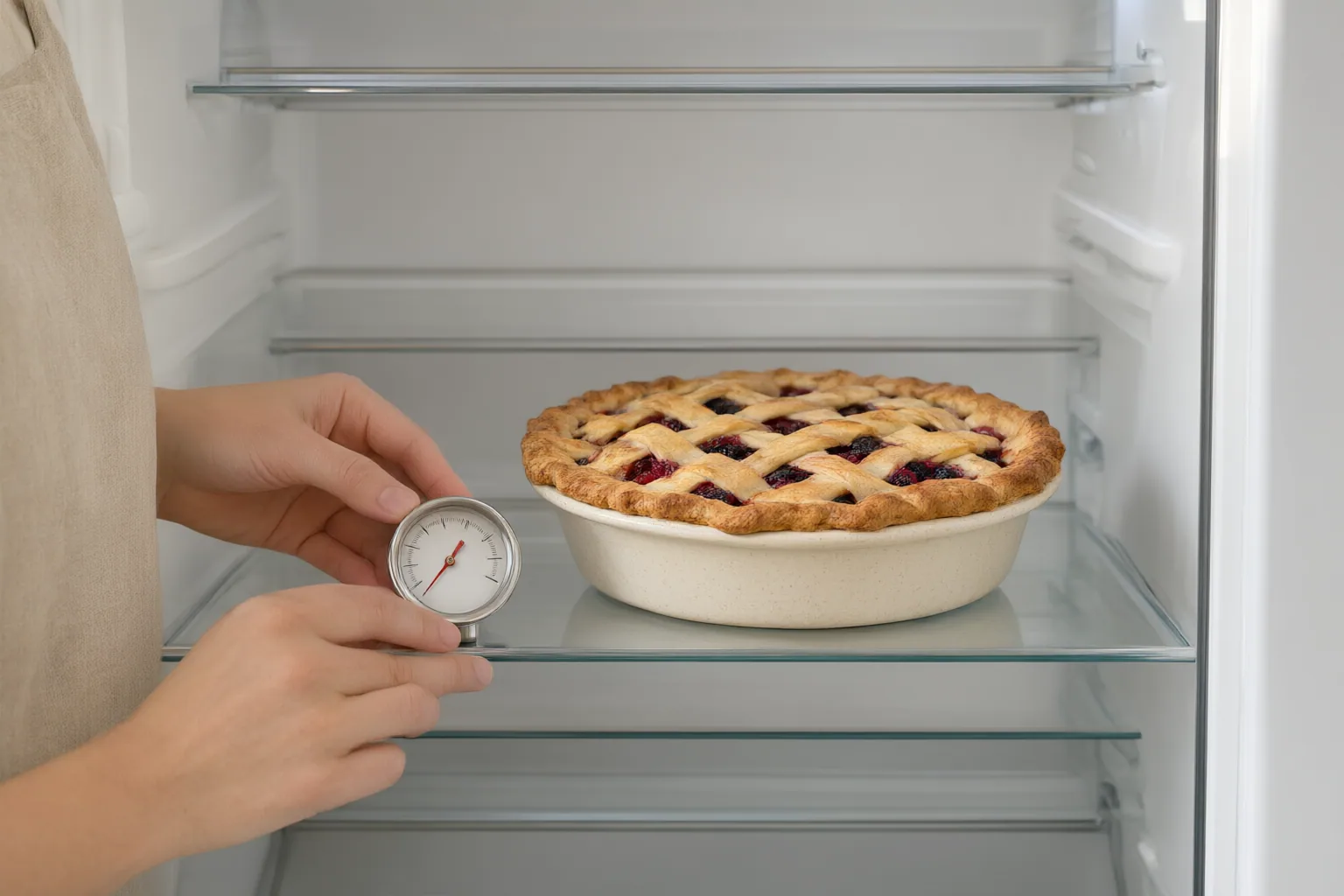
A suitable thermometer reading is important, but the space inside the appliance also matters. The FDA advises against overpacking a refrigerator because cold air must circulate around food to keep it properly chilled. TCL similarly recommends leaving enough room in refrigerators and freezers for air circulation.
Before adding a pie, look for tightly packed containers or packages that leave little open space. Rearrange the contents so cold air can move around the stored food. This practical check is useful in both compartments: a crowded refrigerator or freezer can make proper chilling more difficult even when its control has been set to the intended level.
After making room, continue using the compartment thermometer to verify the actual temperature. Do not treat extra space as a substitute for a temperature reading, and do not treat a correct reading as a substitute for the pie’s recipe or label. Temperature, airflow, and pie-specific instructions serve different purposes in a safe storage routine.
Conclusion
Prepare the cold-storage space before putting away a homemade pie. Keep a separate freestanding appliance thermometer in the refrigerator and freezer, check the readings often, and adjust the controls when necessary. Verify 40 °F or below for the refrigerator and 0 °F for the freezer, while keeping enough open space for cold air to circulate around food.
The supplied guidance covers general food-storage conditions rather than the needs of every pie. A recipe or product label should govern whether a particular pie needs refrigeration or freezing and how long it may be stored. This distinction is especially important for pies with perishable fillings because the general temperature targets do not establish a pie-specific storage period.
Before storing your next pie, read both compartment thermometers, correct any temperature or crowding problem, and then follow the recipe or label for the pie’s specific storage method and duration.
Disclosures and limitations
- This article was prepared with AI assistance from the supplied FDA and TCL source material and was written within those sources’ evidence limits.
- No products are recommended here, and no affiliate relationship is represented. Pie-specific storage decisions should follow the applicable recipe or product label.
Related reading
Sources
- Are You Storing Food Safely? Storage Basics and Freezer Facts — tcl.com
- Refrigerator Thermometers – Cold Facts about Food Safety — U.S. Food and Drug Administration
- Safely Storing Dairy Products: Proper Refrigerator and Freezer… — localmeatmilkeggs.org