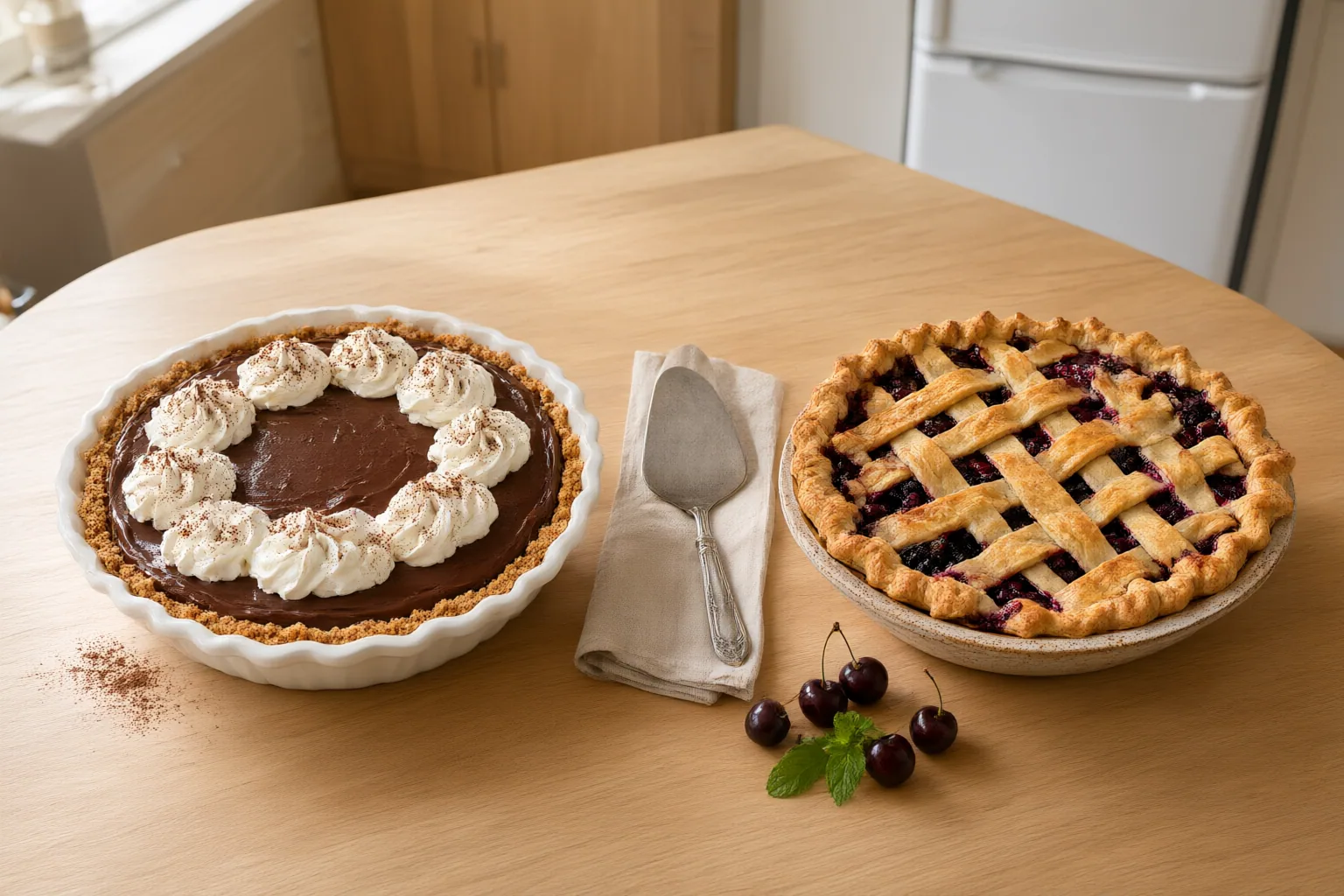
Choose pie storage by identifying the filling first. Pies containing eggs or dairy, including cream and custard styles, generally require refrigeration after cooling, while fruit pies have distinct counter and refrigerator guidance. Always follow a product label or recipe when it gives more specific directions.
Start With the Filling Type
The filling is the practical starting point when choosing storage methods. First separate pies containing eggs or dairy from fruit-filled pies. Greatist places cream, custard, pumpkin, mousse, chiffon, and other egg- or dairy-containing pies in the group that should be refrigerated after cooling. It gives fruit pies a different storage window, including limited room-temperature storage.
This distinction matters because the word “pie” covers fillings with different handling needs. Do not assume that storage guidance for a basic fruit pie also applies to a cream or custard pie. Check the product label or recipe before storing the pie, since it may provide directions specific to its ingredients or preparation. If those directions are more cautious than general guidance, follow them.
Cream and Custard Pies: Refrigerate After Cooling
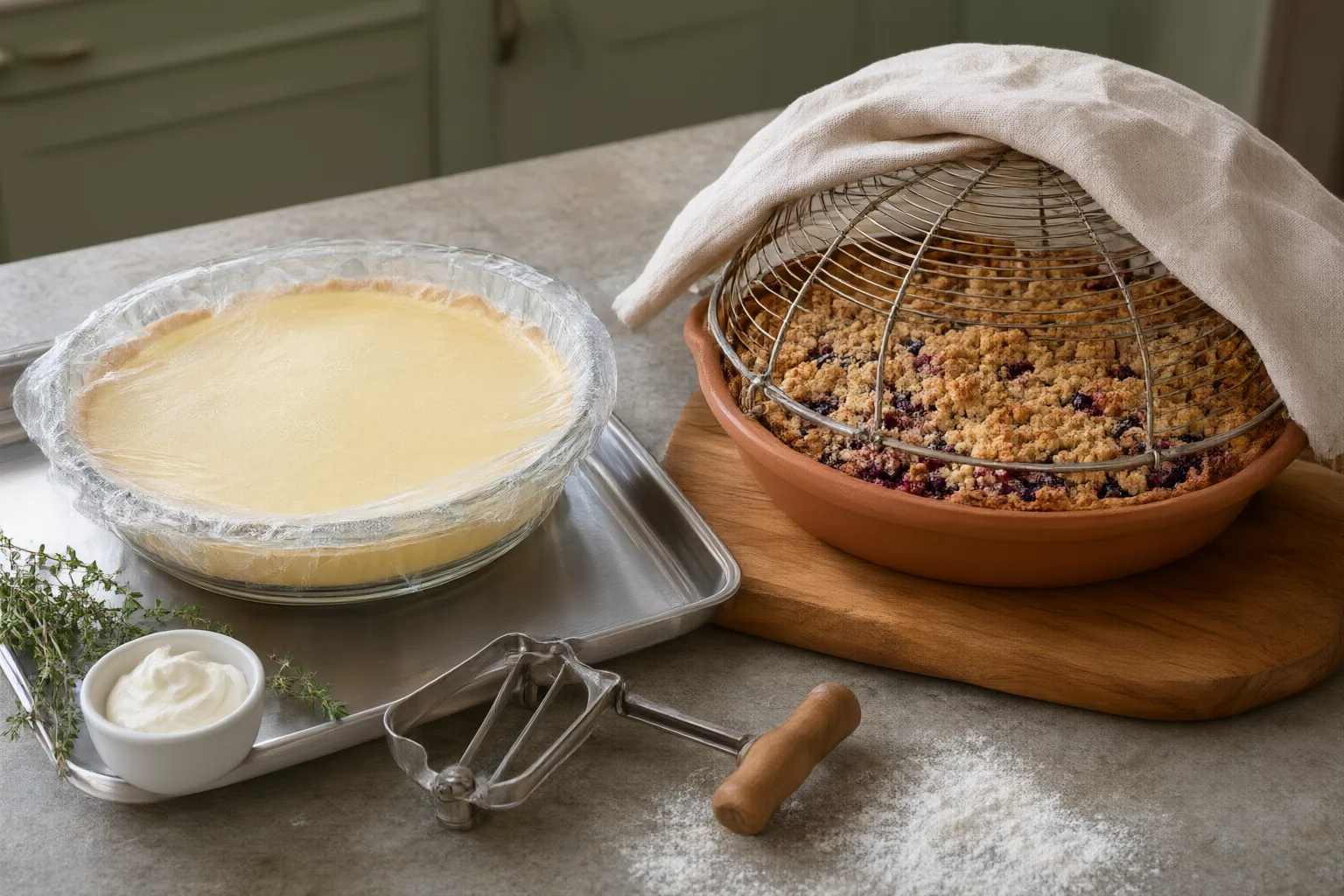
Greatist advises refrigerating cream and custard pies after they have cooled. Its refrigerated category also includes pumpkin, mousse, chiffon, and other pies containing eggs or dairy. For a mixed or unfamiliar pie, inspect the ingredient description, label, or recipe rather than deciding from the crust or appearance alone.
Room-temperature time is especially important for pies treated as perishable. Greatist reports a USDA recommendation that perishable food should be discarded after more than two hours at room temperature. Because the supplied research includes that guidance through Greatist rather than a separate USDA source, it should be understood as a recommendation attributed to USDA by that article.
Plan storage before serving: allow the pie to cool as directed, refrigerate it, and limit unnecessary time on the counter. If a product label or recipe specifies a different cooling process or a shorter room-temperature limit, use those instructions. When the filling category is uncertain, do not automatically apply the more permissive fruit-pie timing.
Fruit Pies: Counter and Refrigerator Timing
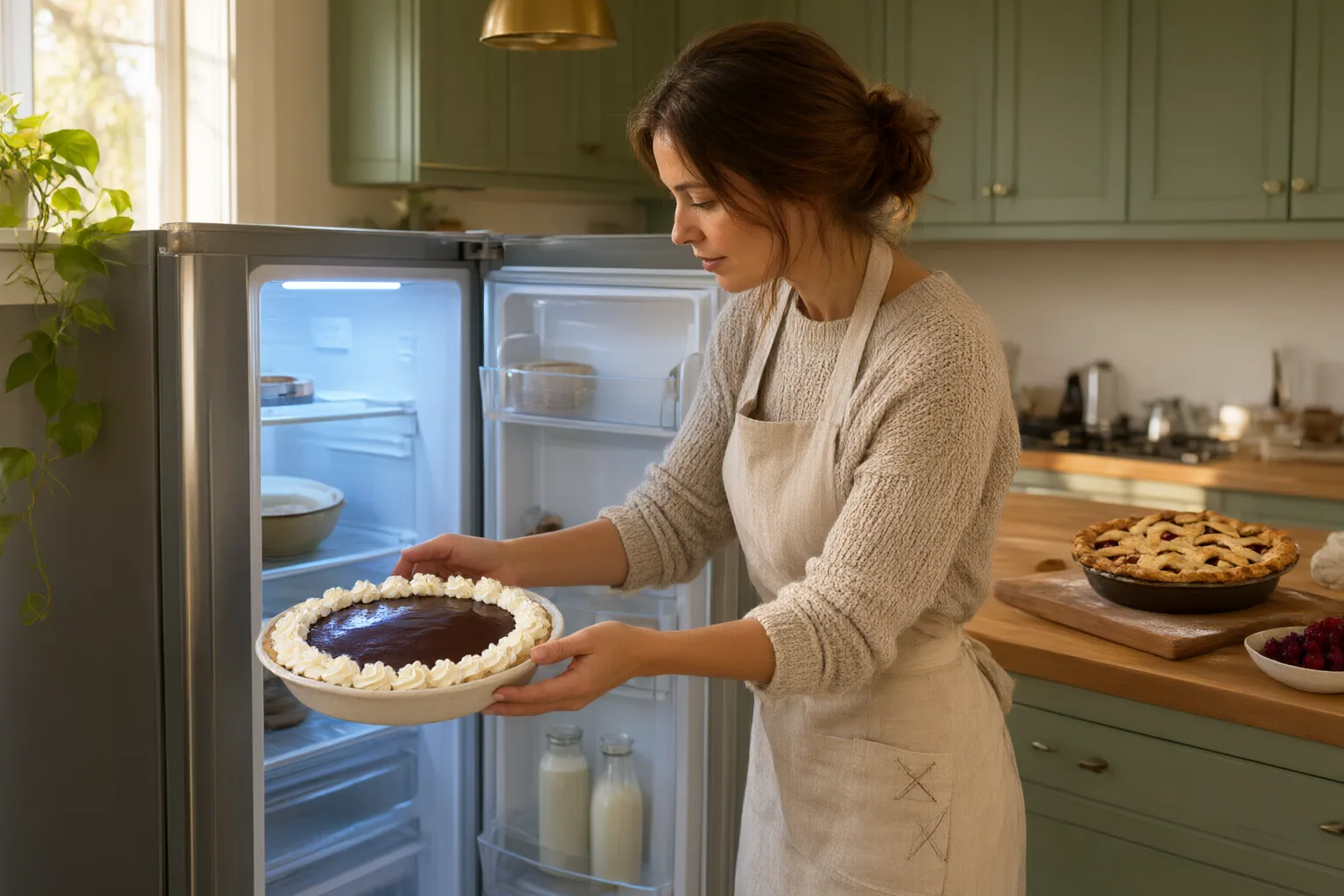
Greatist says fruit pies can remain at room temperature for up to two days. After that period, its guidance is to wrap them and refrigerate them for up to another two days. This creates a clear sequence for a pie that is genuinely fruit-filled: a limited counter period first, followed by wrapped refrigerator storage.
Confirm the category before using that timeline. A pie that combines fruit with custard, cream, eggs, or dairy should not automatically be treated like a basic fruit pie merely because fruit appears in its name. The research does not provide separate rules for every possible combination, so the product label or recipe should resolve more specific cases.
Keep track of how long the pie has already been stored instead of restarting the timeline when it is moved. The cited guidance describes up to two days at room temperature and then up to two additional days wrapped in the refrigerator; it does not support an unlimited counter-to-refrigerator cycle.
Conclusion
The central storage split is straightforward: Greatist advises refrigerating cooled pies containing eggs or dairy, including cream and custard styles, while giving fruit pies a limited counter period followed by wrapped refrigeration. Identifying the actual filling prevents fruit-pie guidance from being applied to a more perishable pie.
Freezing also depends on pie type. Greatist identifies fruit, pumpkin, and pecan pies as suitable candidates for freezing, but advises against freezing mousse, custard, and meringue pies. For pies being frozen, it recommends wrapping them first in plastic and then in foil to help reduce freezer burn. Suitability for freezing does not replace the need to follow any product-specific directions.
Before putting a pie on the counter, in the refrigerator, or in the freezer, identify its filling and check its label or recipe. Then use the storage method and timing that correspond to that pie rather than relying on a single rule for every variety.
Disclosures and limitations
- This article was prepared with AI assistance from the supplied research package and approved content plan. Pie-storage claims are attributed to the cited Greatist source, which relays some recommendations from other organizations.
- No product recommendations or affiliate offers are included. Readers should follow the exact product label or recipe when it provides more specific storage instructions.
Related reading
Sources
- Choosing an AWS storage service – AWS Decision Guides — docs.aws.amazon.com
- 10 Key Factors to Consider When Selecting a Data Storage Option | IntelligentHQ — IntelligentHQ
- Can You Store Pies Without Them Becoming Inedible? Yep — Greatist