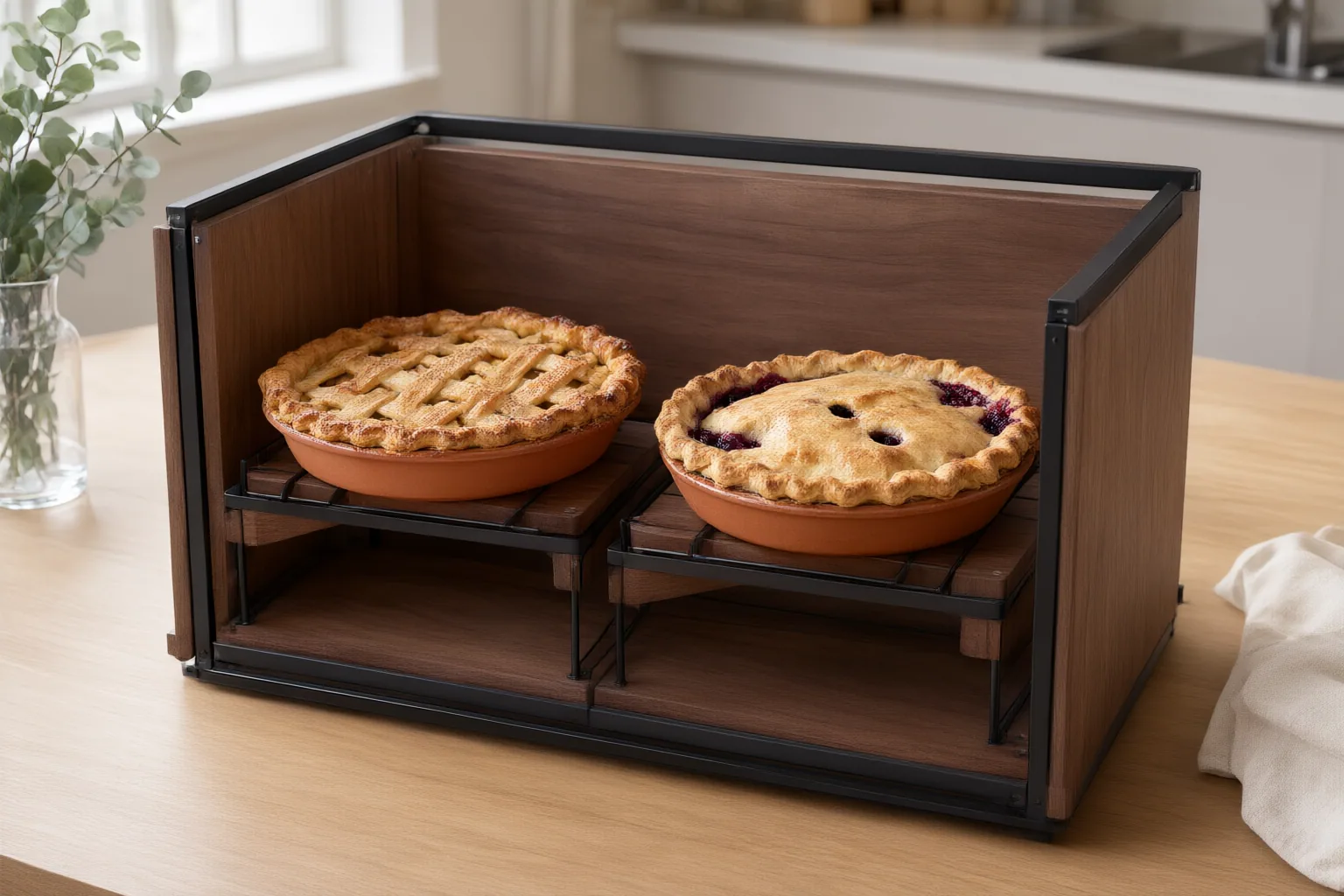
To carry two pies without stacking weight on either crust, plan a separate supported position for each pie, limit side-to-side movement, and direct any vertical load through rigid packaging structures. This is a source-based planning approach, not a tested transport procedure or endorsement of a particular carrier.
The Core Transport Principle
Treat each pie as an independently supported item. Neither pie, its lid, nor another part of the arrangement should press on the other crust. If one pie must sit above the other, the upper load should be carried around the pies by a rigid divider, shelf, frame, or container edges, with clearance above both crusts.
The cited crust source discusses weights during baking rather than transportation, while the packaging source concerns industrial trays. Together, they support attention to shape, retention, and load paths, but they do not establish a tested method for carrying finished pies.
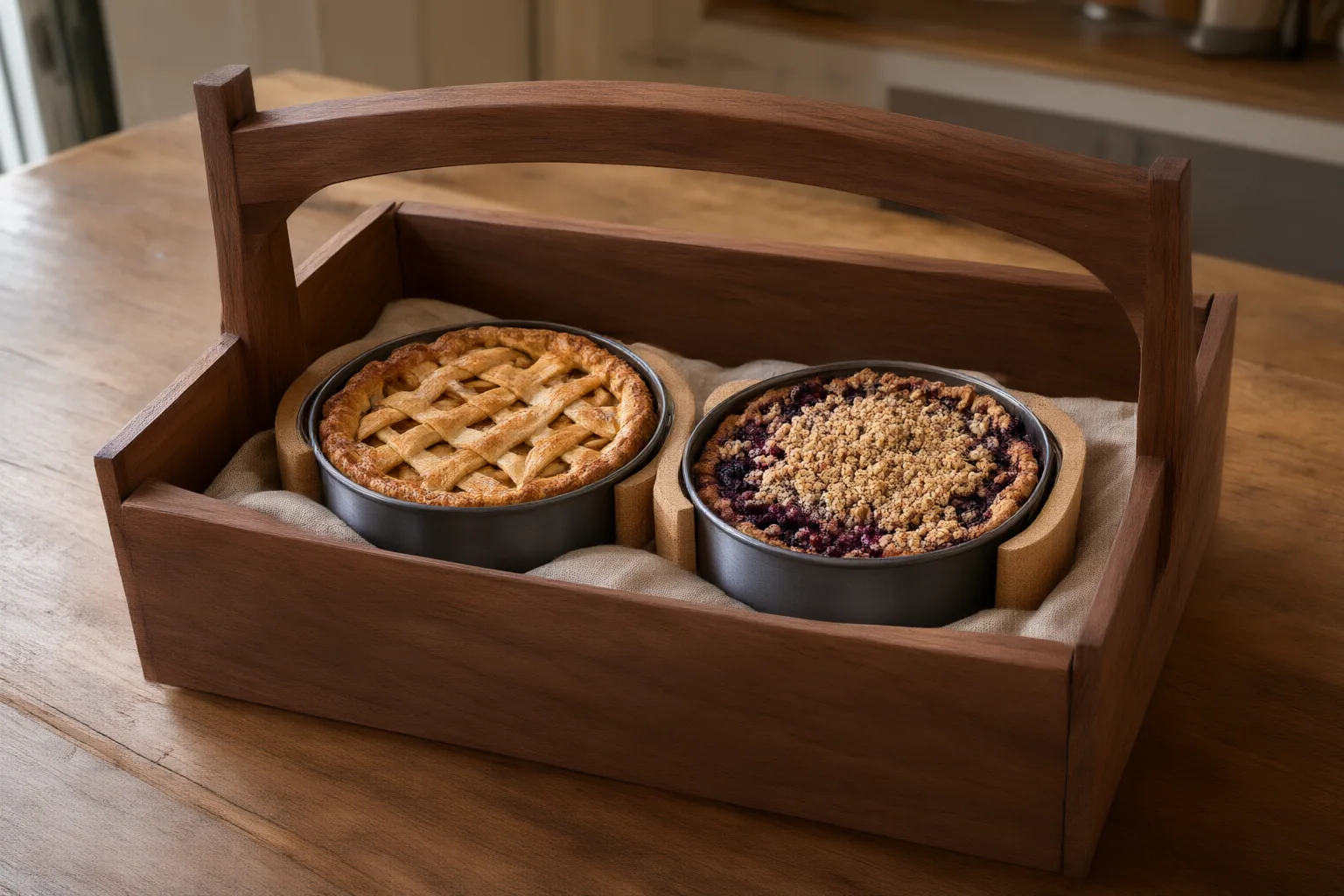
Give Each Pie Separate, Form-Fitting Support
Separate, close-fitting support can help keep the pies from shifting when a package tilts or encounters vibration. The packaging source describes form-fitting cavities designed to hold products immovably and integrated ribs and buffers intended to protect contents from impacts and vibration. These are useful design concepts for evaluating a transport setup: restrain movement around each pie and include protective structure between the contents and outside forces.
However, that source describes custom industrial transport packaging, not food-contact pie carriers. It does not establish that any particular tray, buffer, liner, or improvised material is food-safe or suitable for finished pies. Select packaging based on its actual labeling and intended use. The evidence also does not show that close-fitting support alone can prevent every type of damage.

Route Pressure Around the Crusts
A conceptual two-level arrangement needs a load path that bypasses both pies. A rigid shelf or divider could rest on strong outer walls or an external frame rather than on a pie container’s center. The aim is to keep open clearance over each crust while transferring upper weight to structural points at the perimeter.
Before relying on such an arrangement, inspect where every supported part meets the structure. Pressure should terminate at the rigid packaging, not at a crust or at a flexible surface that can sag onto one. The pies should also remain restrained against lateral movement, since vibration and tilting are separate concerns from vertical pressure.
The available sources do not validate specific materials, dimensions, clearances, load limits, or a food-safe two-pie carrier. Accordingly, this arrangement is a planning concept rather than a performance guarantee. Avoid treating the industrial packaging claims as proof that a homemade or retail food container will provide the same protection.
Conclusion
A careful setup addresses four checks: each pie has separate support, neither crust touches a load-bearing surface, movement is restrained, and any upper weight travels through rigid structures around the pies. Close-fitting retention may help with shifting, while ribs or buffers illustrate how packaging can address vibration and impact, but the supplied evidence does not guarantee a damage-free trip.
Before traveling, place each pie in its own supported position and verify that there is clearance above both crusts. Keep the setup level, then gently check it for movement without applying pressure to either pie. If a component shifts, sags, or transfers weight toward a crust, revise the arrangement before departure.
Disclosures and limitations
- This article was prepared with AI assistance from the supplied research package. Its practical guidance synthesizes cited sources about crust shape and industrial transport-packaging principles; no specific two-pie method or food-safe carrier was tested or verified.
- No products are recommended, and no affiliate relationship or commercial endorsement is implied.
Related reading
Sources
- How to Blind Bake Pie Crust — Taste of Home
- Buy Plastic Transport Packaging USA | Scafa — SCAFA INVESTMENTS LLC
- Folding Transfer Aid — Ovilcare