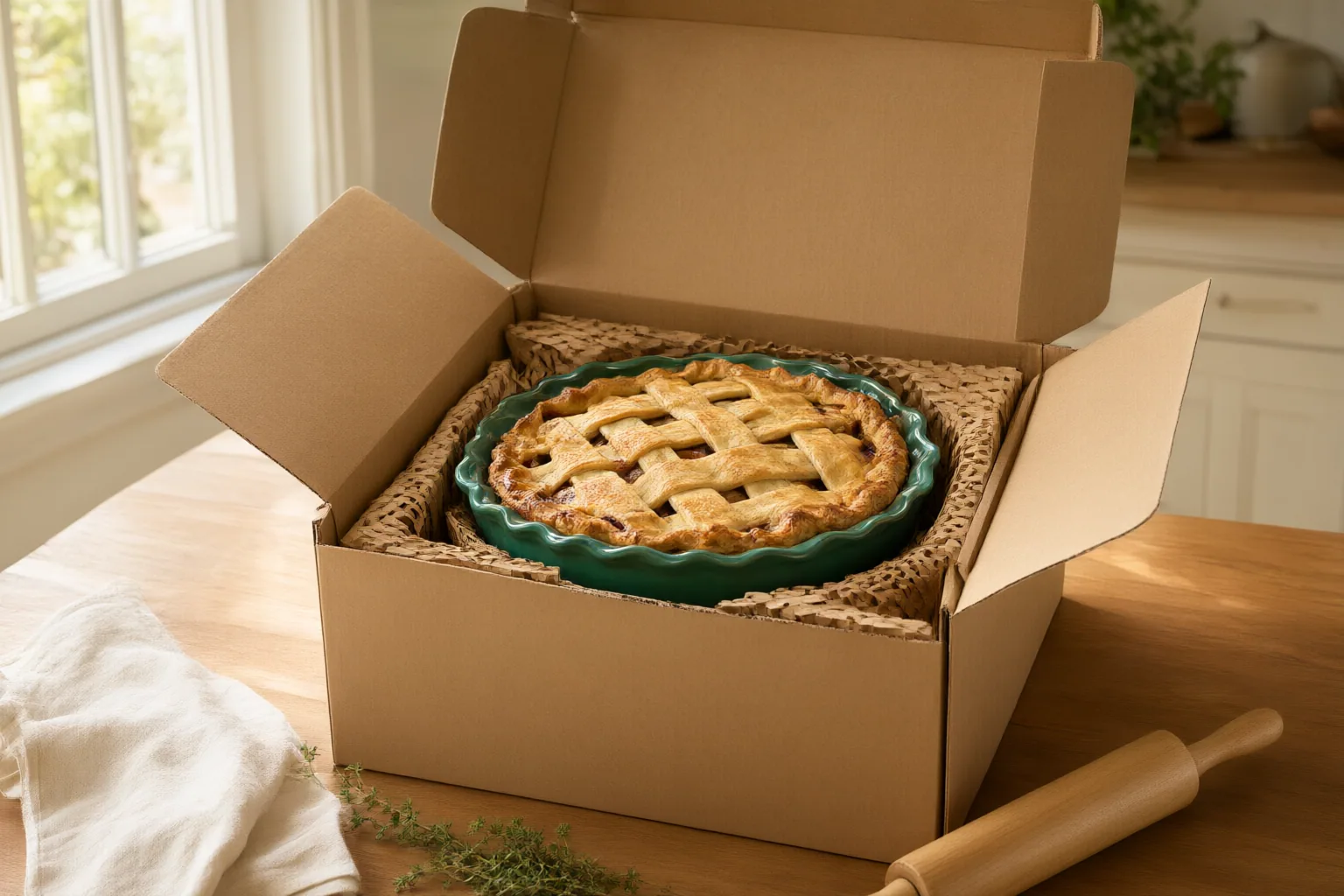
Before gifting a pie in a dish you want back, agree on the return method, explain who will handle postage, and prepare an enclosure sized for the dish. Clear arrangements spare the recipient from having to invent a return process after the gift arrives.
Decide How the Pie Dish Will Be Returned
Start with a simple agreement between giver and recipient. Decide whether the dish will be handed back in person or mailed, when the return should happen, and whom the recipient should contact if the arrangement changes. Share the necessary contact details in writing so they remain available after the pie has been served.
Clear directions are particularly useful when the recipient has no gift receipt or established return procedure to follow. In a documented retail example, Cooking Gift Set Co. instructs gift recipients to email the company for return or exchange directions. A personal pie-dish return is different from a retail return, but the practical principle carries over: identify the contact and provide instructions before a problem arises.
If mailing is the chosen method, also settle who will supply the return enclosure and who will arrange or pay for postage. Do not leave those decisions implicit. A short note can state the planned return method, the return address, the relevant contact information, and the agreed responsibility for mailing costs. This creates a return-ready food gift without making the recipient guess what the giver expects.
Match the Return Enclosure to the Dish
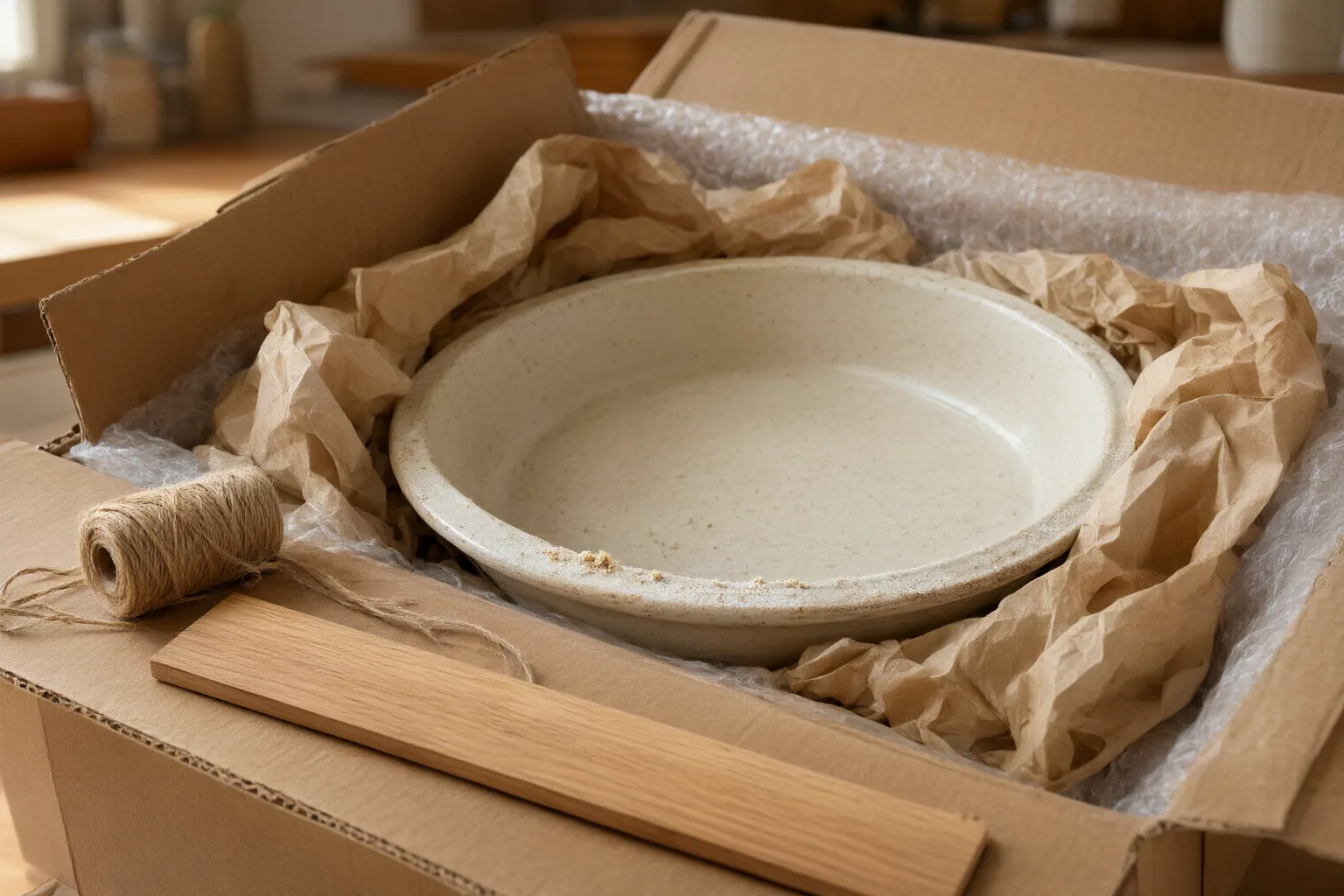
Choose the return enclosure around the object that must come back. Guidance for self-addressed stamped enclosures says their size should depend on what the recipient needs to return. It also distinguishes standard envelopes from more suitable mailers for larger or rigid items. A pie dish is rigid, so the planning question is whether the proposed enclosure can accommodate that specific dish without requiring it to be folded or forced into an undersized package.
Check the actual dish and intended enclosure together before giving the pie. Confirm that the dish fits and that the return address and any prepared postage materials can be included without confusion. If a mail carrier or service has its own packaging or labeling requirements, those requirements should be checked separately before mailing.
The available sources do not evaluate reusable food containers or pie carriers. They also do not establish food-contact safety, leak resistance, insulation, shipping performance, or suitable dimensions for any particular product. Accordingly, this guide does not recommend a specific reusable container. Use the item-size principle to prepare an enclosure for the return journey, and keep that return enclosure distinct from unsupported claims about how a container protects or preserves food.
Clarify Postage, Tracking, and Common Return Questions
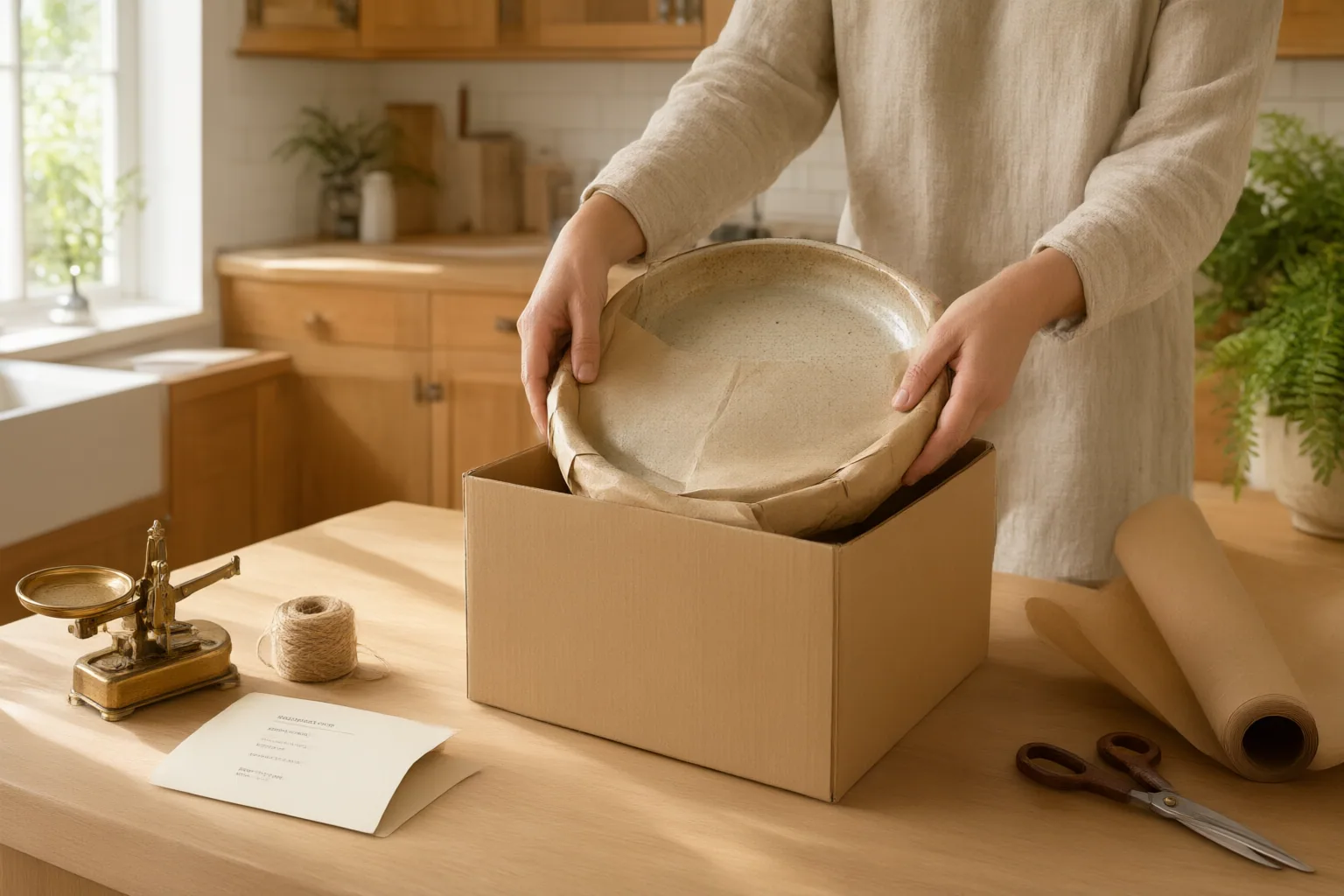
Address mailing costs before the recipient needs to act. A self-addressed stamped enclosure is intended to let the recipient mail an item back without paying the postage. For a pie dish, the same planning goal can be applied without assuming that an ordinary stamped envelope is appropriate: arrange a return method suited to the rigid item and make clear whether the giver or recipient is responsible for the cost.
If the giver intends to cover postage, prepare or explain that arrangement in advance. The recipient should not have to infer whether reimbursement will be offered later or whether a supplied label or other mailing arrangement is ready to use. If postage has not been prepared, state plainly who will purchase it and how the cost will be handled.
Preserve mailing evidence when the dish is sent. Cooking Gift Set Co. says a returned parcel remains the sender’s responsibility until it is received and advises obtaining proof of postage for tracking or follow-up. Although that statement describes the company’s own return process, retaining a mailing record is a practical step when a returned dish is in transit. The giver and recipient should also agree on who will keep that record and whom to contact if delivery cannot be confirmed.
Conclusion
A workable pie-dish return plan has four parts: an agreed return method, clear contact instructions, an enclosure appropriately sized for the rigid dish, and an explicit decision about postage. When the dish is mailed, retaining proof of postage can support tracking or later follow-up.
Before handing over the pie, review these details with the recipient. Confirm how the dish will come back, provide the return address and contact information, check the enclosure against the actual dish, explain the postage arrangement, and decide who will retain the mailing record.
Disclosures and limitations
- This article was created with AI assistance from the supplied research sources. It contains no specific product recommendation or affiliate offer.
Related reading
Sources
- FAQ — Cooking Gift Set Co.
- SASE Envelope: What It Is and How to Prepare One — businessenvelopes.com