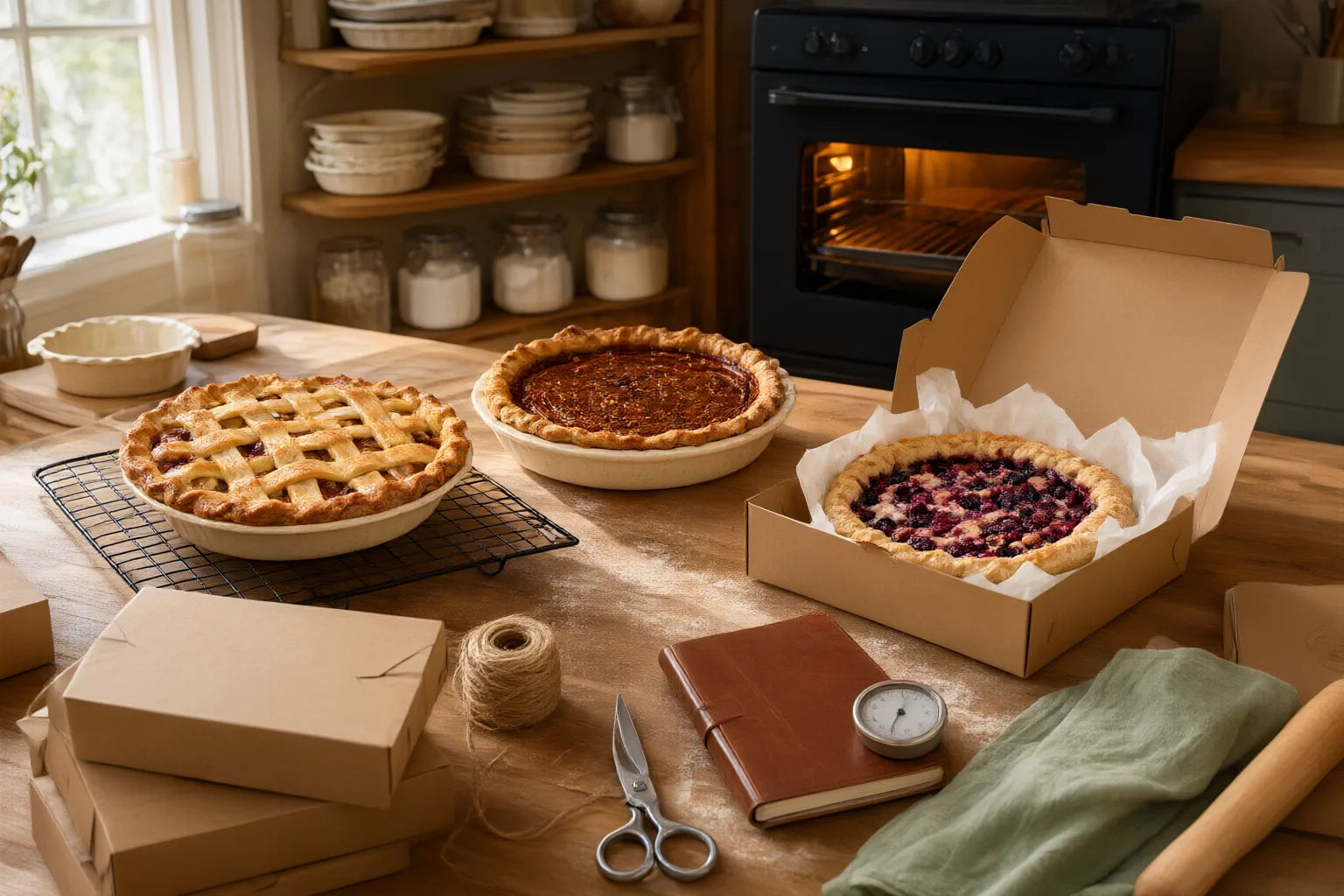
To schedule baking and delivery in one day, begin with your departure time and work backward. Group compatible pies, separate hands-on tasks from oven time, and protect distinct blocks for complete cooling, packaging, labeling, and every delivery stop.
Build the Schedule Backward From Departure
Start with the time you need to leave, then build the day in reverse. Immediately before departure, reserve separate blocks for labeling and packaging. Before those tasks, allow the pies to cool completely. Place baking and preparation earlier in the schedule rather than assuming the work will fit naturally into the morning.
Write down each block. The batch-baking guidance recommends organizing recipes by shared oven temperature, shared ingredients, and whether a task requires active work or can proceed unattended. This makes it easier to see which jobs can be paired. For example, an unattended baking period may create room for preparing another compatible component, while a hands-on task needs its own protected space.
Avoid treating cooling and packing as a single flexible gap. Giving each stage a visible place in the schedule reveals whether the planned departure is realistic before preparation begins.
Sequence Preparation and Multiple Oven Batches
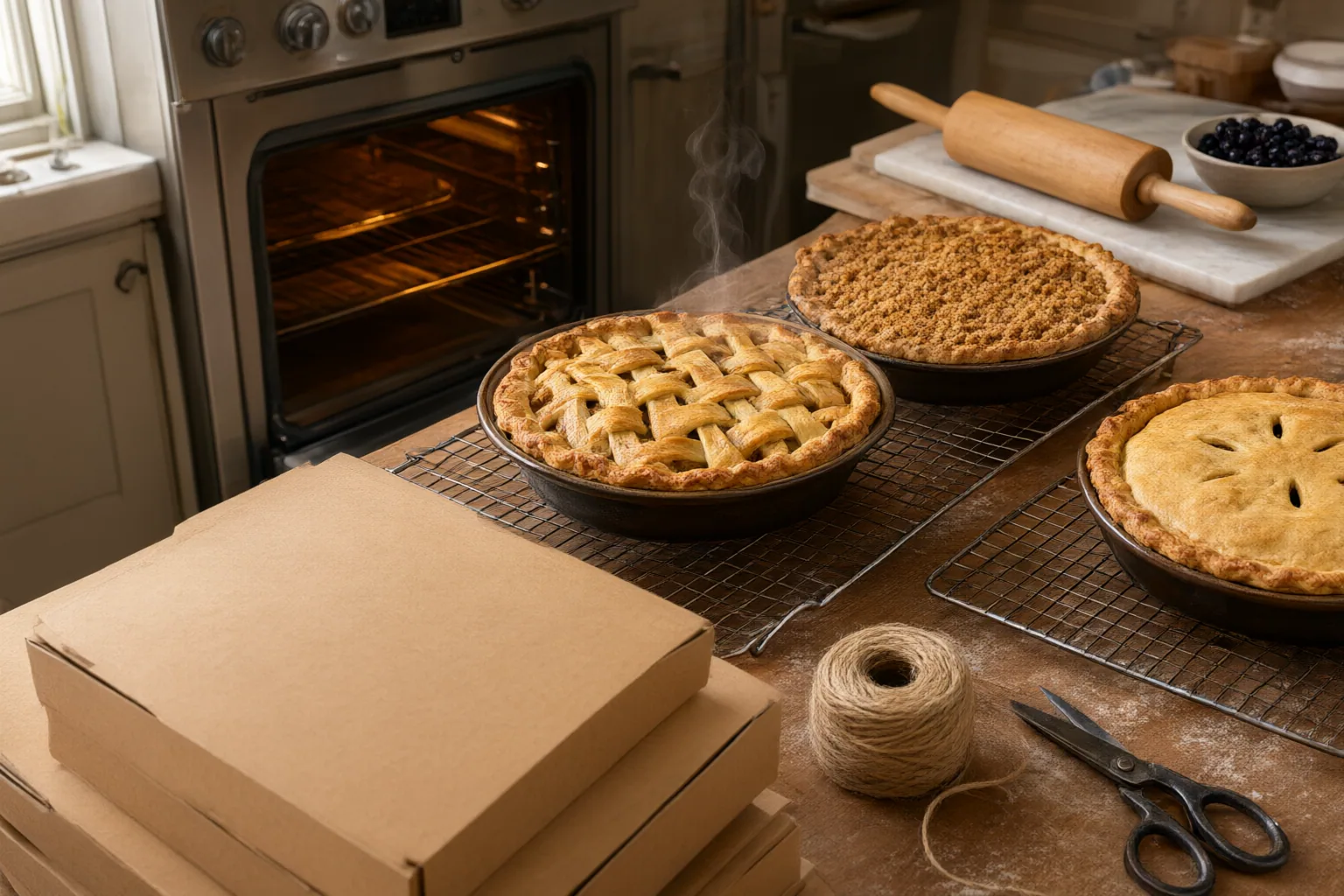
Choose recipes with similar stated baking temperatures and times when several pies will share the oven. That reduces repeated temperature changes and makes the batches easier to coordinate. Prepare crust dough and fillings in advance where the recipes permit, and include oven preheating in the written sequence instead of counting it as part of baking time.
Before loading the oven, arrange the pies on sturdy, oven-safe baking sheets or racks. Decide which pies belong in each compatible batch and record their stated baking times. If pies bake simultaneously, plan to rotate their positions halfway through. Oven hot spots can lead to uneven baking, so position changes and observation are part of the work, not optional interruptions.
Near the end of each recipe’s stated baking time, monitor the pies closely rather than depending on one timer for the entire batch. Keep that period free of preparation jobs that would pull attention elsewhere. This sequence coordinates active work with unattended oven time while preserving the close supervision needed as each batch approaches completion.
Reserve Time for Cooling, Packing, and Delivery Stops
Schedule complete cooling after each batch because cooling allows pie fillings to set. Pies that leave the oven at different times will enter the cooling stage at different times, so track them separately rather than assigning every pie the same finish point. Do not let an optimistic departure time compress this stage.
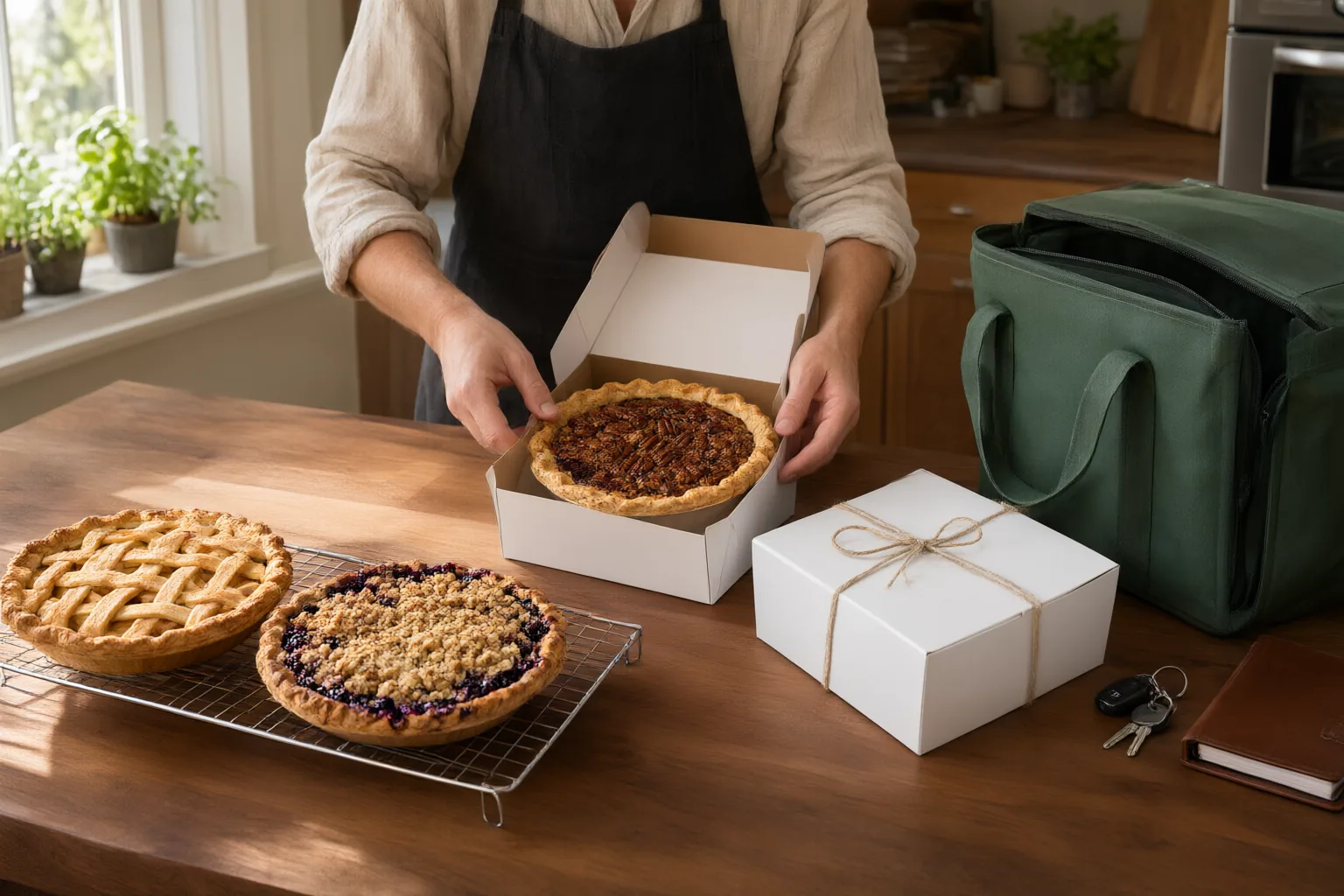
Packaging and labeling also need dedicated blocks. The batch-baking guidance treats them as planned work rather than incidental end-of-day chores. Keeping those blocks separate helps expose a bottleneck: a pie may be baked, yet still not be ready for departure because cooling, packing, or labeling remains unfinished.
Create a written delivery table for the final portion of the day. A bakery-delivery schedule source supports using a table together with an additional-information list. Adapt that structure to place the stops in their intended sequence and keep relevant notes with the schedule. Because the supplied sources do not establish universal transport or storage rules, follow the applicable recipe or product guidance rather than adding assumptions to the timetable.
Conclusion
A workable one-day plan follows a clear sequence: advance preparation, compatible oven batches, complete cooling, packaging, labeling, and organized delivery stops. Grouping recipes by temperature, ingredients, and active versus unattended work can reduce avoidable schedule conflicts, while planned rotation and end-of-bake monitoring address the demands of baking several pies together.
Before beginning any preparation, write your schedule backward from the required departure time. Give every stage its own block, list the delivery stops in order, and revise the start time if the full sequence does not fit.
Disclosures and limitations
- This article was prepared with AI assistance and is based solely on the cited research sources. Recommendations synthesize source-backed guidance; no products were personally tested or used.
Related reading
Sources
- How to Batch Bake Efficiently for Big Orders — bakingsubs.com
- Free Bakery Delivery Schedule Template to Edit Online — template.net
- How To Bake Multiple Pies At Once — Recipes.net
- Sweet & Savory Pies. Made in San Jose. — Sweetdragon Baking Company
- Home | BakeGenie — BakeGenie