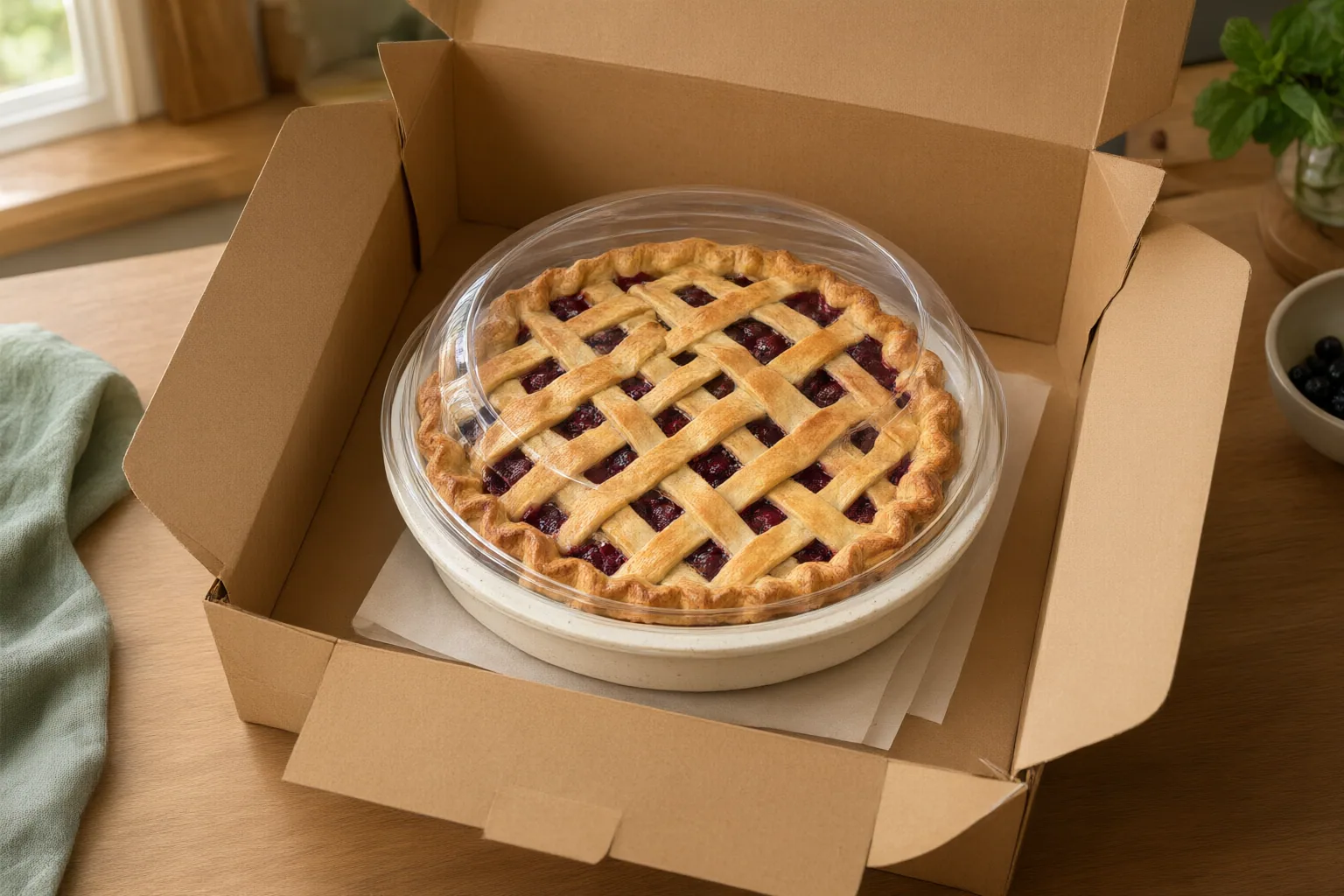
Let the pie cool completely, keep all wrapping from pressing on the decoration, and stabilize the plate inside a sturdy bakery box. These steps address the main transport risks identified by the sources: condensation, crushed details, sliding and bumps.
Cool the Pie Completely Before Packing
Wait until the pie has cooled completely before adding wrapping or placing it in its final gift packaging. Covering a warm pie can trap residual heat and steam, producing condensation that softens the crust. A filling that remains warm may also be more likely to shift or spill while the pie is being carried.
Do not treat wrapping as the first line of protection while the pie is still cooling. Instead, allow the heat to dissipate, then prepare the cover and box. This preserves the practical value of the later packing steps: a supported covering can protect the decoration without trapping warmth, while a stable box can limit movement without enclosing a pie that is still releasing steam.
Keep Wrapping Away From Decorative Details
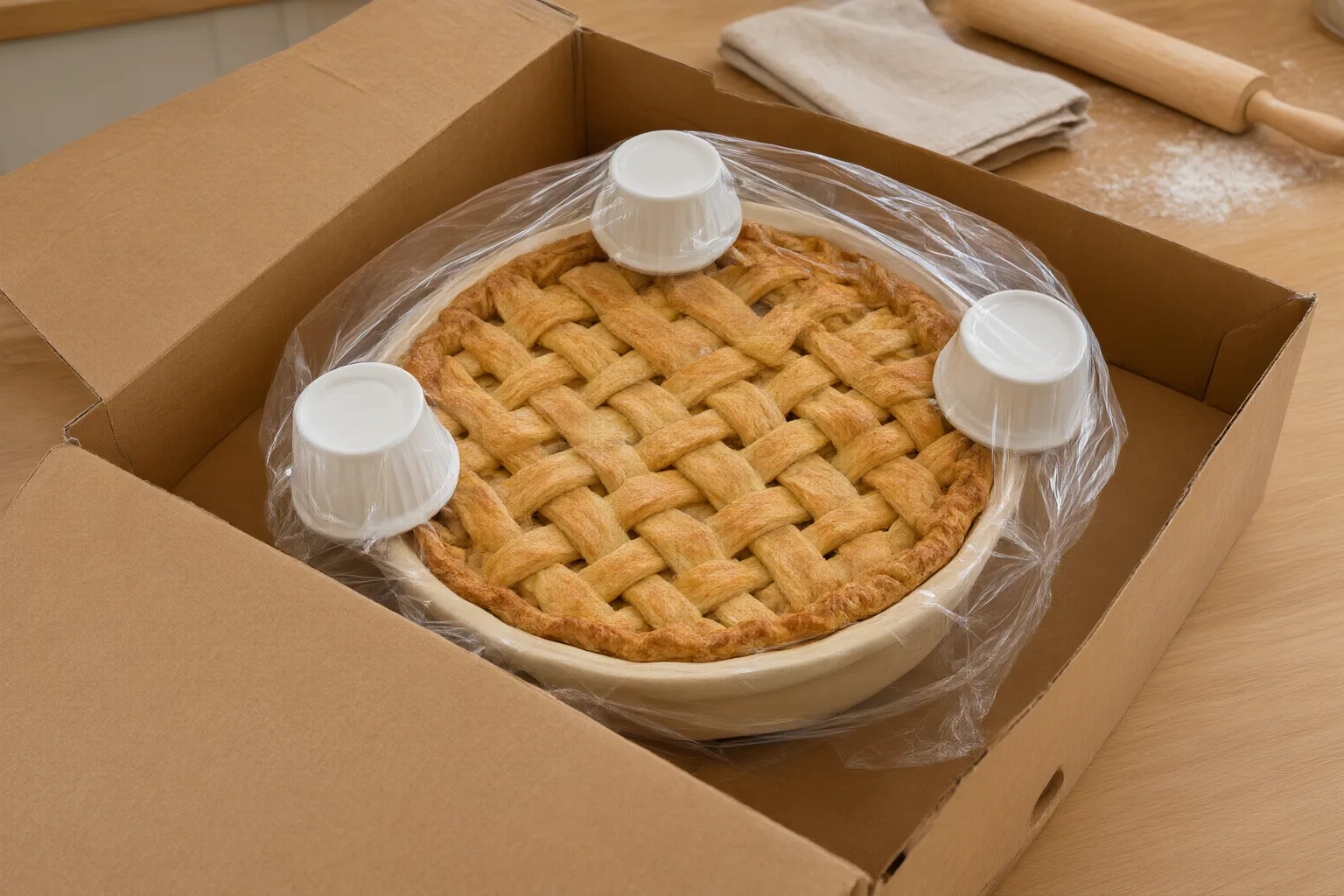
Direct contact is a particular concern for lattice strips, pastry cutouts and fragile crust edges. Rather than pulling wrapping tightly across the top, create clearance above the decorated surface. One cited method is to place an overturned paper cup or a pie-saver tripod at the center so that the wrapping rests on the support instead of the crust. Another cited option is to lay parchment or wax paper loosely over the pie before adding the outer packaging.
Whichever method you use, avoid pressing the covering against raised or delicate pastry. Guidance about foil crust shields during baking reinforces the importance of gentle contact: Taste of Home advises crimping foil only lightly because excessive pressure can ruin a decorative edge, and Cocomoclub likewise cautions against pressing foil firmly onto crust edges. Those foil instructions concern baking rather than transport, so they should be understood as a caution about pressure—not evidence that foil has been tested as travel packaging.
Box the Pie to Limit Sliding and Bumps
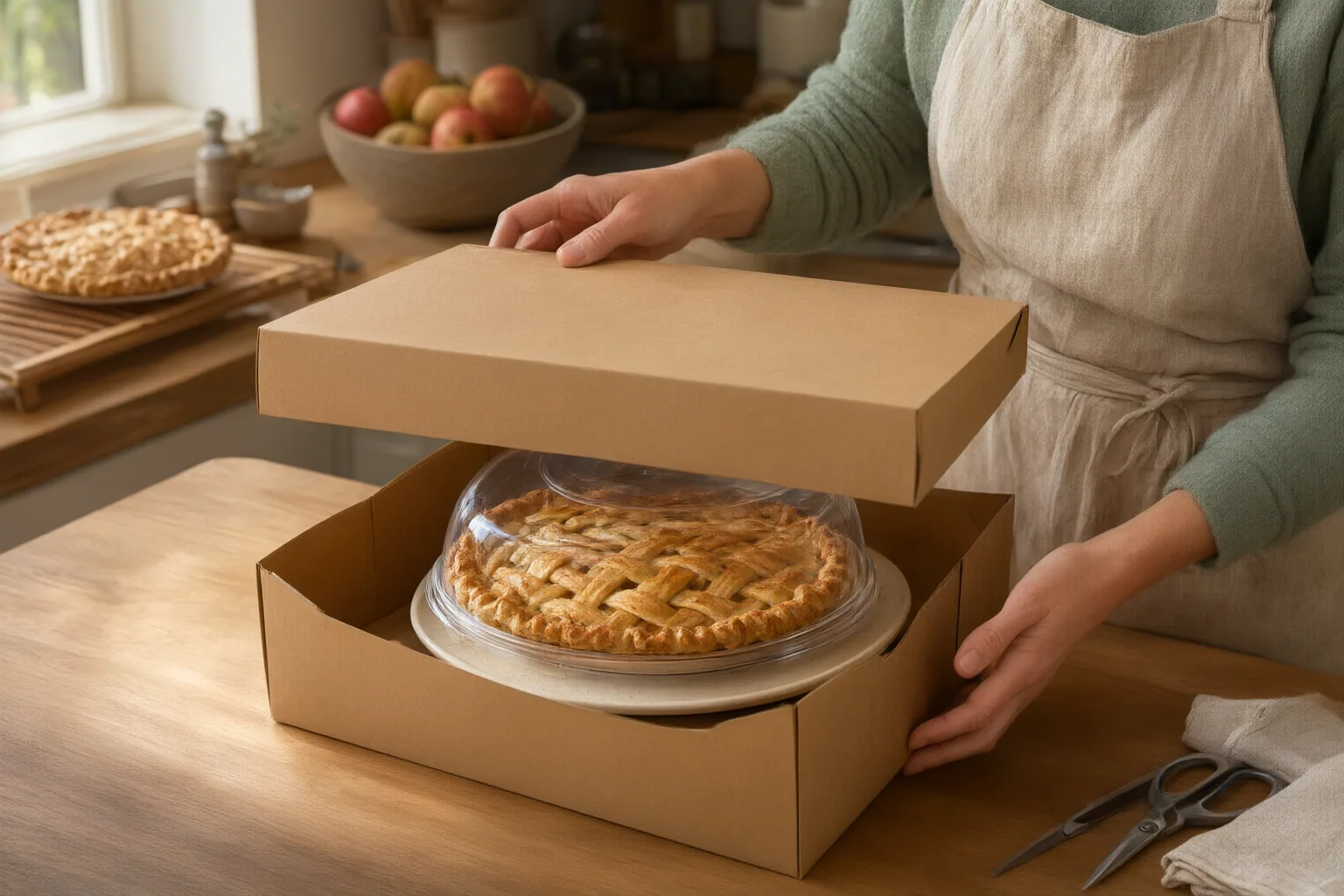
Place the cooled, covered pie in a sturdy bakery box. The box walls provide a barrier against the ordinary bumps that can occur during a car ride, while the supported covering helps preserve space above the decorated crust.
Movement inside the box also matters. Put parchment or a doily beneath the pie plate to help reduce sliding, then check the plate’s stability before setting out. The available guidance is general and does not compare packaging materials or quantify how much protection they provide, so the practical objective is simple: limit avoidable motion without placing pressure on the pastry.
Keep the box level as you position and carry it. Before moving it, look through any available opening or carefully check the setup to confirm that the plate remains seated on its liner and that the cover support stays clear of the decorative details.
Conclusion
Use a short pre-trip check before presenting the pie as a gift:
- Confirm that the pie is completely cool before wrapping it.
- Make sure a cup, pie-saver tripod or loosely placed paper keeps the covering from bearing down on lattice work, cutouts or the edge.
- Set the pie plate on parchment or a doily inside a sturdy bakery box to reduce sliding and provide protection from bumps.
- Avoid tight crimping or other direct pressure around a decorative edge.
Before leaving, gently check that the plate is stable and the covering does not touch the decoration. If either condition is not met, adjust the liner or cover support before carrying the gift.
Disclosures and limitations
- This article was prepared with AI assistance from the supplied source-based research package. Its transport guidance is general and is not based on comparative packaging tests.
- No products are recommended, and no prices, availability claims or affiliate offers are included.