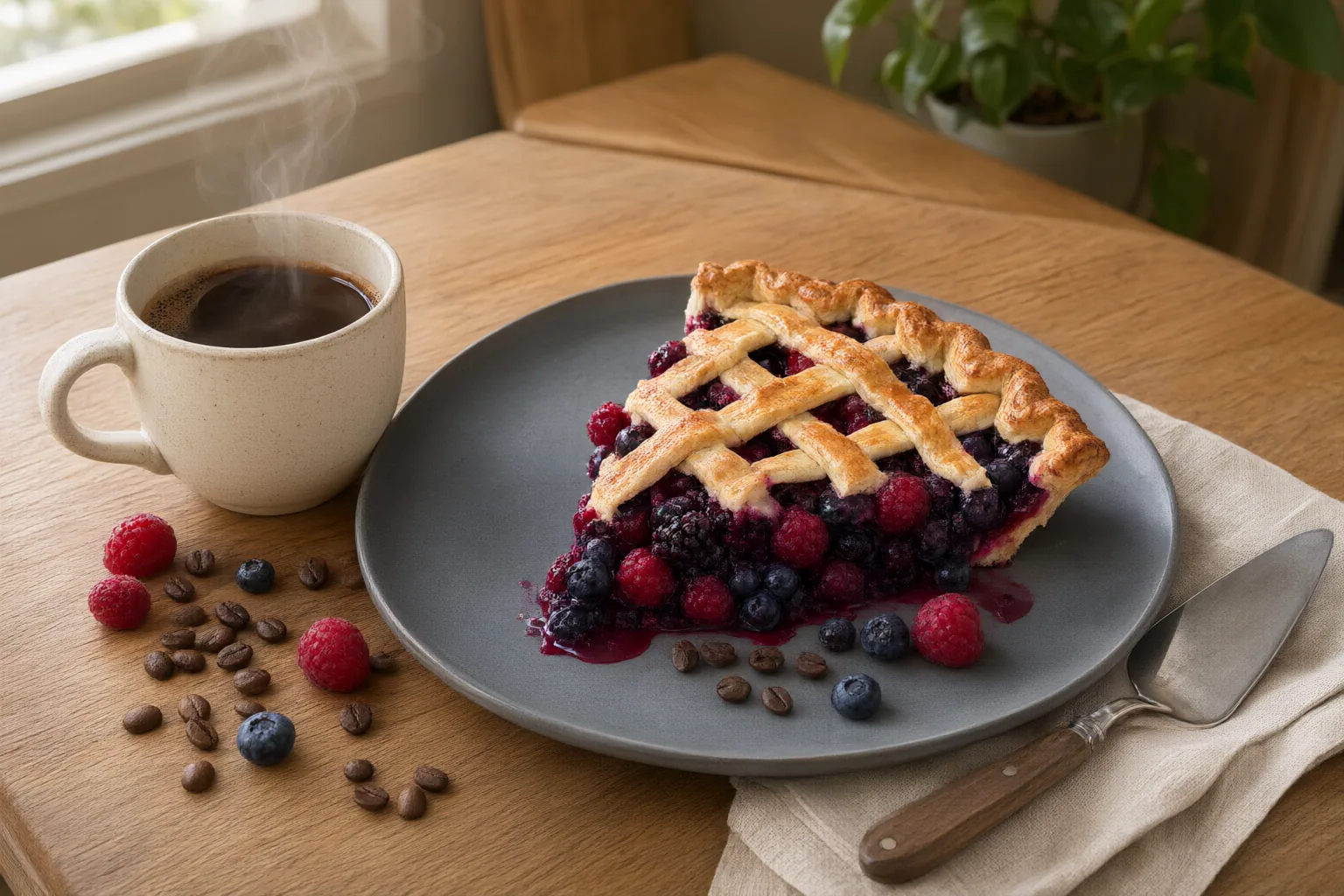
Pair fruit pie with coffee by matching their intensity first, then considering acidity, body, sweetness, bitterness, and flavor notes. Light and medium roasts are often the most adaptable choices, but the best match depends on the filling and crust.
Start With Balance, Not the Roast Label Alone
A useful pairing keeps either the coffee or the pie from dominating. Roast level offers a starting point, but it does not describe the entire cup: body, acidity, bitterness, and tasting notes also affect how coffee meets a pie’s sweetness, fruit, richness, and texture.
Begin by judging the pie’s overall intensity. A delicate fruit filling generally calls for a lighter-bodied coffee, while a sweeter pie or richer crust can accommodate more weight and bitterness. Coffee’s bitterness may complement fruit-pie sweetness, provided the contrast remains balanced. Treat these principles as practical guidance rather than fixed rules, because the cited recommendations come from pairing guides rather than controlled sensory studies.
Choose Light, Medium, or Dark Roast for the Pie
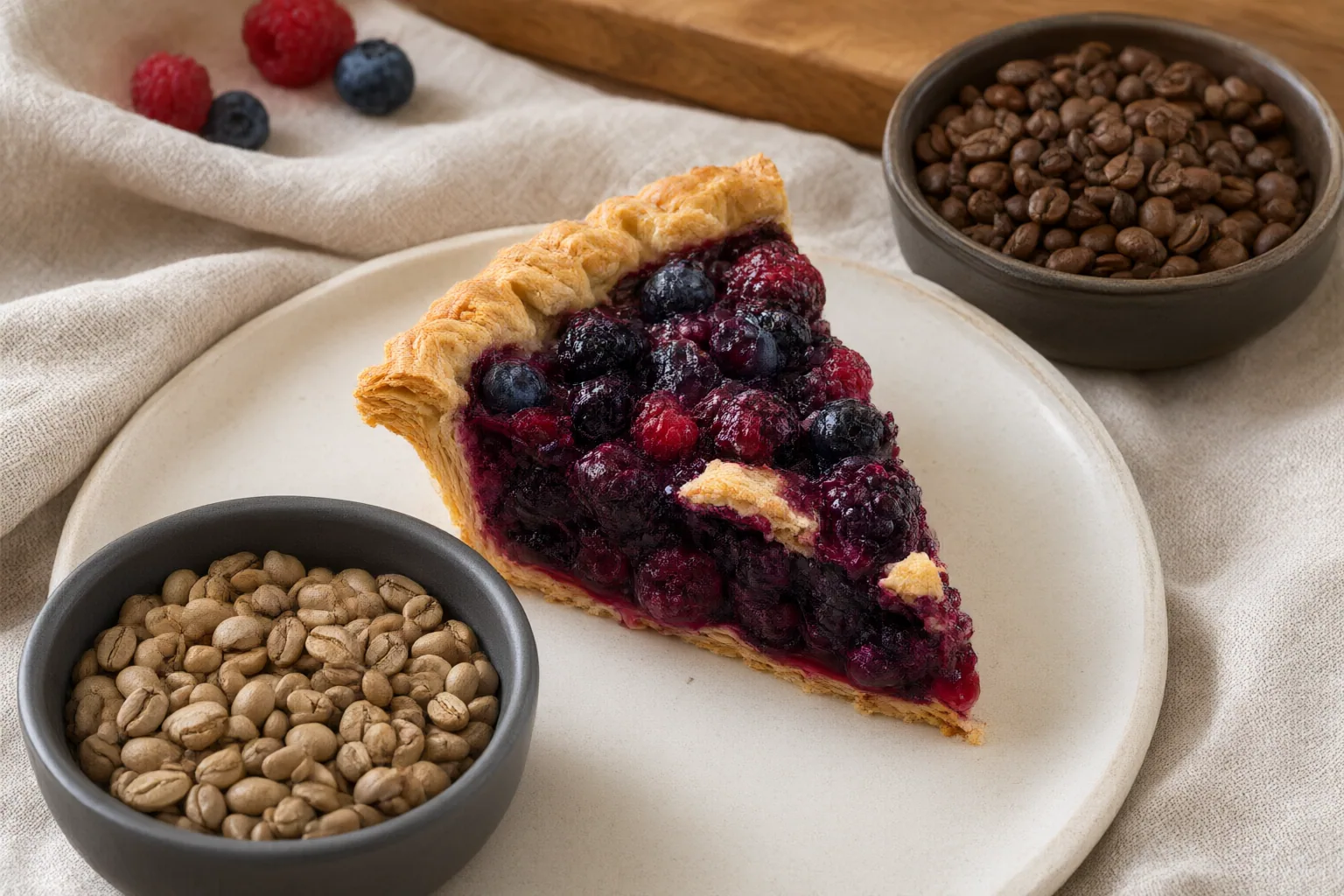
Light roasts are commonly described as relatively light-bodied, bright, floral, or fruit-forward, with possible citrus and berry notes. Those qualities make them a practical starting point for delicate fruit desserts. The guides associate light roasts with examples including apple pie, fruit tarts, berry crumble, and lemon meringue pie.
Medium roast is the flexible middle option. Common caramel, nut, chocolate, or baking-spice notes can fit baked desserts, while a medium roast with bright acidity or fruitiness may highlight apple, berry, or cherry filling and balance sweetness and crust. One guide specifically connects apple pie with light or medium coffee carrying caramel notes.
Dark roasts tend to be more intense and full-bodied, with smoky, earthy, or chocolate-like profiles. The cited guides mainly direct them toward dense chocolate or caramel desserts. That does not prohibit a dark-roast pairing, but it raises the risk of overwhelming a delicate fruit filling. Compare the coffee’s actual body and intensity instead of relying on its roast label alone.
Use Acidity and Flavor Notes to Create Harmony or Contrast
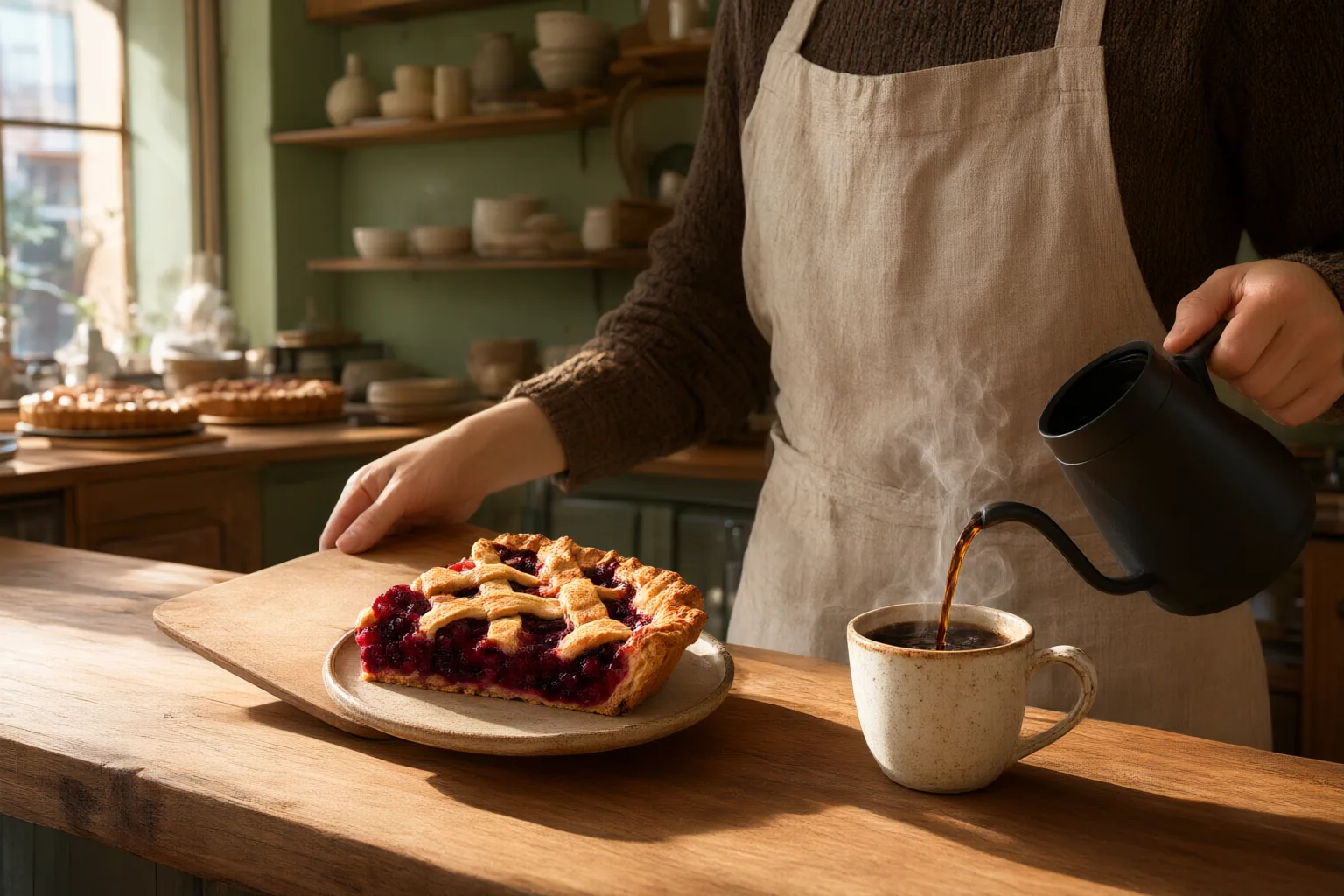
There are two workable approaches. For harmony, connect flavors already present in both items: pair a fruit-forward coffee with a fruit filling, or caramel notes with a baked apple pie. This can make shared characteristics more noticeable without introducing a strongly competing flavor.
For contrast, use bright coffee acidity against a richer pie or coffee bitterness against pronounced sweetness. The goal is still balance, not maximum difference. A coffee that refreshes the palate beside a rich crust may feel too sharp with a lighter tart, while a heavy, bitter cup may obscure delicate fruit.
Consider the whole slice rather than the fruit name alone. Filling sweetness, fruit intensity, and crust richness can make two pies with similar fruit need different coffees. If uncertain, begin with a bright light roast and a balanced medium roast, then compare how each changes the perceived fruit, sweetness, and crust.
Conclusion
Taste the pie and coffee separately before deciding. Identify the dominant traits in each, such as sweetness, bitterness, acidity, fruitiness, nuttiness, body, and richness. Then taste them together and notice whether one suppresses the other or whether the combination reveals a useful harmony or contrast.
For a more controlled comparison, brew light, medium, and dark roasts using the same method. Try each with the same pie and record the results. At minimum, compare a light roast with a medium roast, noting which combination best balances the fruit, sweetness, crust, acidity, and bitterness for that particular pie and your preferences.
Disclosures and limitations
- This article was prepared with AI assistance from the supplied editorial and commercial pairing guides; their recommendations are practical guidance, not controlled sensory-study findings.
- No product, price, rating, availability, or affiliate claims were used because the supplied research contained no product records.
Related reading
Sources
- The Ultimate Guide to Pie Pairings and Elevating Your Dessert Experience – kitchenwisdom — kitchenwisdom
- Coffee and Dessert Pairing Guide: 5 Simple Rules for Better Matches — Blackout Coffee Co
- The Ultimate Guide to Pie Pairings: Elevate Your Dessert Game with Creative Combinations – flavorfulfeast — flavorfulfeast
- How to Pair Coffee With Cakes, Pies, and Pastries – ReelKitchen — ReelKitchen