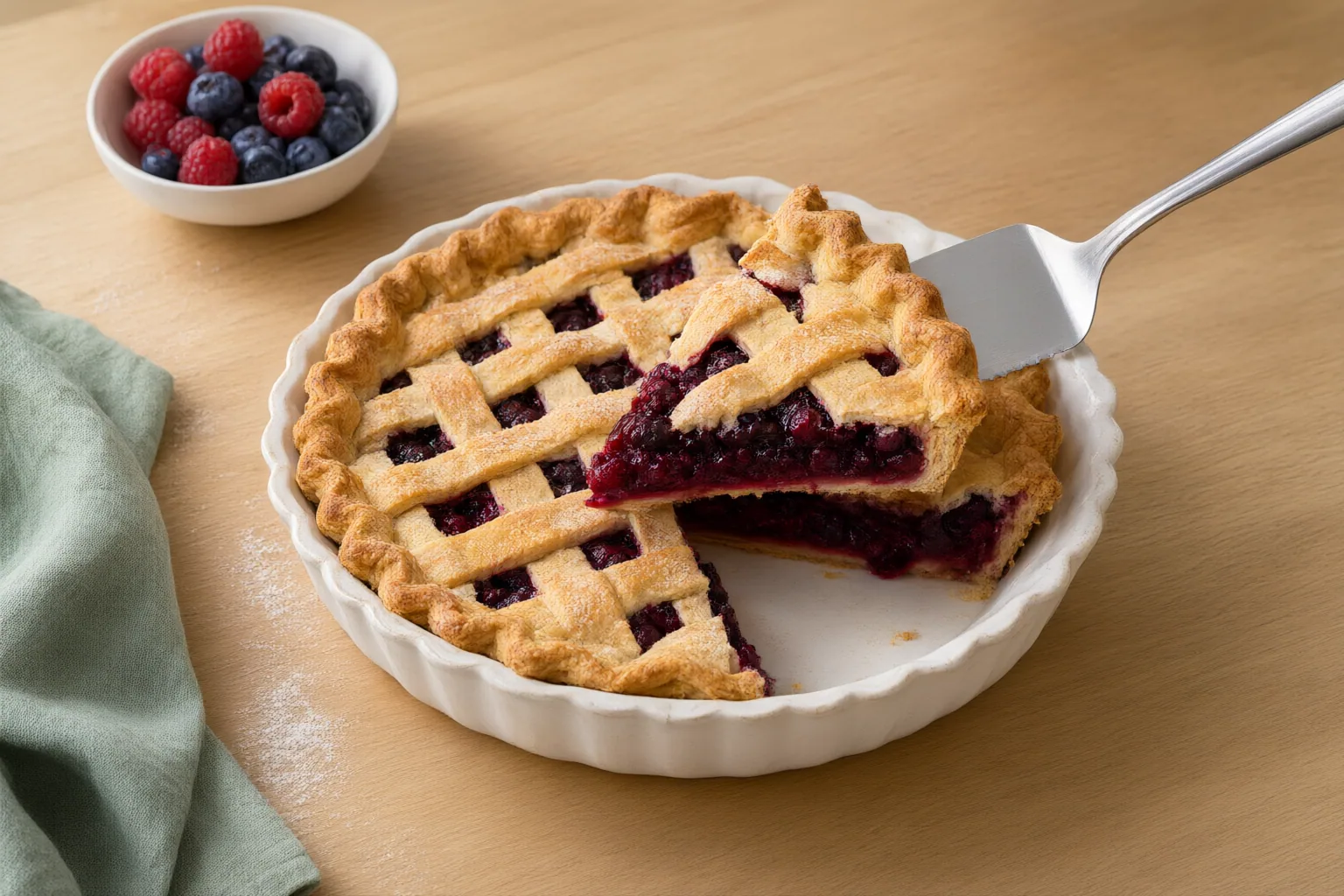
For cleaner fruit pie slices, let the pie cool completely, use a clean, sharp blade with gentle pressure, cut two adjacent portions, and support the first slice from underneath with a thin server.
Let the Fruit Pie Cool Before Cutting
Complete cooling is the foundation of a clean fruit pie slice. As the pie cools, the filling has time to set and the crust becomes firmer. Cutting while the pie is still hot can allow the fruit filling to ooze into the space made by the knife. The crust and top structure may also collapse as the portion is separated.
Wait until the pie has cooled completely before making the first cut. This does not guarantee a perfectly rigid filling, but it addresses one of the main causes of messy portions: slicing before the filling and crust have stabilized. If neat presentation is the priority, avoid treating a freshly baked pie as ready to portion simply because it is no longer in the oven.
Choose the Right Knife and Open the Crust Gently
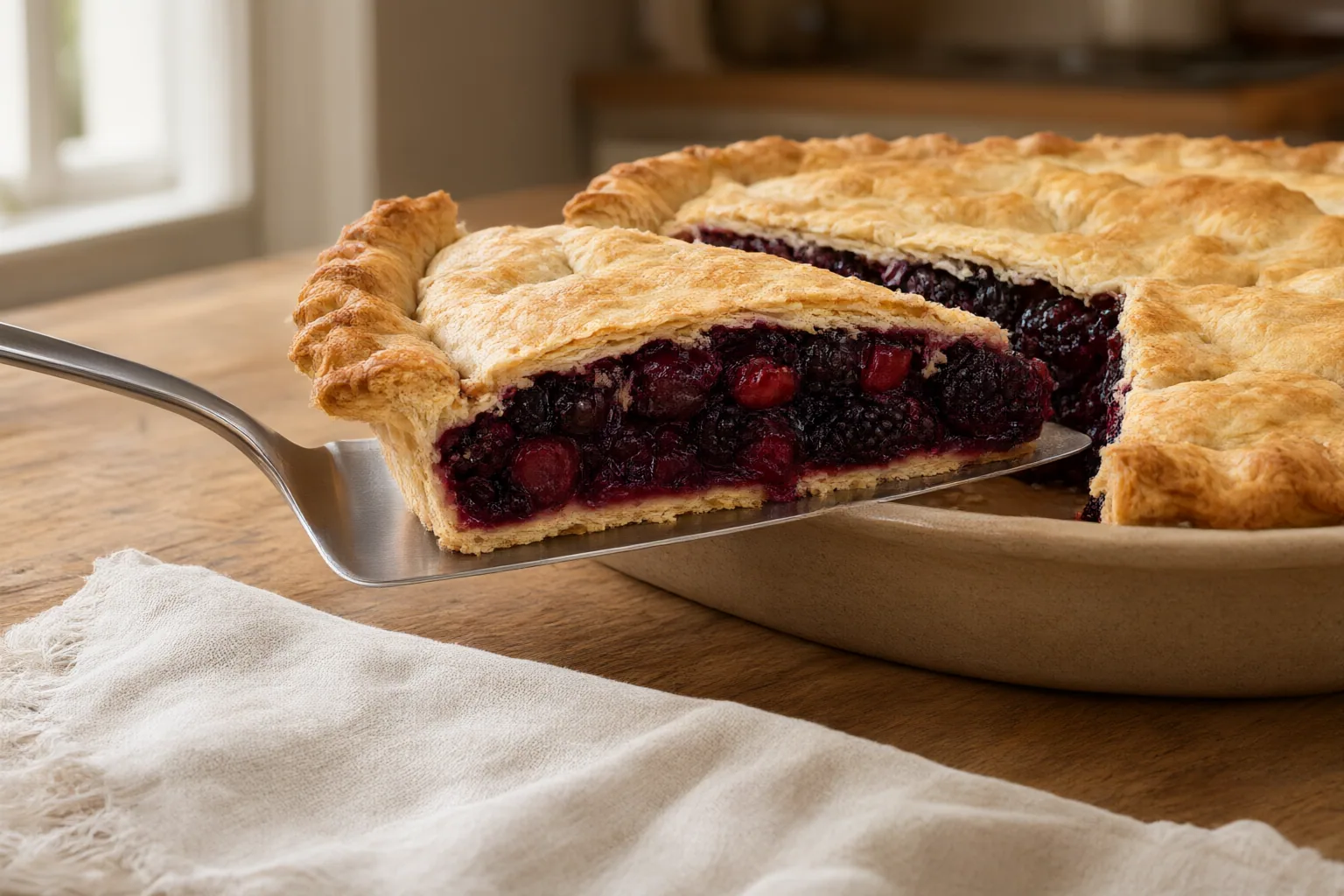
Match the blade to the part of the pie you are cutting. For a double-crust fruit pie, a serrated paring knife or kitchen scissors can open the top crust without requiring heavy downward force. A large, sharp knife can then make the full cut through the pie. More generally, a serrated blade is useful for starting through a flaky or firm crust, while a sharp straight-edge blade allows a controlled cut after that crust has been opened.
Whichever blade you use, keep it clean and sharp. A dull edge is more likely to tear the pastry or make you press hard enough to crush it. Apply gentle, even pressure instead of forcing the knife straight down. Guide the blade through the crust and filling with control, following each planned cut all the way through so the portion is fully separated before you try to lift it.
Make Clean Cuts and Lift the First Slice
Wipe the knife after every cut. Fruit filling and pastry crumbs left on the blade can drag across the next portion, smearing the filling and making the edges less defined. A clean blade gives each new cut a fresh edge rather than carrying debris back through the crust.
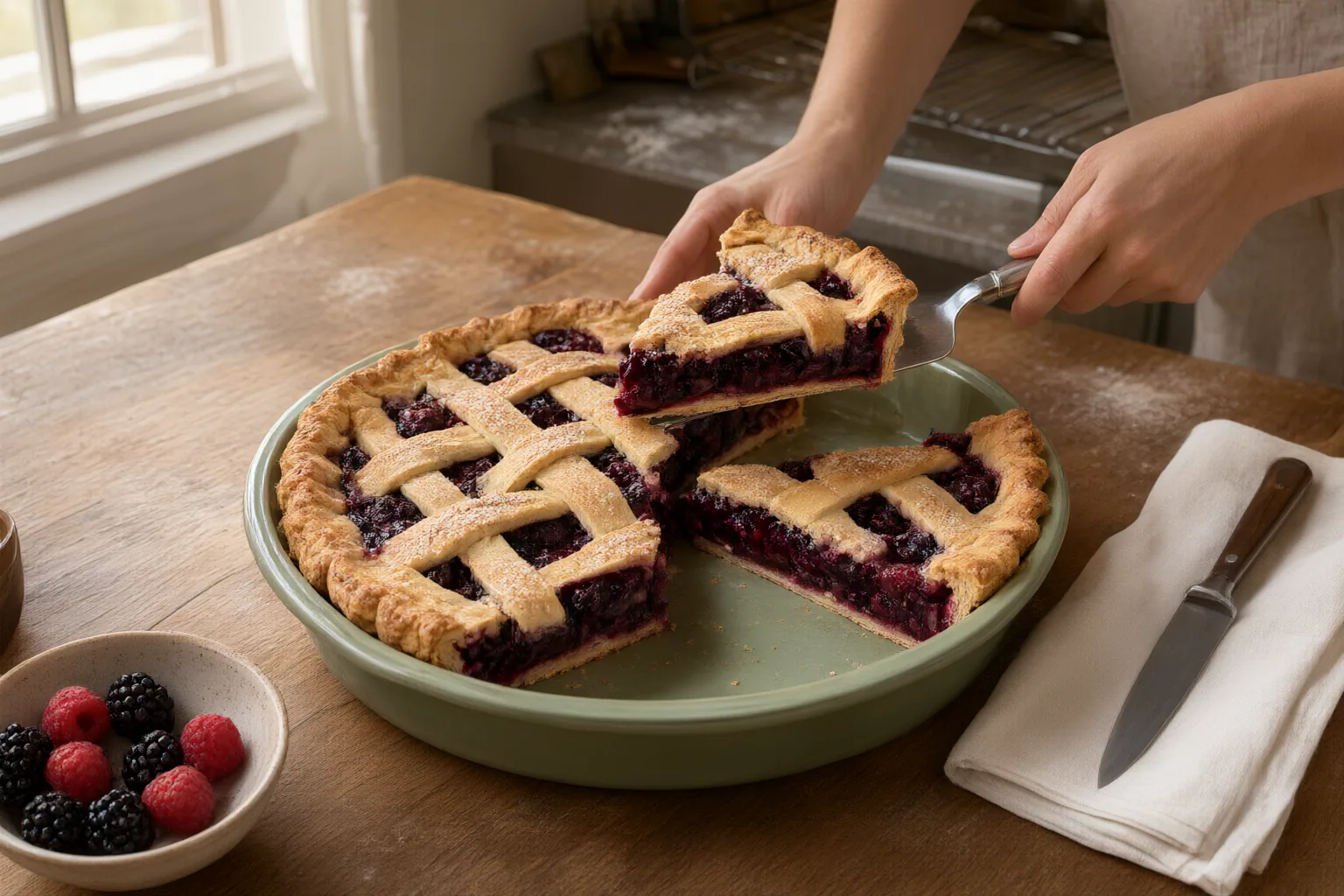
Do not try to remove the first portion as soon as you have cut its two sides. First cut at least one adjacent portion, creating two neighboring wedges. This provides more room to maneuver the serving utensil and reduces the need to press against the surrounding crust and filling.
Slide a thin offset spatula or pie server underneath the selected wedge. Support the slice from below as you raise it instead of pulling from its crust or lifting it by one edge. The combination of a fully separated portion, extra space beside it, and support underneath reduces the chance that the first slice will break apart during removal. Repeat the clean-blade routine before cutting each subsequent serving.
Conclusion
A clean fruit pie slice depends on sequence more than force. Let the pie cool completely so the filling can set and the crust can firm. Open a flaky or firm top crust with a suitable serrated blade, complete the cut with a sharp knife, and use gentle, even pressure. Wipe the blade between portions so crumbs and filling do not mark the next cut.
For the difficult first serving, cut two adjacent portions before lifting either one. Then slide a thin offset spatula or pie server under the chosen wedge and support it as it leaves the pie. When serving your next fruit pie, prepare a clean, sharp knife and thin server in advance, allow the pie to cool fully, and follow this cutting-and-lifting sequence.
Disclosures and limitations
- This article was prepared with AI assistance and is based solely on the cited source material supplied in the research package.
- This independent editorial guide contains no product recommendation or claim of firsthand testing.
Related reading
Sources
- 7 Hacks For Cutting Perfect Slices Of Pie Every Time – Daily Meal — Daily Meal
- Perfectly Slice a Pie: Simple Steps for Clean Cuts — homeplora.com
- How To Cut A Pie Without Breaking Crust — Recipes.net
- This Is How to Cut a Slice of Pie the Right Way — Taste of Home