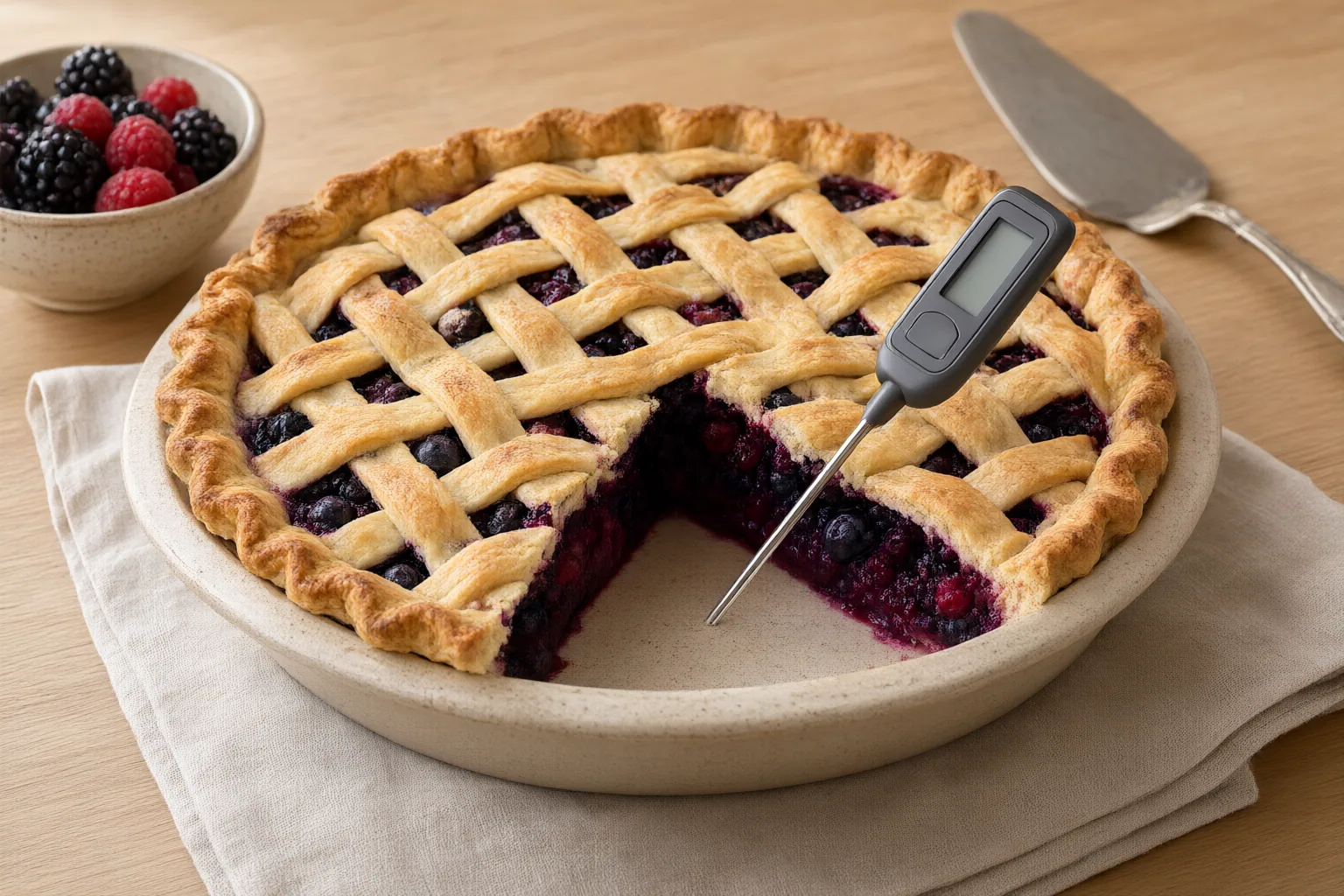
Serve fruit pie when the filling has cooled to 85°F (29°C) or below. Reaching that point typically takes about three hours, although the pie plate can affect the timing. A food thermometer provides a more dependable check than touch or elapsed time alone.
The Short Answer: Cool Fruit Pie to 85°F or Below
The supplied fruit-pie guidance recommends serving the filling at no warmer than 85°F (29°C). Treat that measurement as the practical indicator that the pie has reached its recommended serving range rather than assuming it is ready after a fixed number of minutes.
Cooling to 85°F or below typically takes about three hours. That is a starting point, not a universal schedule: the source specifically notes that the pie plate can affect the cooling time. Consequently, two pies removed from the oven together might not reach the recommended range at precisely the same moment if their plates differ.
When planning dessert, build roughly three hours of cooling into the schedule, then verify the filling’s temperature before slicing. If it remains above 85°F, allow additional cooling time and check again rather than treating the estimated time as a guarantee.
Serving Temperature Is Not the Same as Baking Doneness
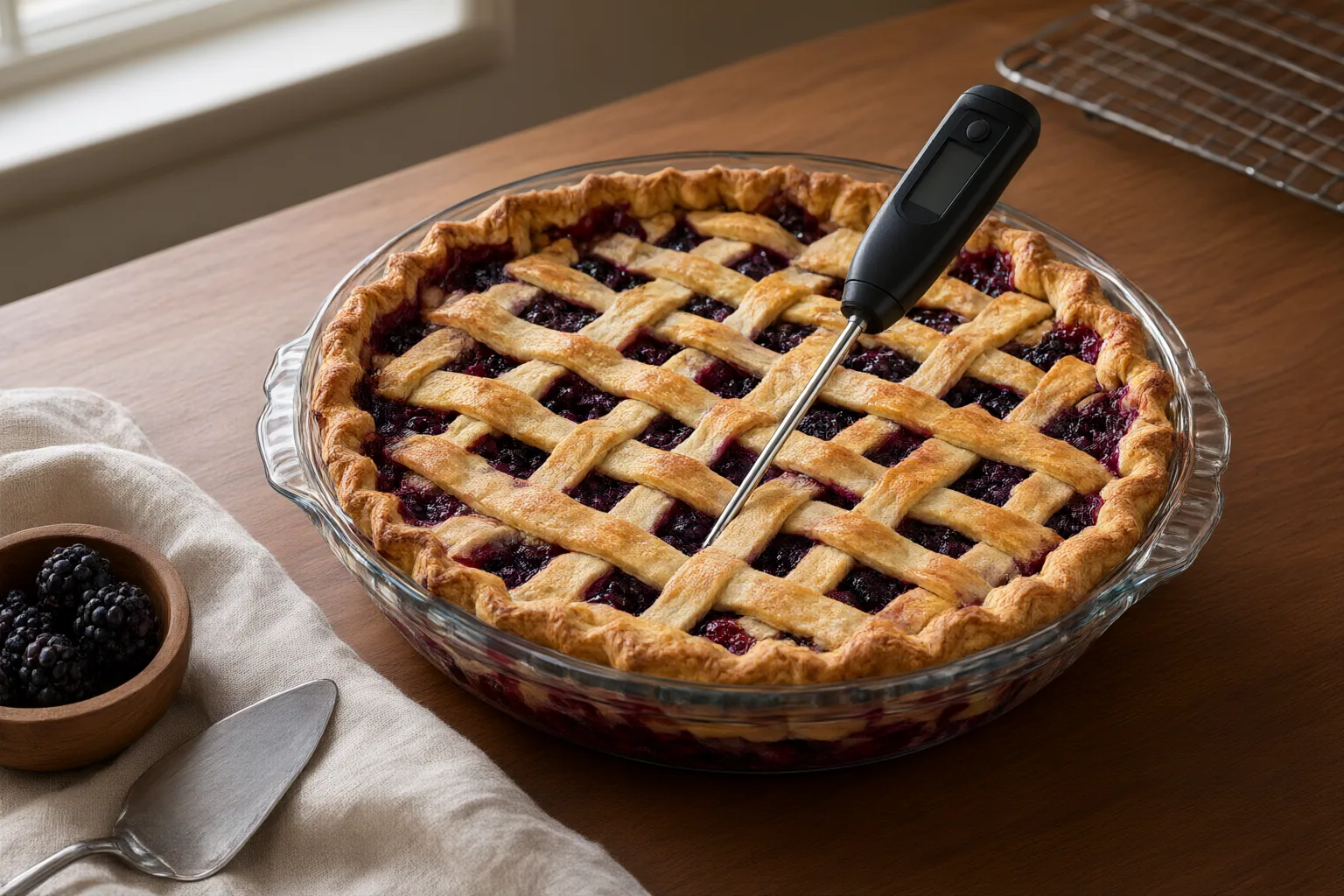
Baking doneness and serving readiness are separate stages. The pie-specific source identifies a golden crust and bubbling filling as visible signs of doneness during baking. It also says a food thermometer is more reliable than visual judgment alone when checking temperature.
Once the pie is baked, the serving question changes from whether it is done to whether the filling has cooled sufficiently. The relevant serving recommendation is 85°F (29°C) or below. A pie can therefore show the stated visual doneness cues and still require substantial cooling before it reaches the recommended serving range.
Keep the two decisions distinct: use the documented baking cues to assess what is happening in the oven, and use a temperature measurement to assess readiness for serving afterward. This avoids confusing an oven-stage observation with the lower temperature recommended before the pie is sliced and served.
Serving Now Versus Holding Pie for Later
The 85°F (29°C) figure is a fruit-pie serving recommendation. It should not be confused with general guidance for keeping food hot or cold over an extended serving period. The supplied general sources say hot-held food should remain at or above 140°F (60°C), while cold-held food should remain at approximately 40°F (4°C) or below.
Those figures are holding-safety thresholds, not evidence that fruit pie tastes best or has its best texture at either temperature. They address a different decision: maintaining hot or cold food during holding rather than determining when a freshly baked fruit pie has cooled to its recommended serving range.
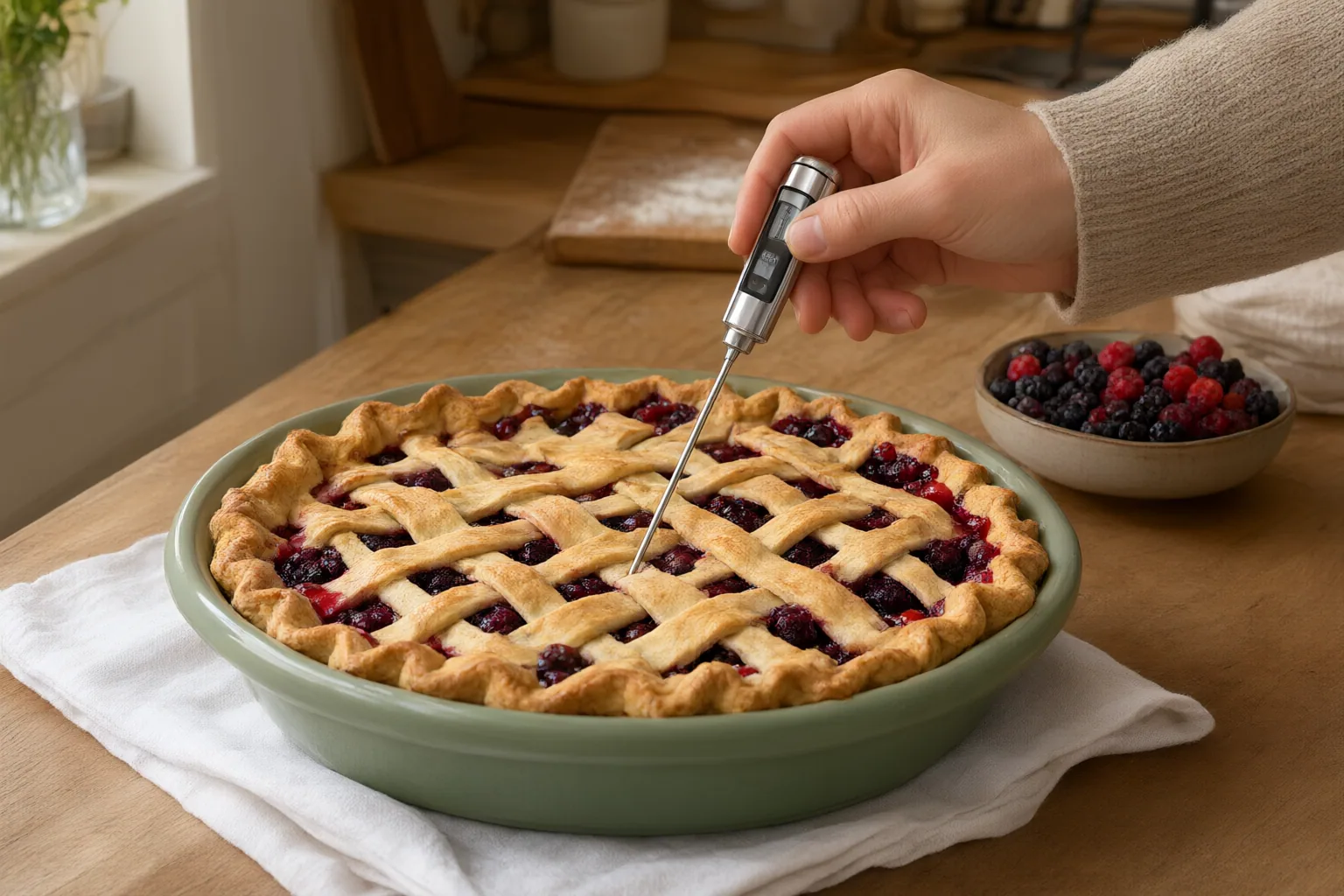
If pie will be served after an extended holding period, distinguish the holding plan from the preferred serving point. The general sources also recommend checking temperature with a food thermometer instead of relying only on perception. This distinction helps hosts apply each number only to the purpose supported by the sources.
Conclusion
For a straightforward serving decision, begin with roughly three hours of cooling, while allowing for the fact that the pie plate can change how long the process takes. Do not assume the pie is ready solely because three hours have passed or because its surface no longer feels very warm.
Instead, separate the stages clearly. A golden crust and bubbling filling are the documented visual cues associated with baking doneness; cooling afterward brings the filling toward the recommended serving point. General hot- and cold-holding thresholds apply when food is being held, but they do not establish the ideal eating temperature for fruit pie.
Before slicing, check the filling with a food thermometer. If it is still above 85°F (29°C), allow more cooling time and measure again.
Disclosures and limitations
- This article was prepared with AI assistance and editorially synthesized from the supplied source material.
- Temperature recommendations are limited to the cited fruit-pie guidance and general food-holding sources; no independent product testing was performed.