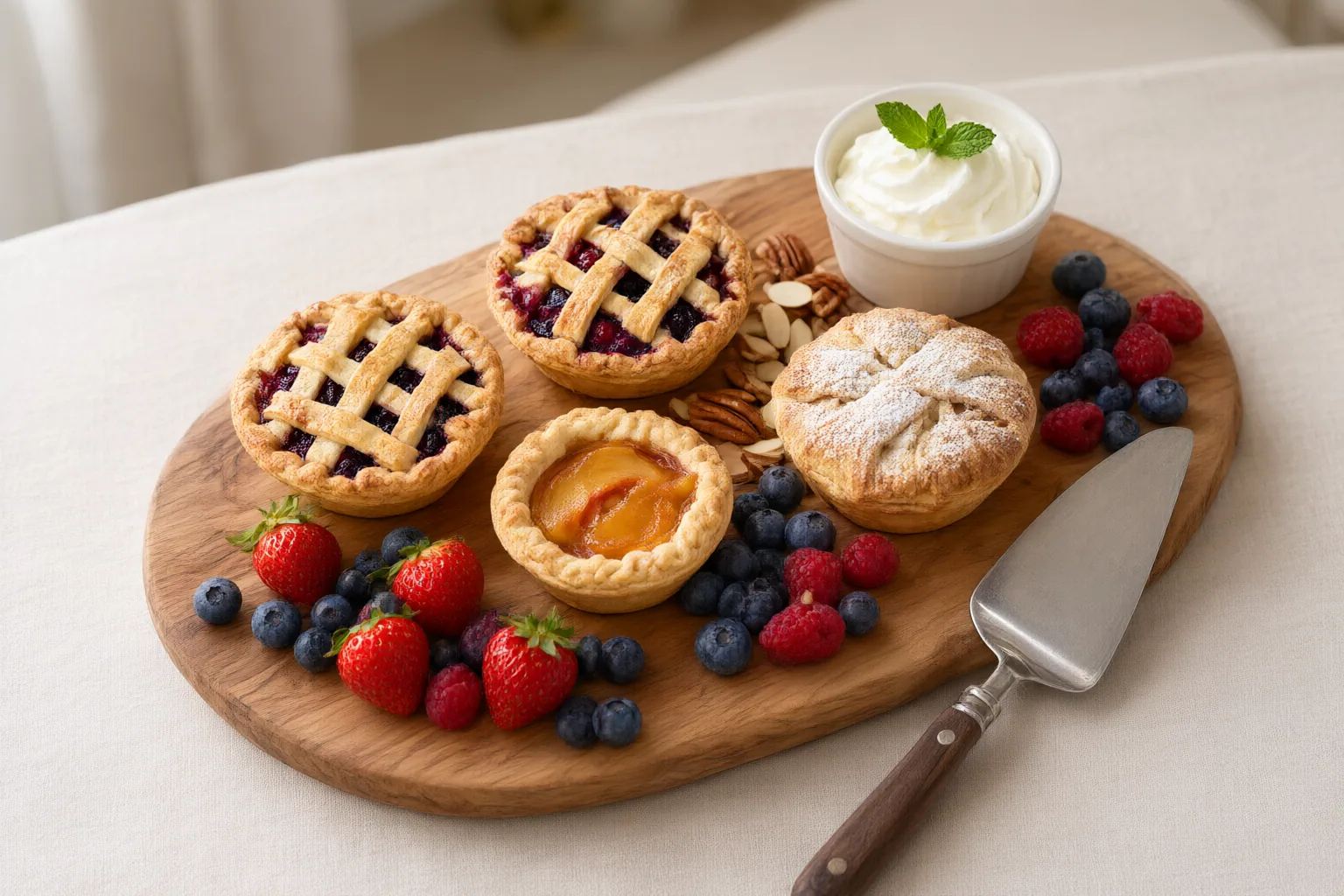
Build a compact fruit pie dessert board by choosing mini pies, adding two or three complementary items, and arranging everything shortly before guests serve themselves.
Choose the Board, Pies, and Portions
Start with a wooden serving board or, if easier transport matters, a rimmed sheet pan lined with parchment. Mini pies make self-service simpler because guests do not need to cut slices from a full-size pie; depending on the format, they may also be able to eat them without plates or forks.
Choose either one preferred pie variety or several flavors. A large assortment is optional, not a requirement. Several varieties give guests a chance to sample different flavors in smaller portions, while a single variety keeps preparation focused. If you offer multiple flavors, group matching pies together so the choices are easier to recognize. Premade mini pies or ready-made fillings are possible shortcuts when preparing several homemade flavors would take too much time.
Select a Few Practical Accompaniments
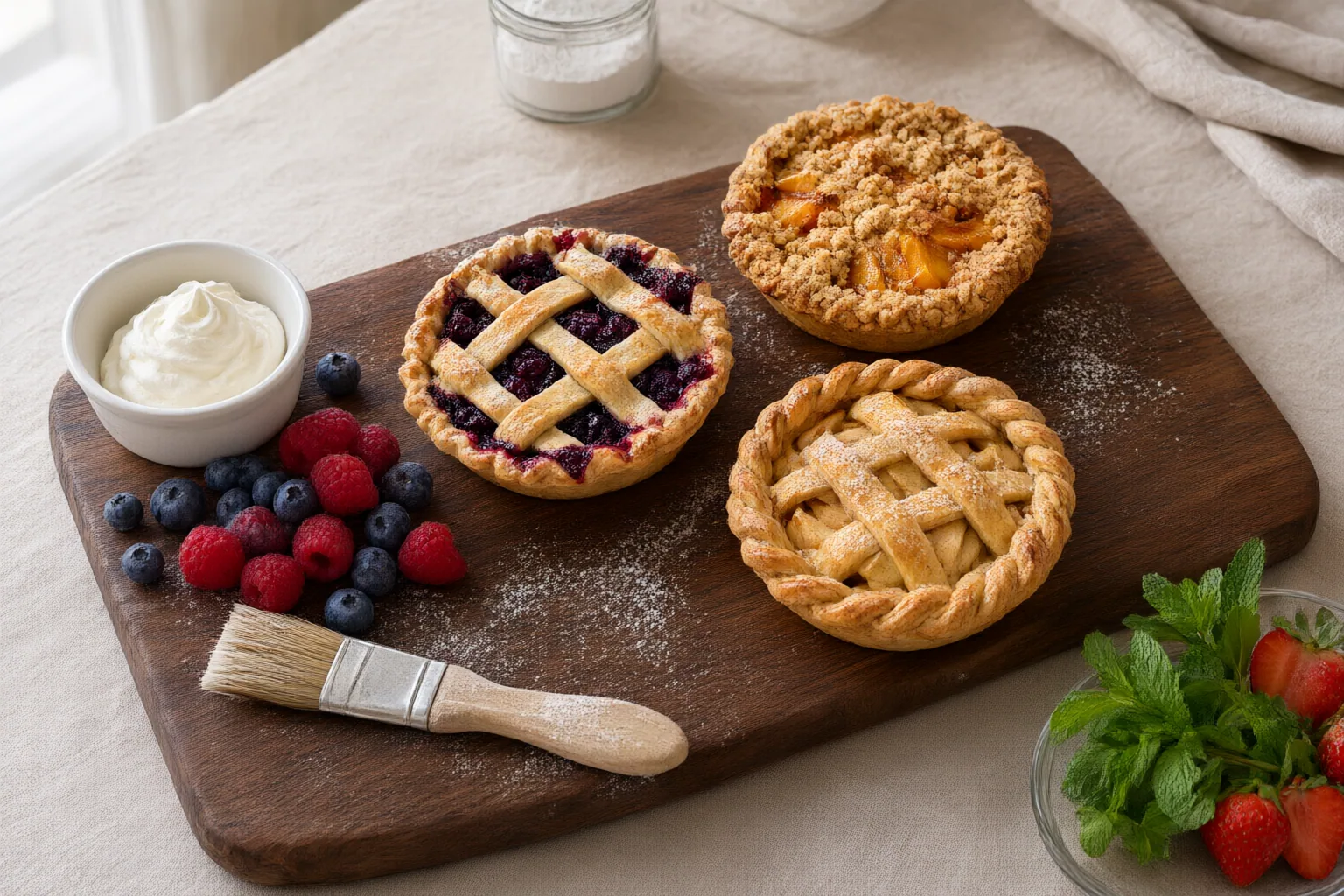
A small board does not need every possible extra. Select two or three accompaniments that suit the pies and fit comfortably around them. The cited examples include fresh fruit, whipped cream, cookies, sauces, nuts, candies, chocolate shavings, and mint.
For example, the board might combine mini pies with a bowl of whipped cream, sliced apples, and one small sweet or crunchy item. Nuts, cranberries, chocolate-covered almonds, and caramels have all been used to fill smaller spaces, but they are options rather than a required checklist. Keeping the selection limited preserves room around the main dessert and makes the display easier to navigate. Follow the applicable recipes and product labels for preparation, handling, storage, and allergen information; the serving examples are not substitutes for those instructions.
Arrange and Prepare the Board for Serving
Prepare the pies ahead of time and let them chill fully when the recipe calls for chilling. This turns board building into a short final task instead of a last-minute baking project.
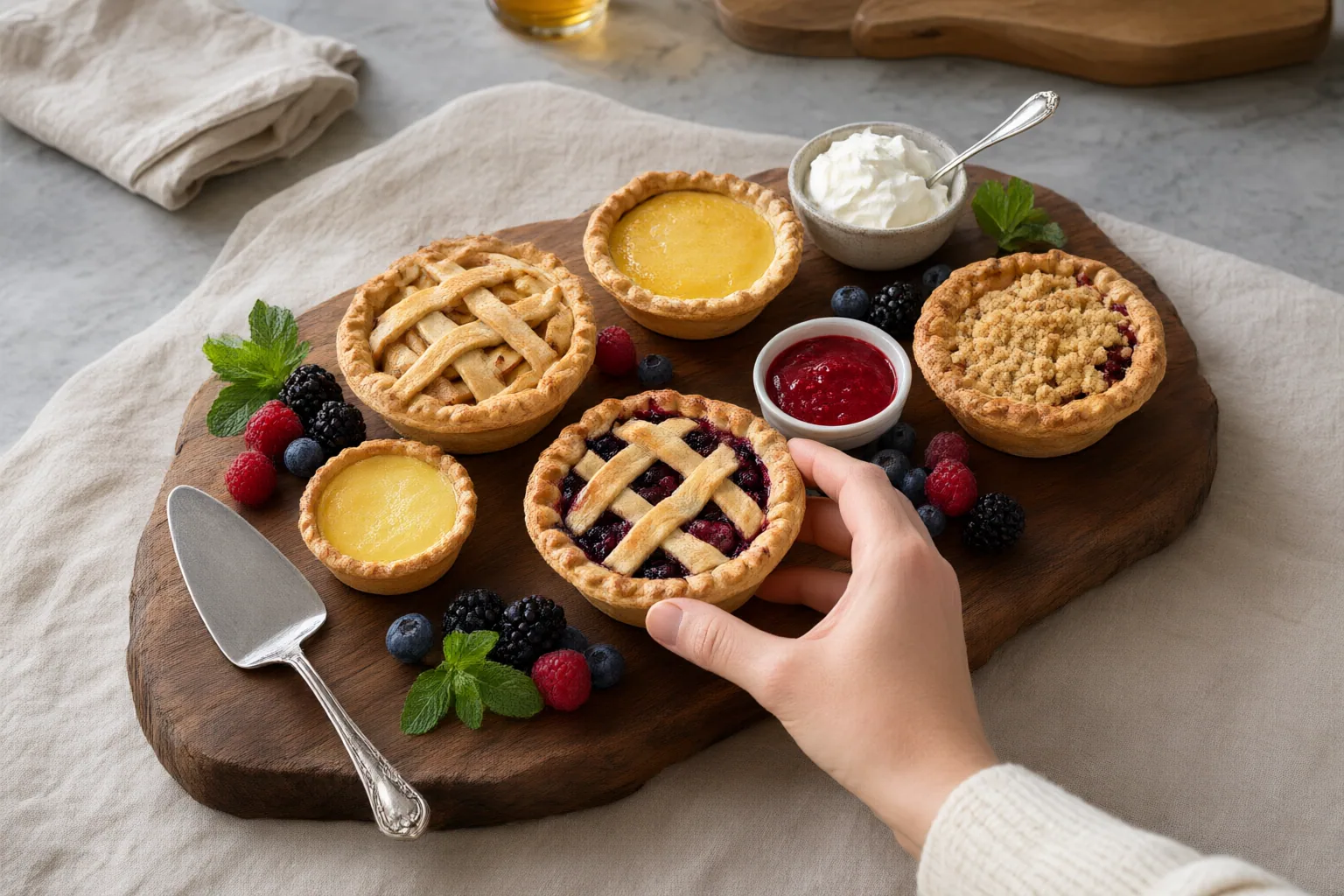
For a clear arrangement, work from largest to smallest:
- Place the mini pies first, grouping them by flavor when more than one variety is offered.
- Add other large components, such as a small bowl of whipped cream.
- Arrange fresh fruit in a defined section rather than scattering it everywhere.
- Fill remaining openings with smaller accompaniments, stopping before the board feels crowded.
If using sliced apples, one cited method coats them with lemon juice shortly before arranging them to help address browning. Add those slices near serving time. This sequence establishes the board’s structure before small items occupy the available space, keeping the pies visually central and the flavor choices easier for guests to identify.
Conclusion
The practical formula is straightforward: mini pies, a suitable serving surface, and a limited set of accompaniments. Use one flavor for simplicity or group several flavors for easier choosing, position the large pieces first, and add small items only where space remains.
After serving, separate the components rather than storing the assembled board as one unit. One cited approach keeps leftover pies in an airtight container in the refrigerator, stores nuts and candies in airtight containers at room temperature, and uses apple slices the same day. Always defer to the applicable recipe, package label, and current food-safety guidance because storage and allergen needs can vary. Choose your pie format and two or three accompaniments now, prepare the pies ahead, and follow the large-to-small assembly order shortly before serving.
Disclosures and limitations
- This article was prepared with AI assistance from the supplied third-party recipe and lifestyle sources; its factual claims are limited to those materials.
- This independent editorial guide does not sell products or provide manufacturer service. No product records, prices, ratings, availability details, or affiliate offers were supplied or evaluated.
Related reading
Sources
- Mini Pie Dessert Board: An Incredible Ultimate Guide with 7 Amazing Ideas – Recipe Culinary — Recipe Culinary
- Mini Pie Dessert Board — OverThePartyTable
- Skip the Dessert Table, Make a Pie Board Instead — Celebrated Nest
- Make a Mini Pie Dessert Board to Feed a Crowd or Bring to a Holiday Soirée | ehow.com — ehow.com