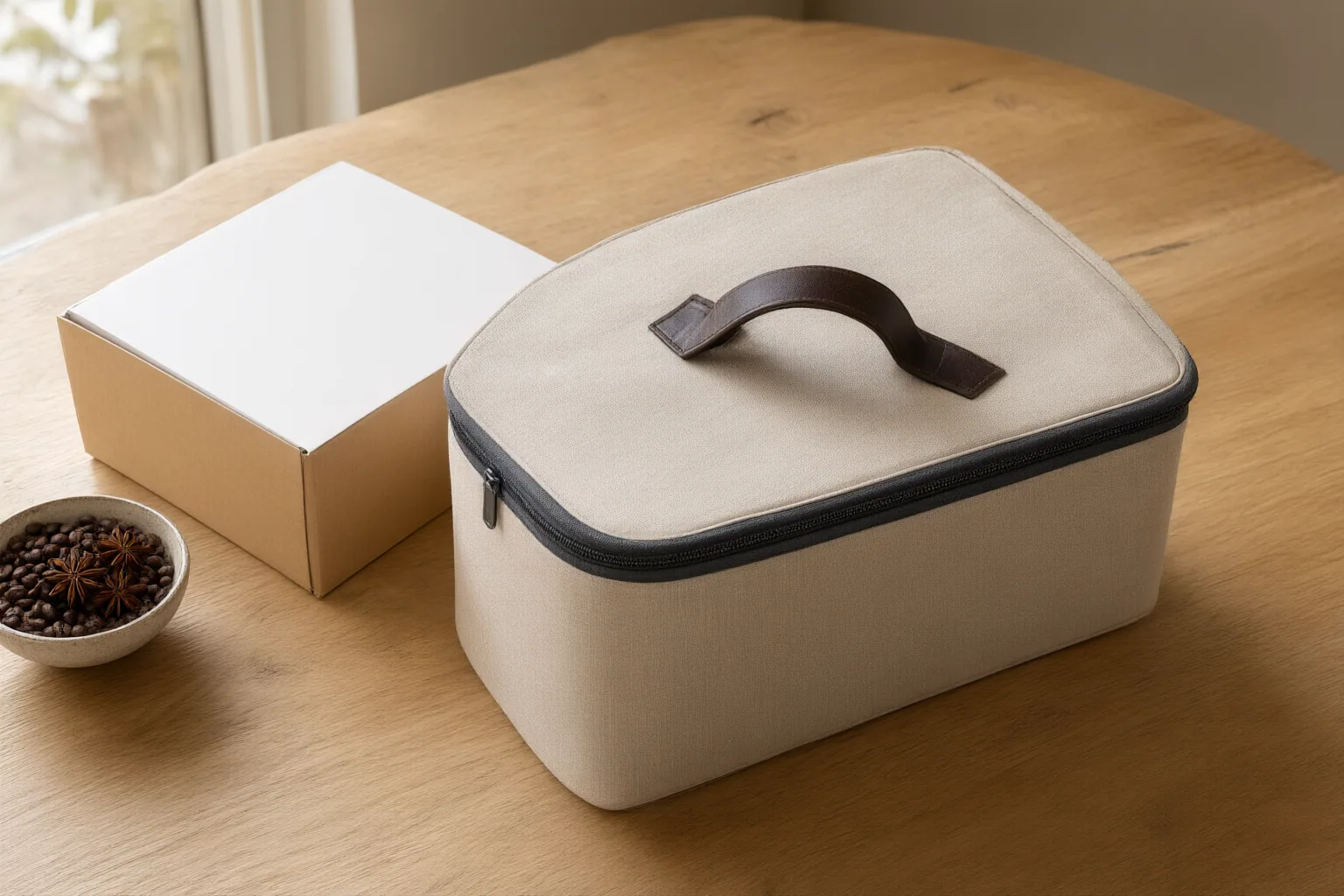
Keep the pie in its appropriate primary packaging, add a securely closed outer isolation layer, and place it as far as practical from strong-smelling cargo. Commercial descriptions connect odor control with barrier materials and secure closures, but the available sources do not prove that these features protect pies from external odors.
Separate the Pie From the Odor Source
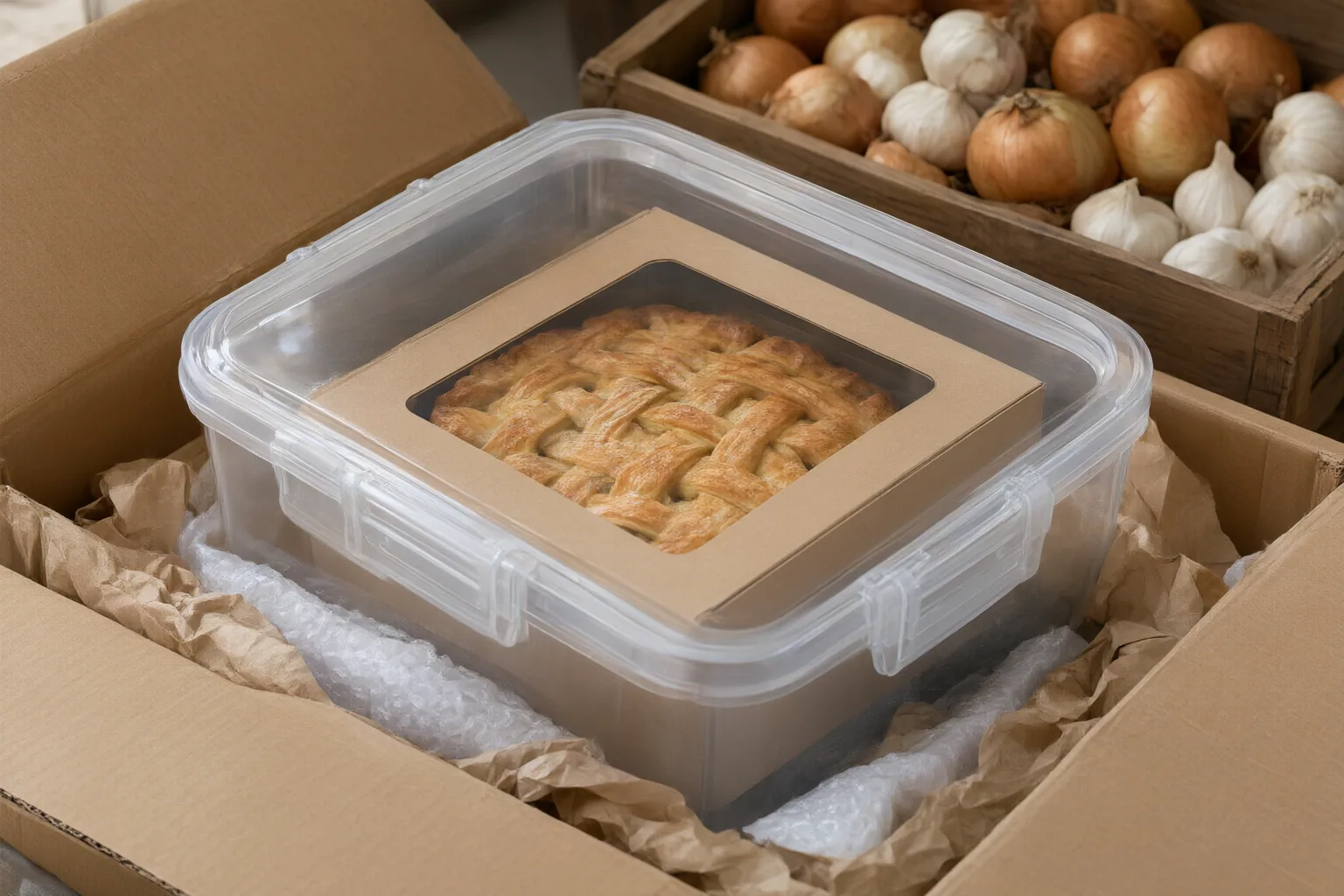
Treat distance and containment as complementary precautions. Leave the pie inside the primary packaging appropriate for it, then use a separate, securely closed outer layer to isolate that package from the rest of the load. Place the wrapped pie away from strongly scented cargo rather than expecting one bag or lining to do all the work.
This approach is a cautious interpretation of limited commercial evidence. One supplier describes multilayer plastics or blended materials as barriers against odor molecules. Another seller describes a travel bag combining heavy fabric, an activated-carbon lining, a sealed zipper, and an internal fastener. Both associate odor control with material construction and closure features. However, neither source reports a controlled test in which a pie was exposed to odors from neighboring cargo. The sources also focus mainly on containing smells inside a bag, so they do not establish how well the described products resist odors coming from outside.
What to Look For in an Outer Isolation Layer
The documented commercial examples point to three features worth evaluating: a barrier-style construction, a closure designed to seal, and, in one example, an activated-carbon lining. The supplier of odor-control bags says multilayer plastics or material blends are intended to impede odor molecules. The travel-bag listing describes 600D fabric, an interior carbon lining, a sealed zipper, and an internal fastener.
These are seller or manufacturer claims, not independent performance findings. They should therefore be treated as clues for comparing outer containers, not proof that a particular package will protect a pie. The sources do not establish pie-specific effectiveness, resistance to external cargo odors, or food-contact suitability. Unless the exact product label supports direct food contact, keep any odor-control container outside the pie’s appropriate primary packaging. A carbon lining may be an additional claimed odor-control feature, but the evidence does not show that it is necessary or sufficient for this use.
A Cautious Transit-Packing Checklist
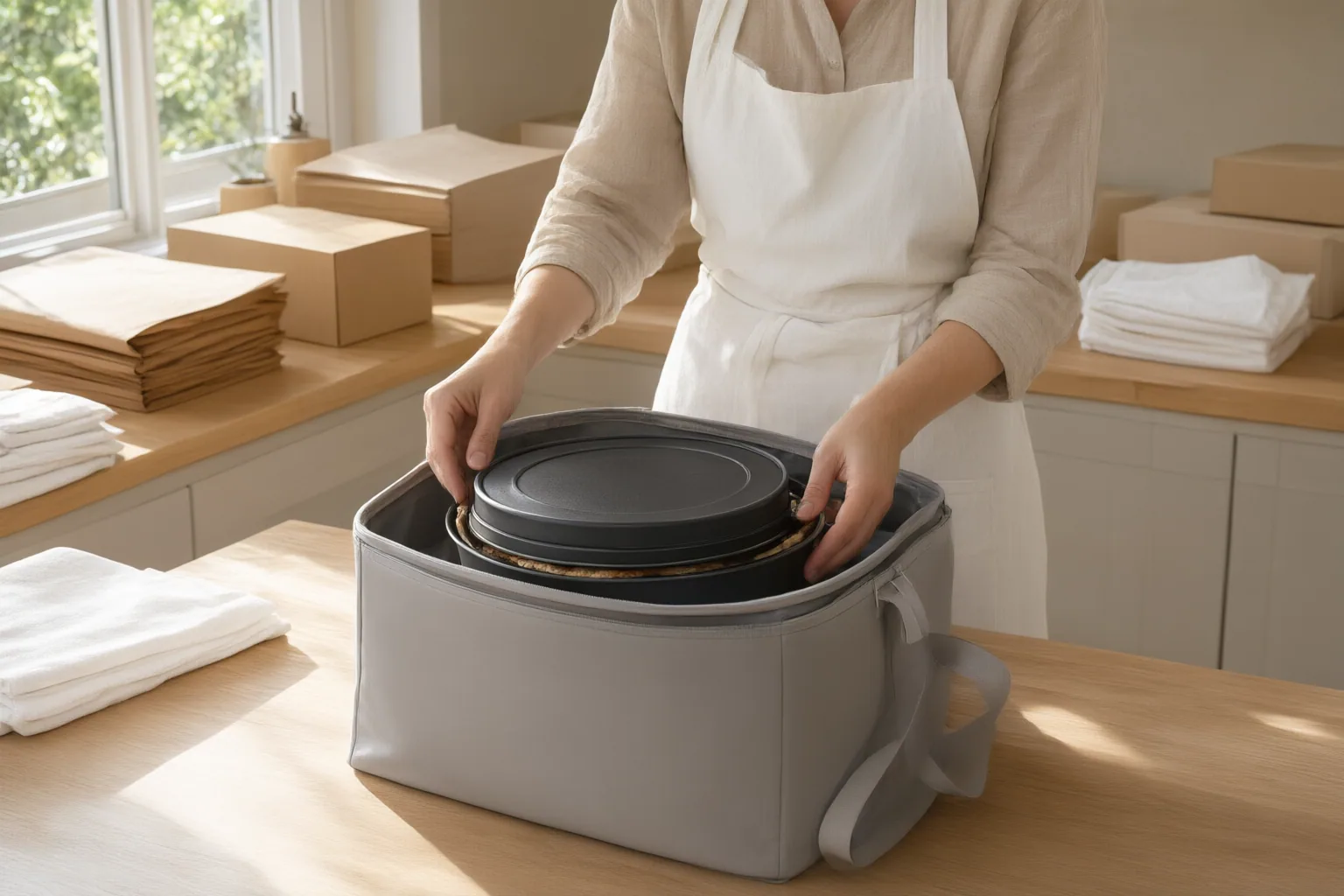
Use the available evidence as a framework for layered packing rather than as a performance guarantee:
- Keep the pie in its appropriate primary package instead of placing it directly into an odor-control bag whose food-contact suitability is not established.
- Add a separate outer isolation layer. When comparing options, look for the documented concepts of multilayer or barrier materials and a closure intended to seal.
- Close the outer layer completely. If it has more than one closure feature, such as a zipper and internal fastener, secure each one as directed by its label.
- Maximize practical distance between the pie and strong-smelling cargo. Physical separation reduces reliance on unverified packaging claims.
- Inspect the packed gift before departure. Confirm that the primary package remains intact, the outer closure is fully secured, and odorous items are not immediately beside the pie.
This checklist does not establish that the pie will remain unaffected by every odor. The cited pages describe commercial odor-control products, including a bag for pet-waste containment and a travel bag marketed for smelly foods and other items. Neither provides independent, pie-specific test results, so the most defensible approach combines several precautions.
Conclusion
No supplied evidence supports relying on one unverified feature to shield a pie gift from odors from other cargo. The commercial descriptions instead suggest a layered approach: retain the pie’s appropriate primary packaging, add an outer barrier with a secure closure, and create as much practical distance as possible from the odor source. Carbon lining can be considered where offered, but it is not proven necessary for pie transport. Before leaving, inspect the primary package, fully close the outer isolation layer, and reposition the gift if strong-smelling cargo is nearby.
Disclosures and limitations
- This article was prepared with AI assistance from the supplied commercial source pages. Their odor-control statements are seller or manufacturer claims, not independent pie-transport test results.
- No product recommendation or affiliate relationship is presented here; readers should verify the exact package label, including any food-contact information, before use.
Related reading
Sources
- Odor Proof Bags & Odor Proof Bags Wholesale, Supplier, Factory, Manufacturer China — custompackagingbags.com
- Amazon.com: Enjoy Native Smell Proof Bag with Lock 11" x 9", Premium 5 Layers 600D Box | 100% Stealth Smell Proof Container, Zero Leak Dog Tested Odor resistant Bags, Discreet Storage Best Zipper odor sealing pouch : Industrial & Scientific — amazon.com