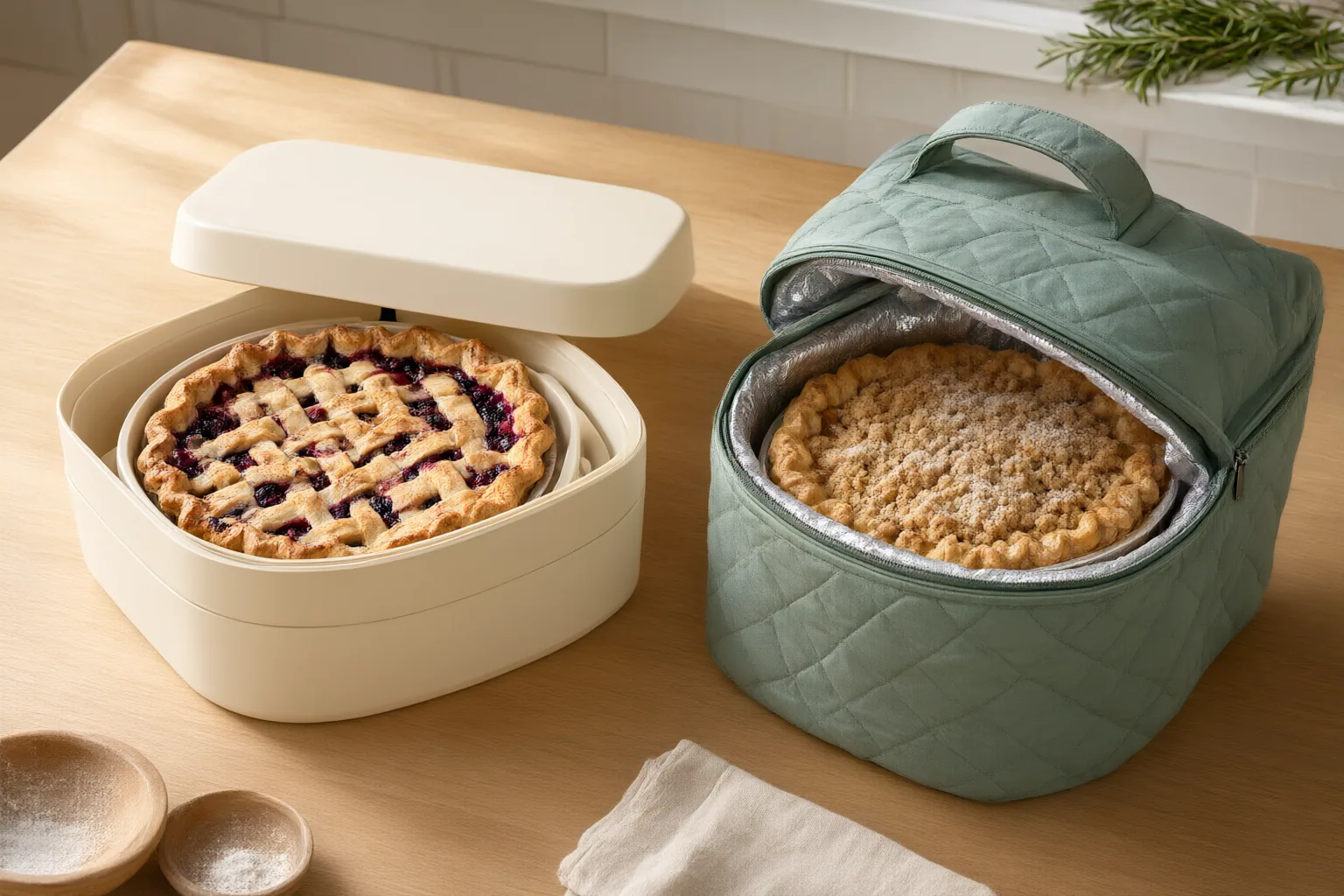
Choose according to the trip’s biggest risk: a rigid carrier is generally better suited to protecting a gift pie from crushing, impact, and sliding, while an insulated fabric carrier emphasizes temperature retention. Whichever format you consider, confirm the interior width, vertical clearance, structural support, and closure before transporting the pie.
Start With the Trip’s Main Risk
Begin by considering what is most likely to damage the pie during the trip. The two available carrier guides frame the decision as a tradeoff between structural protection and temperature retention.
A rigid carrier is the more appropriate starting point when the route involves a greater chance of impact, crushing, or movement. Its firm exterior can provide stronger protection against compression and can help limit sliding. This may matter when the pie will share a crowded vehicle or could encounter other items during loading and unloading.
An insulated fabric carrier is worth considering when retaining the pie’s serving temperature is the more important concern. However, insulation does not necessarily provide the same resistance to pressure as a rigid shell. Heavy objects placed on a fabric carrier could compress it and damage a raised crust or topping.
Neither format is automatically suitable. A rigid carrier may offer no meaningful insulation, while an insulated carrier still needs adequate support and a secure fit. Choose only after considering the trip length, handling conditions, likely pressure from surrounding items, and the pie’s shape.
Compare Protection, Insulation, and Closures
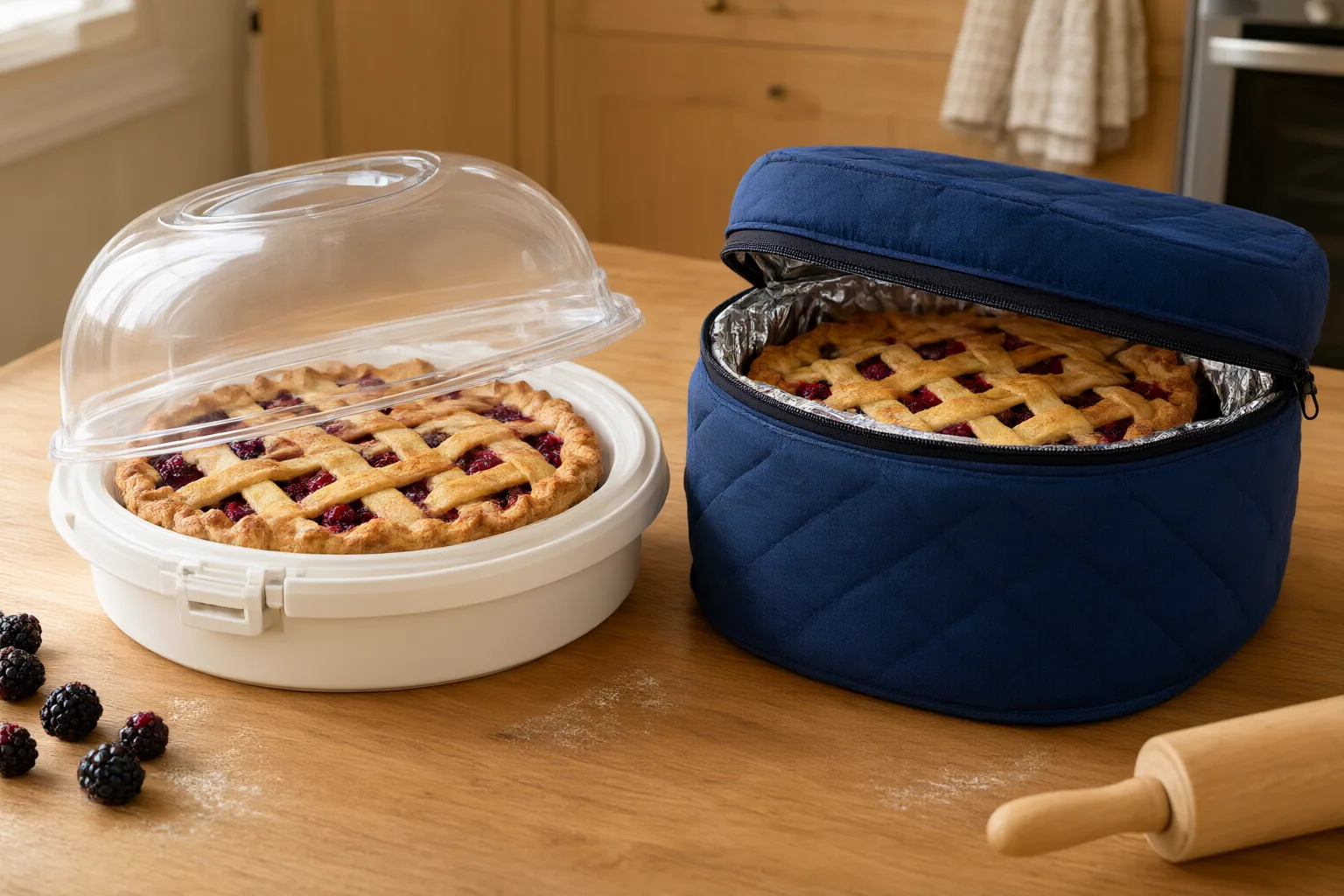
Rigid pie carriers commonly use clamps or latches, while insulated fabric carriers commonly close with zippers. The closure should remain aligned and secure through carrying, loading, and unloading. A closure that unlatches, catches, or forces awkward handling can increase the chance of tipping or damaging the pie.
For a rigid model, examine whether the lid and base meet correctly and whether the clamps or latches can be operated without tilting the container. The rigid walls are the format’s principal advantage: they offer greater resistance to crushing and can protect the pie from contact with nearby objects.
For an insulated fabric model, consider both the zipper and the support beneath and around the pie. Insulation can help retain temperature, but a soft-sided carrier may offer less protection from external pressure. It should not be treated as a surface for stacking heavy objects.
Also plan how the pie will be removed at its destination. The carrier should open far enough to allow controlled lifting without scraping decorative crust, meringue, or another raised topping. These checks do not establish the performance of any specific product; they help identify which design characteristics address the trip’s foreseeable risks.
Measure the Pie, Plate, and Topping
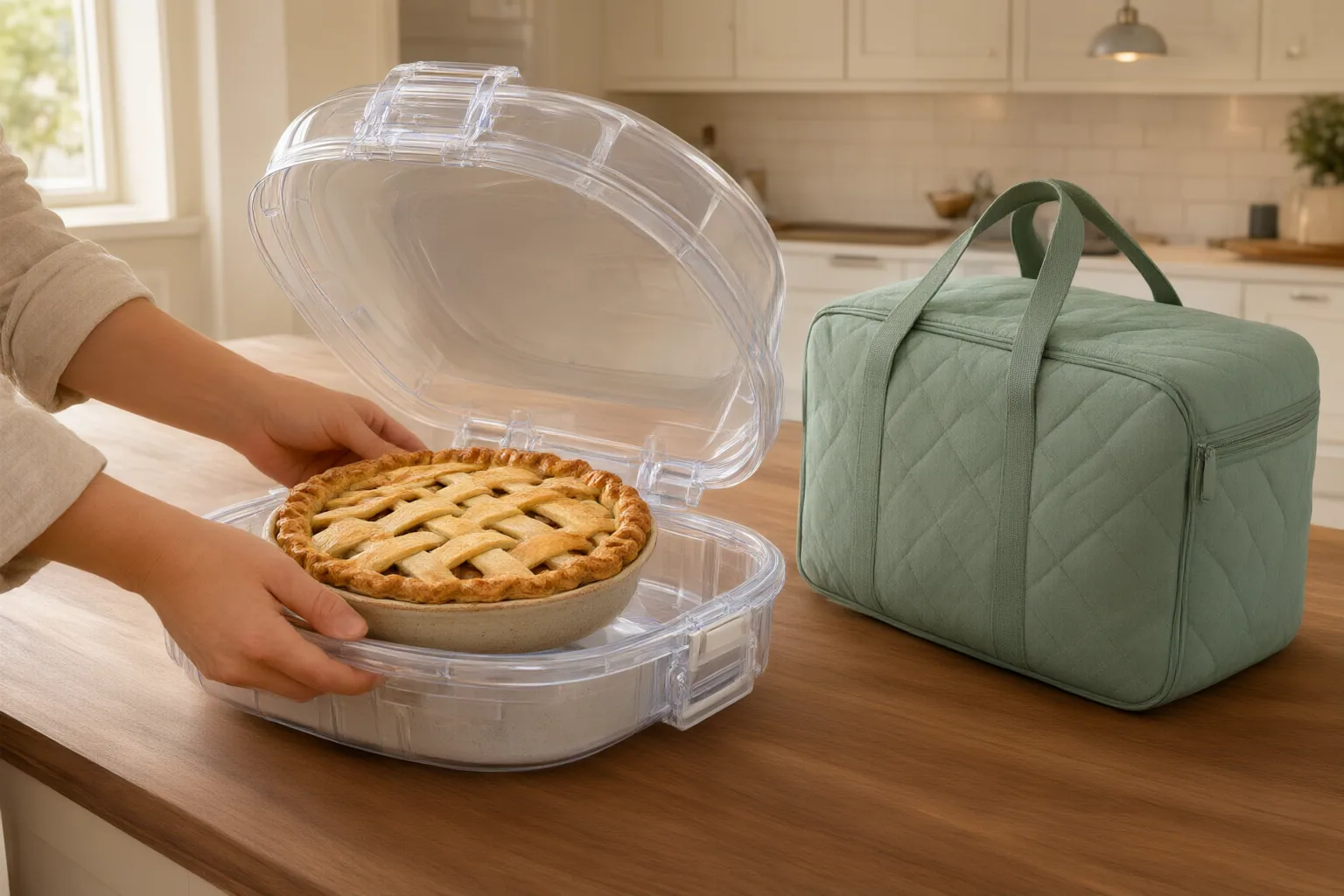
Do not rely on the pie’s nominal diameter alone. The guides recommend checking a carrier’s interior dimensions because the plate, dish, topping, and crust may extend beyond the expected size.
Measure the plate at its widest point, including handles, rims, or projecting edges. Then measure the completed pie’s full height from the bottom of the plate to the highest part of the crust or topping. Deep-dish pies, decorative crusts, and meringue can require substantially more vertical clearance than a low, flat pie.
Compare those measurements with the carrier’s usable interior width and height—not merely its exterior dimensions or advertised pie diameter. Allow enough clearance so the lid or fabric top does not press against the pie. At the same time, consider whether the base provides stable support; excessive room without adequate support may allow the plate to slide.
Finally, consider the opening and closure path. A carrier may appear large enough inside yet still be awkward to load if a zipper, rim, or lid restricts access. Fit should cover the complete process: placing the pie inside, securing the closure, carrying it level, and removing it without contact with the topping.
Conclusion
Choose a rigid carrier when protection from compression, impact, or sliding is the trip’s leading concern. Consider an insulated fabric carrier when retaining serving temperature matters more, while recognizing that its softer structure may need extra protection from external pressure.
In either case, a secure closure and correct interior fit are essential. Before choosing, measure the plate’s widest point and the finished pie’s full height. Then match those measurements—and the most likely transport hazard—to a carrier with sufficient clearance, stable support, and a closure that can be handled without tipping the gift.
Disclosures and limitations
- This article was prepared with AI assistance from the supplied research package and draws on two editorial carrier guides. Their similar claims were not independently verified, and no specific product performance, price, availability, rating, or review count is asserted.
- No specific products or affiliate offers are recommended in this article. Readers should verify a carrier’s dimensions and features from its current label or seller information before making a purchase.