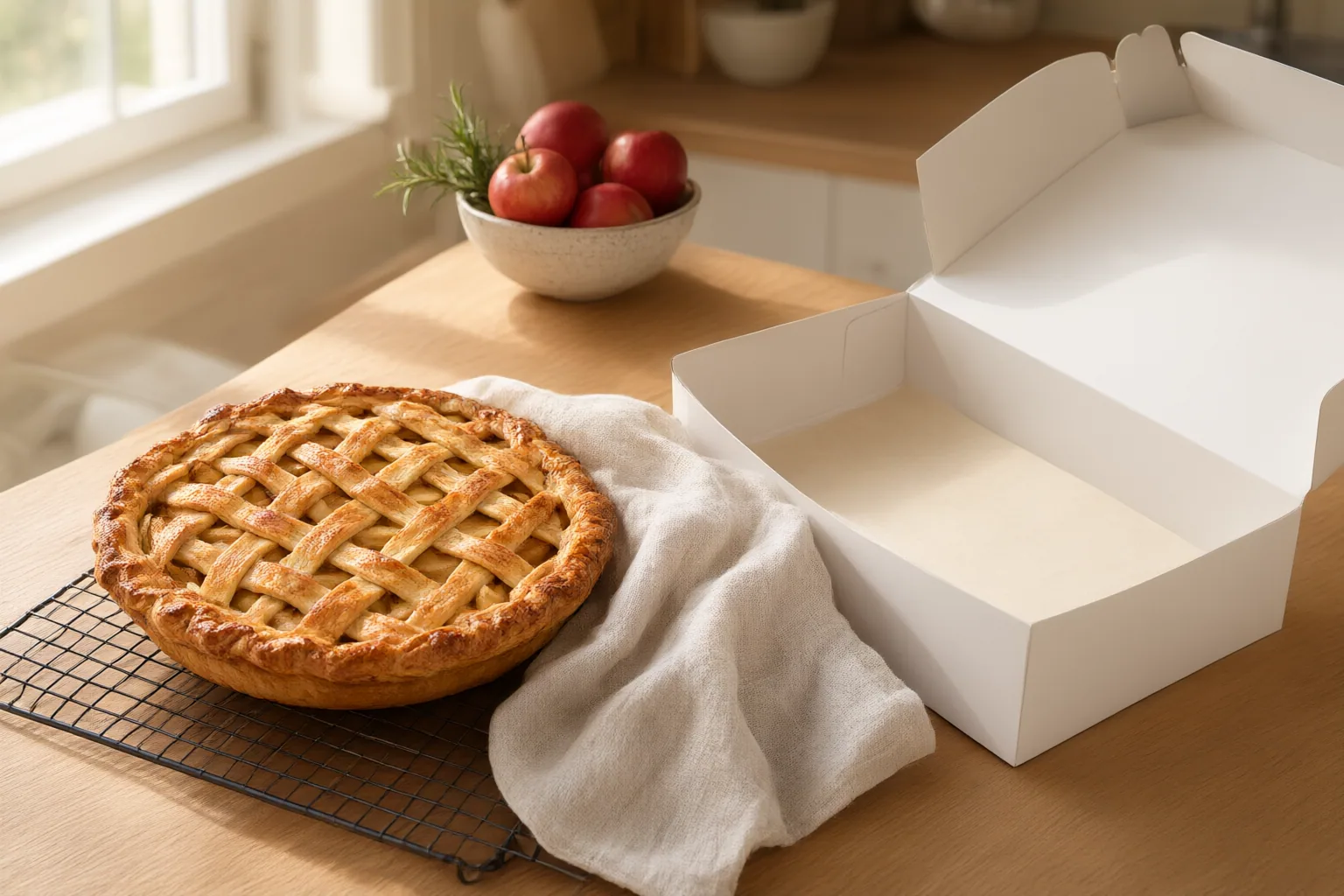
For a same-day gift handoff, let the pie cool on a wire rack before packing it, use breathable food-safe material, and place it in a rigid box that limits movement without pressing on the crust. This combination helps steam escape while protecting the pie from handling and crushing.
Cool the Pie Before Closing the Package
Cooling is the first part of packaging, not a separate afterthought. Place the baked pie on a wire rack so air can circulate around it and residual steam can escape. Closing a bag, wrap, or box around a warm pie can trap that steam; the resulting moisture may soften surfaces that were crisp when the pie left the oven.
Do not rely on a fixed cooling time, because the available guidance does not establish one that applies to every pie, filling, climate, or journey. Instead, avoid closing the package while the pie is still releasing noticeable warmth and steam. Keeping it uncovered during this stage gives moisture somewhere to go before the pie enters its gift packaging.
Cooling cannot remove every risk of a soft crust. A moist filling can transfer moisture into the pastry, so even carefully selected packaging cannot guarantee that every crust will remain crisp. Its practical role is to avoid adding another source of moisture by trapping steam around the freshly baked pie.
Choose Breathable, Food-Safe Materials
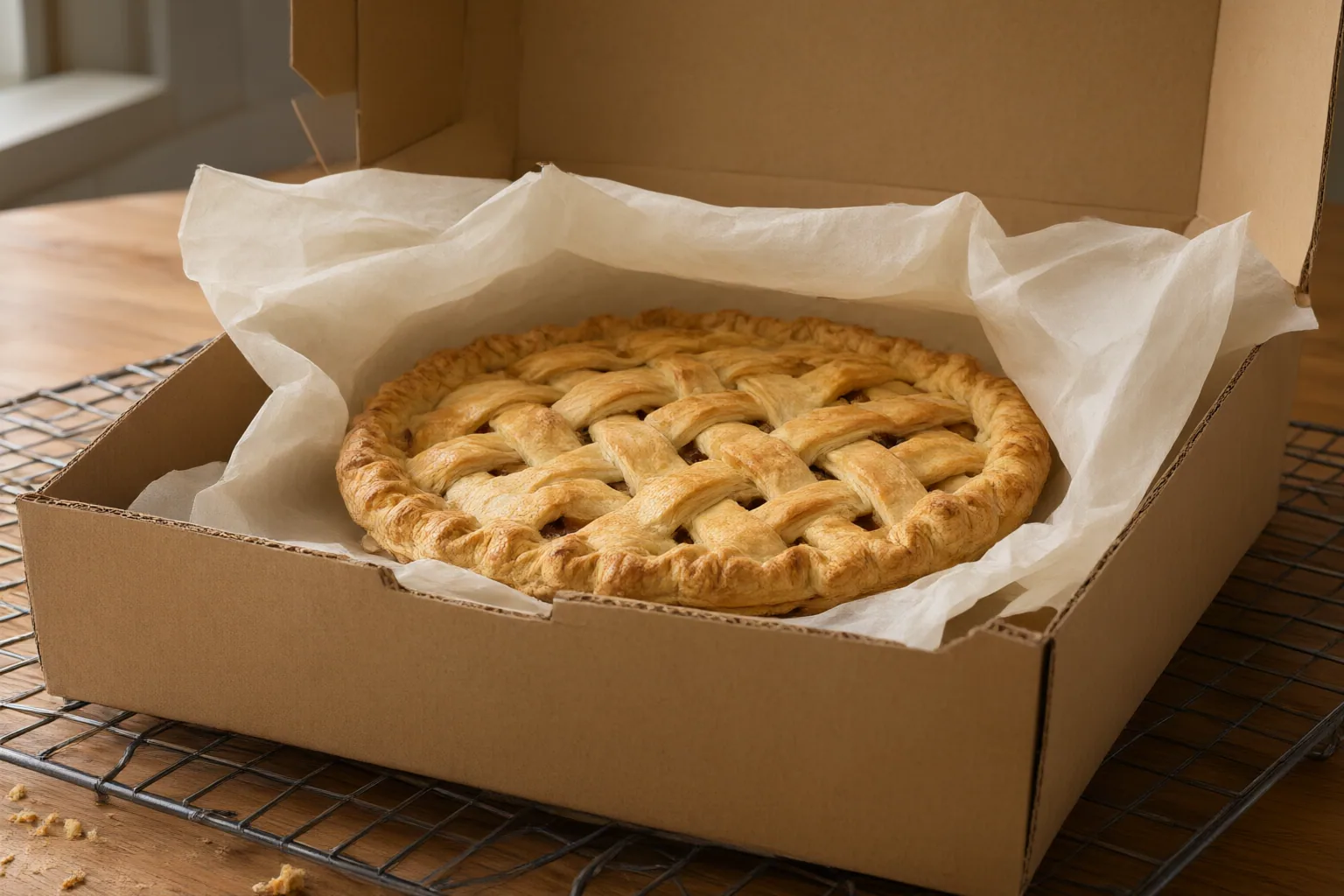
For a crusty baked gift intended for same-day use, breathable paper packaging offers a useful balance: it shields the pie from handling and debris while allowing steam to escape. By contrast, sealing a pie while it is still warm—especially in non-breathable plastic—can hold moisture close to the crust and encourage softening.
Any paper, liner, bag, or other material that directly touches the pie should be food-grade. Printed materials intended for food contact should also use food-safe inks. These requirements matter independently of appearance; decorative gift packaging should not replace an appropriate food-contact layer.
Leave space on the package or an accompanying card for ingredient and allergen information. That information helps the recipient make an informed decision before eating the gift. The sources support breathable paper as a general approach for crusty baked goods, but they do not identify one material or package as universally best for every pie and set of conditions. The essential distinction is between allowing moisture to escape and sealing residual steam inside.
Add a Rigid Box for the Handoff
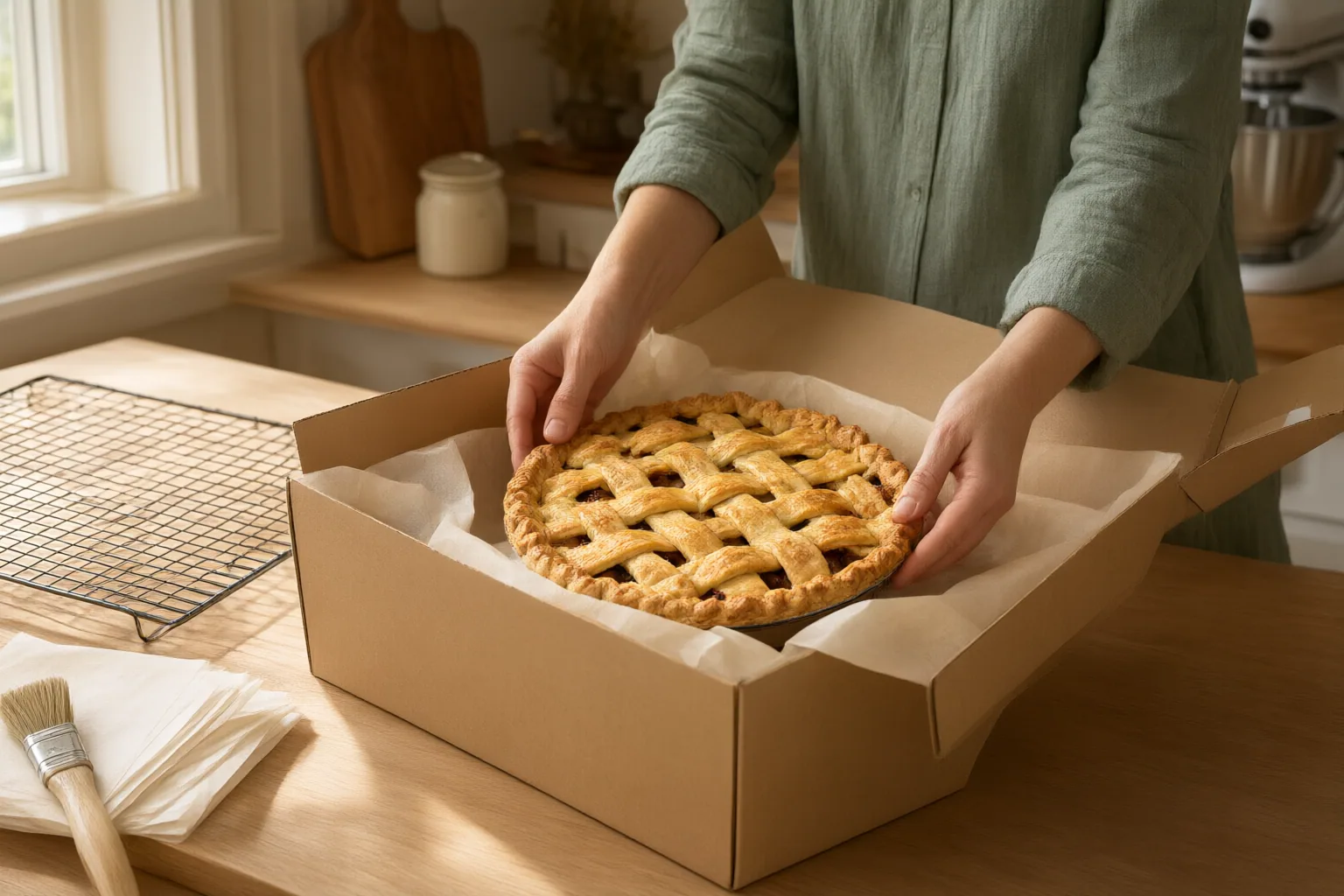
Breathability addresses moisture, while a rigid pastry or bakery box addresses physical damage. A box can help protect a fragile crust from crushing during carrying and handoff. Available guidance pairs paper wrapping or bags with a loosely packed box for delicate, crusty baked goods, allowing the inner material and outer container to perform different jobs.
Choose a box sized to limit shifting without pressing against the crust. Too much empty space can allow the pie to move, while a tight lid or firmly packed material can damage its surface. The goal is stable support rather than compression. Keep the box level and avoid placing other items on top of it during transport.
This approach is a practical application of general bakery and packaging guidance, not the result of a controlled comparison of pie packages. Trip length, climate, filling moisture, and the pie’s structure can affect the result. A rigid box therefore improves handling protection, but it does not by itself preserve crispness; cooling and breathable food-safe materials remain part of the same system.
Conclusion
For a same-day pie gift, follow a simple sequence: cool the pie on a wire rack, place it in or around breathable food-safe material, and add a rigid box that limits movement without touching or crushing the crust. Include ingredient and allergen information for the recipient.
These steps reduce avoidable trapped steam and provide protection during transport, but packaging cannot prevent all softening, particularly when moisture moves from the filling into the crust. Before leaving, check that the pie is no longer being enclosed while warm, all food-contact materials are suitable, the box supports the pie without pressure, and the recipient information is attached.
Disclosures and limitations
- This article was prepared with AI assistance using the supplied bakery, pie-cooling, and food-packaging guidance sources. Claims are limited to those materials, which do not include controlled comparisons of pie packaging.
Related reading
Sources
- How to Package Baked Goods So They Stay Crisp — Bakeyy.com
- 7 Simple Ways to Keep Your Pie Crust Crispy After Baking – The Dough Academy — The Dough Academy
- Packaging Baked Goods So They Arrive Fresh and Intact | Small Food Boxes — Small Food Boxes