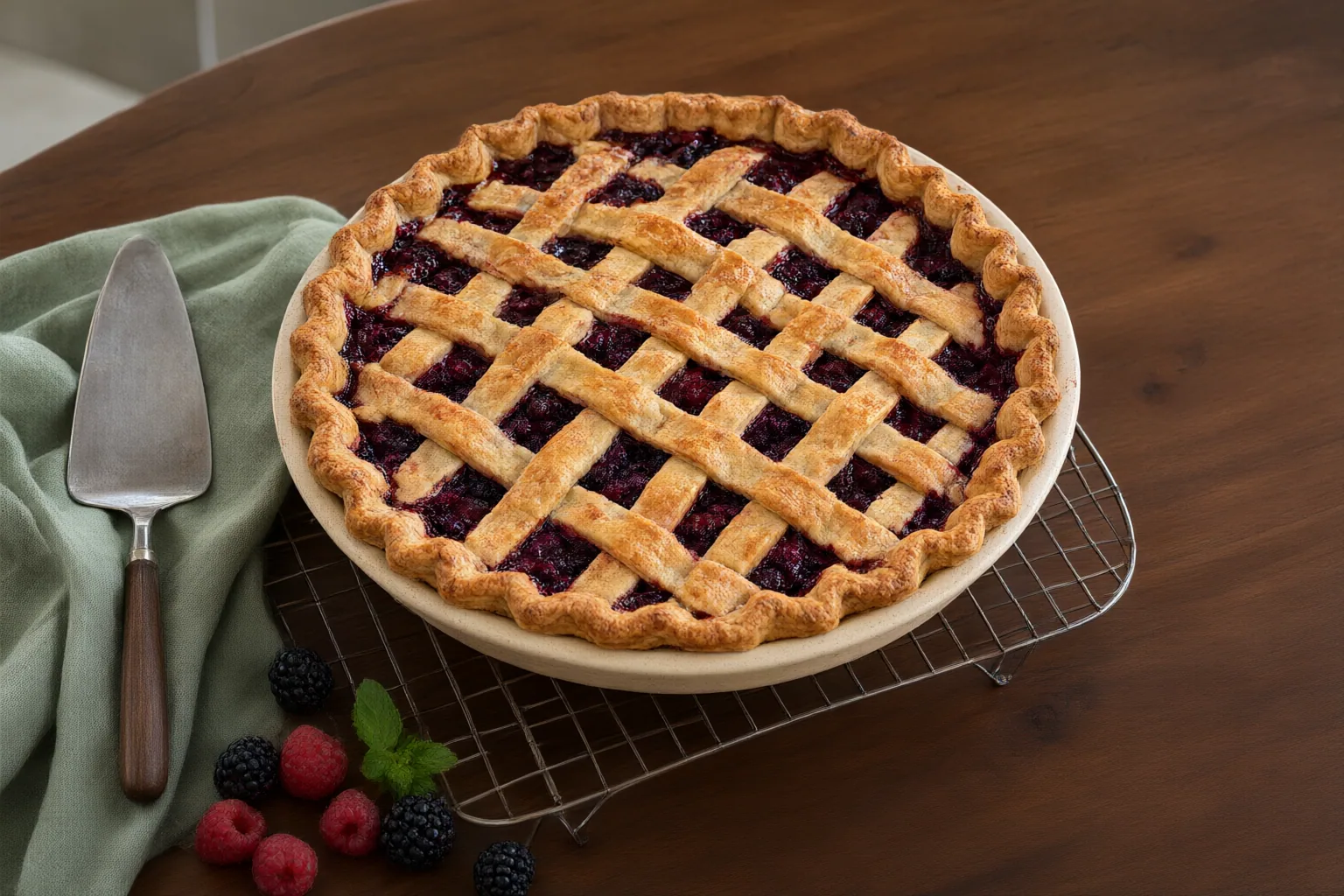
For pies containing eggs or dairy, use a two-hour total room-temperature limit, reduced to one hour above 90°F (32°C). Many traditional fruit pies may remain out for up to two days, but the filling, room temperature, and any product-label instructions determine the appropriate action.
Start With the Filling: Is the Pie Perishable?
Identify the filling before deciding how long a pie can remain at room temperature. Cream, custard, pumpkin, mousse, chiffon, and other pies containing eggs or dairy require refrigeration after cooling. Pie-specific guidance says these perishable pies should be refrigerated within two hours.
Many traditional fruit pies are treated differently: the cited pie-storage sources say they may remain at room temperature for up to two days. That distinction should not be applied blindly, however. A packaged pie may have its own preparation and storage directions, so follow the exact label when one is available. If the filling or ingredients are uncertain, do not assume the more permissive fruit-pie guidance applies.
Count Cooling and Serving as One Room-Temperature Window
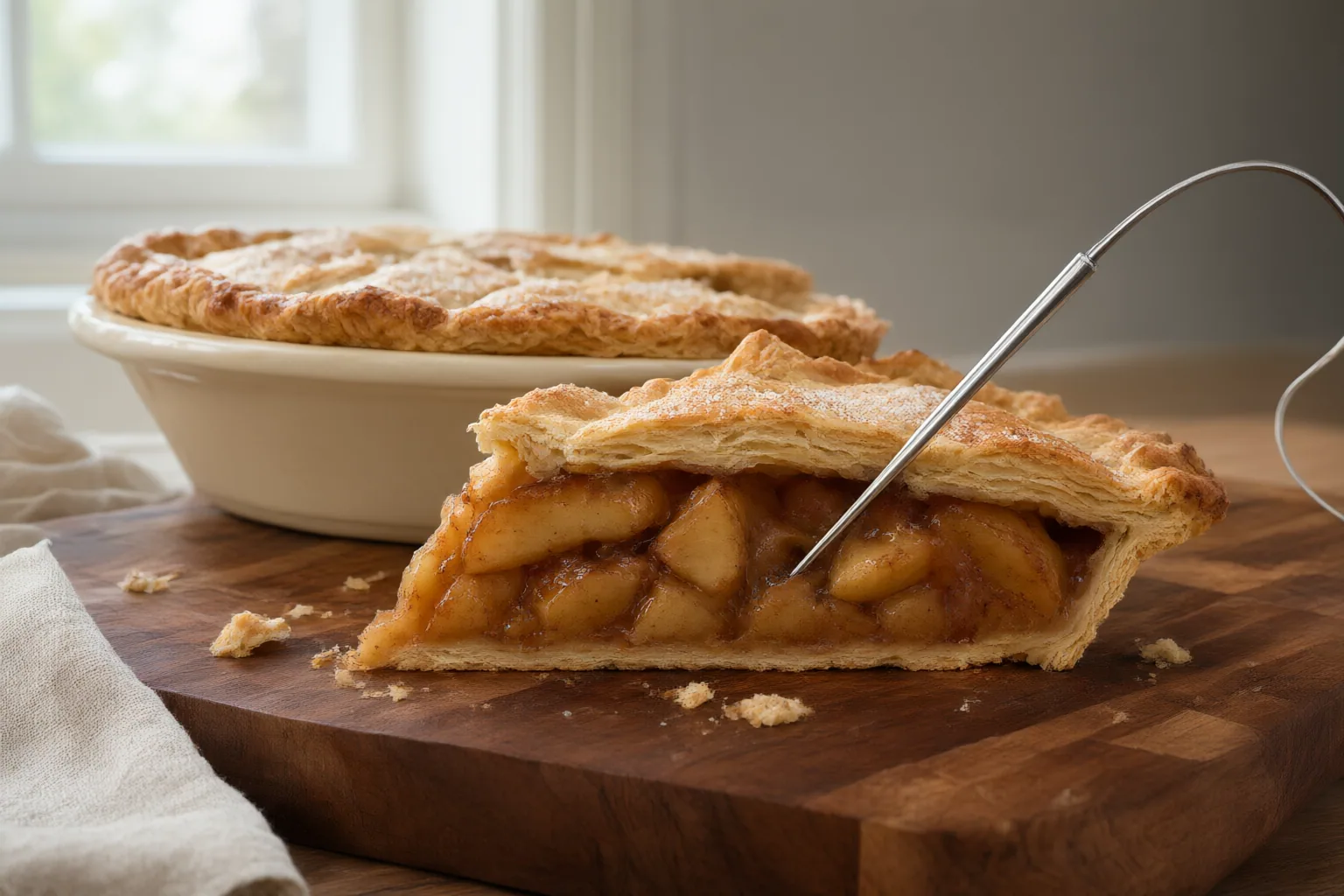
For a pie containing eggs or dairy, count all of its time at room temperature—not just the period when it is displayed for serving. Cooling on the counter and sitting out during a meal both contribute to the same total exposure. The clock does not restart when the pie moves from the kitchen to the serving table.
Mississippi State University Extension’s HappyHealthy guidance says cooked foods should not remain at room temperature for more than two hours and should be refrigerated or frozen as soon as possible. Pie-specific guidance likewise gives egg- or dairy-containing pies a two-hour window. When the ambient temperature exceeds 90°F (32°C), that cited window falls to one hour.
A practical approach is to note when the pie leaves temperature control. Include cooling time when calculating when refrigeration is due. If serving will continue for an extended period, return a perishable pie to refrigeration rather than allowing its combined cooling and serving time to exceed the applicable limit.
How Fruit Pies and Serving Conditions Change the Guidance
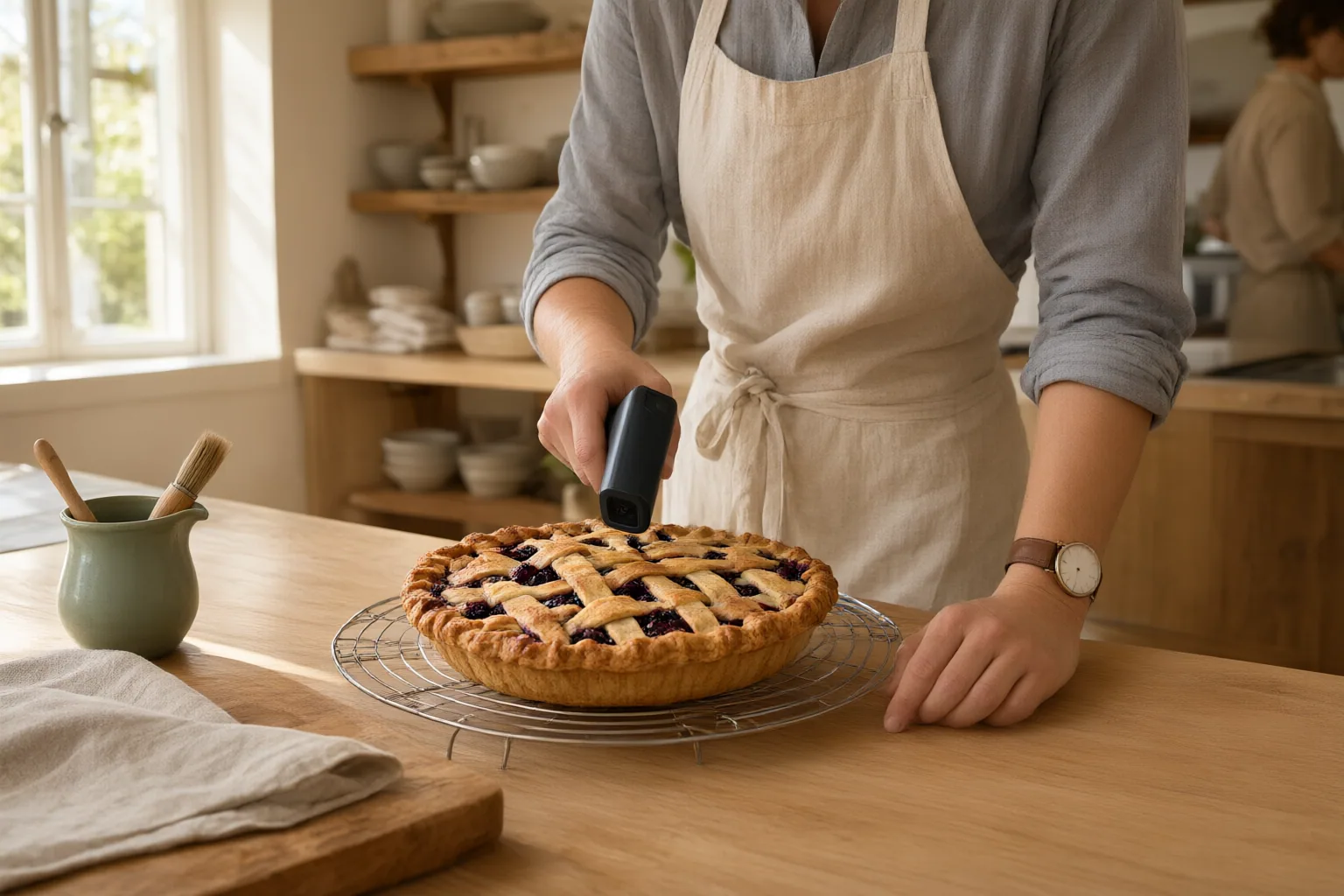
Both pie-specific sources say many traditional fruit pies can remain at room temperature for up to two days. Greatist adds that refrigeration is advisable in warmer conditions. This longer period is not a general rule for every pie labeled or described as “fruit”: the ingredients and any storage directions still matter, particularly if eggs or dairy are also present.
Serving conditions deserve attention. Food World News recommends keeping cold foods chilled and hot foods warm during service. It also suggests shallow containers for faster cooling, although a pie should still be handled according to directions appropriate to that pie. Outdoor tables, hot kitchens, and rooms above 90°F require particular caution for perishable pies because the cited room-temperature window shortens to one hour.
Do not use an ordinary appearance or smell as proof that a pie is safe after excessive room-temperature exposure. Food World News notes that unsafe food may still look and smell normal. Time, temperature, filling type, and label directions provide a more reliable basis for the storage decision.
Conclusion
Use a filling-first rule: pies containing eggs or dairy need prompt refrigeration, while many traditional fruit pies may remain at room temperature for up to two days. For a perishable pie, combine cooling and serving time within the cited two-hour limit, or one hour when the temperature exceeds 90°F (32°C). Do not rely on smell or appearance to override elapsed time.
Before cooling or serving a pie, check its label, identify the filling, and record when it leaves temperature control. Refrigerate a perishable pie promptly when its applicable limit is reached.
Disclosures and limitations
- This article was prepared with AI assistance from the supplied research package, including university Extension guidance and secondary publications; product-label directions take precedence for a specific pie.
- No products are recommended here, and no affiliate product relationship influenced this guidance.
Related reading
Sources
- Storing Food at Room Temperature — HappyHealthy
- Homemade Pie on the Counter: How Long Is It Safe? — Flavor365
- How Long Can Food Sit Out Safely? Food Safety Room Temperature Rules and Bacteria Growth Time — Food World News
- Can You Store Pies Without Them Becoming Inedible? Yep — Greatist