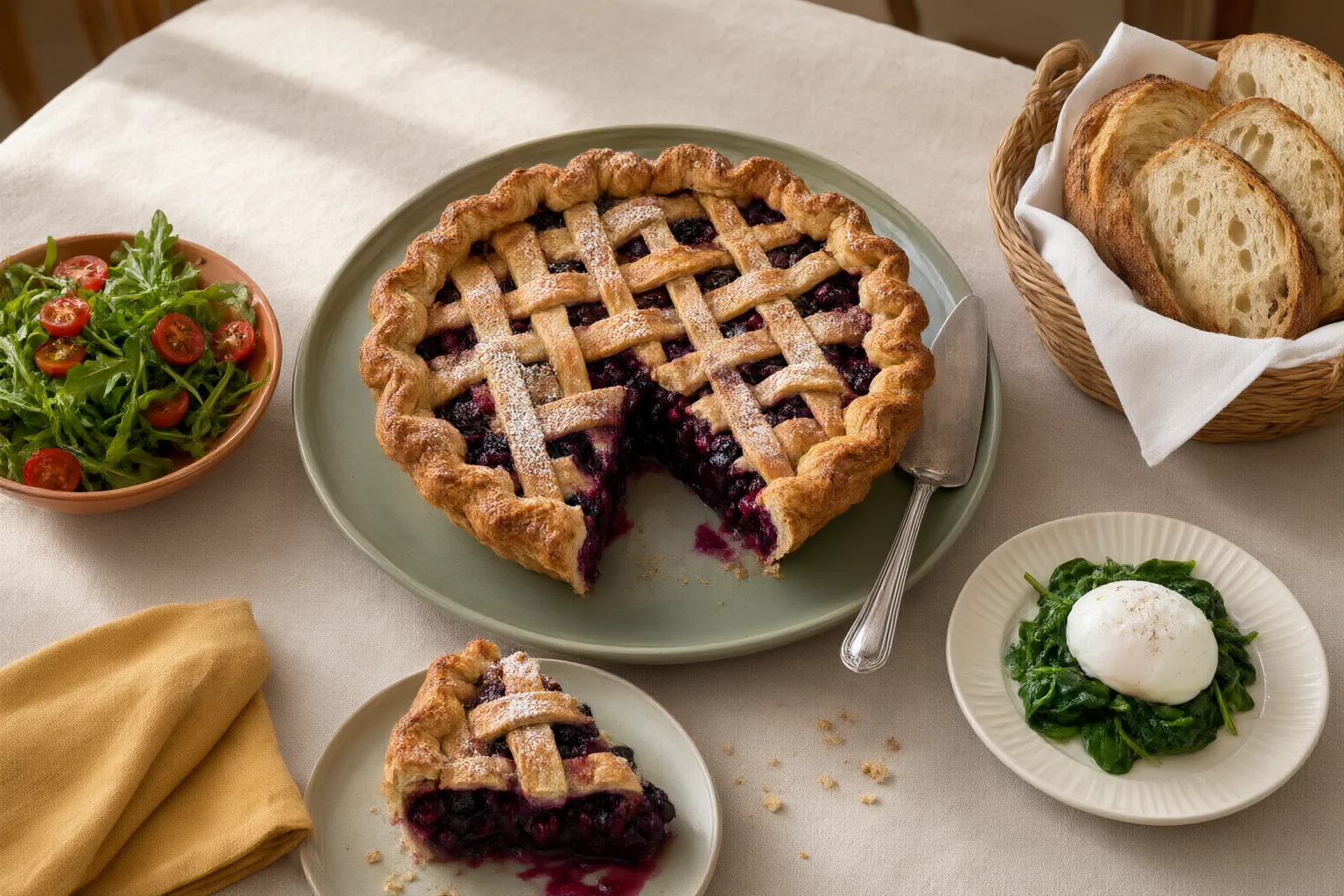
Fruit pie can either bridge breakfast and dessert or serve as brunch’s sweet finish. Choose that role first, keep the savory portion of the menu simple, and match the pie’s crust and assembly schedule to your serving time.
Choose the Fruit Pie’s Role in the Brunch
Start by deciding when the pie belongs in the meal. A fruit-and-yogurt pie can sit alongside the main brunch spread because documented versions combine breakfast-associated elements—Greek yogurt, honey, fruit, and an oat or granola crust—in a pie format. One no-bake version uses a granola, coconut-oil, honey, and salt crust with a Greek-yogurt filling and mixed berries. Another uses a baked oat-and-oat-flour crust, Greek yogurt, and fruit, and is presented for breakfast, brunch, or dessert.
Alternatively, reserve a traditional fruit pie for the end of the meal. A brunch guide identifies peach, cherry, plum, and apricot pies as suitable summer brunch desserts. This creates a clear structure: savory dishes first, pie afterward.
The sources establish both styles as brunch options, but they do not compare complete menus or test particular savory pairings. Treat the choice between an integrated fruit-and-yogurt pie and a closing dessert as a planning decision, not a proven rule.
Build a Savory Counterpoint Without Overcomplicating the Menu
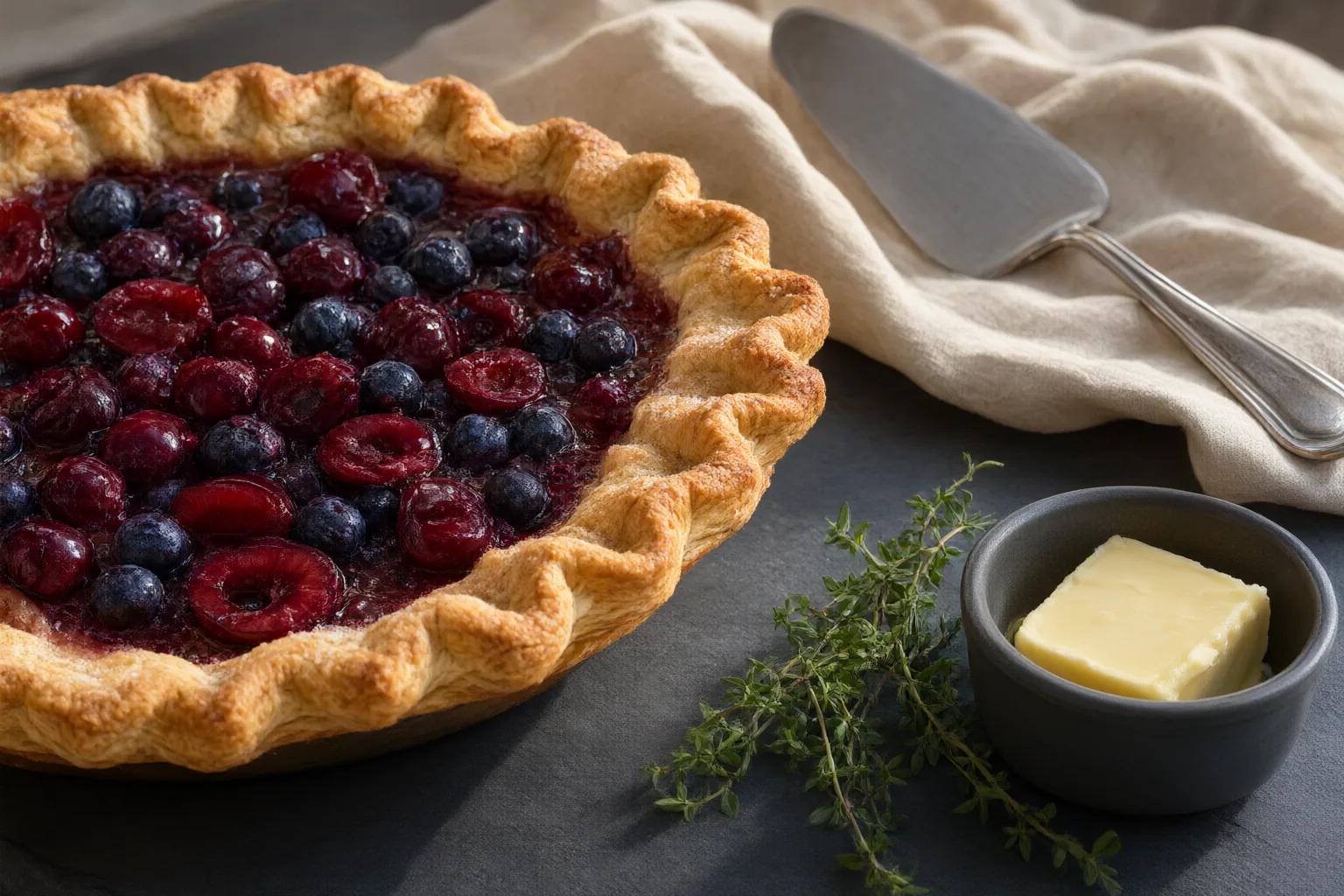
Use the pie’s fruit direction to decide how restrained the savory side of the menu should be. The documented stone-fruit options range from sweet and fragrant to tart or tangy, with suggested combinations including peach and raspberry, cherry and almond, and plum and ginger. Those details can help you anticipate how prominent the sweet course will feel.
As editorial judgment—not a source-tested pairing rule—a bold pie such as plum with ginger can follow a compact savory menu built around one main dish and one simple accompaniment. A milder fruit direction may leave room for a broader savory spread. Eggs, a vegetable-centered dish, or another familiar brunch main are possible editorial choices, but the cited sources do not evaluate them alongside these pies.
Avoid making every dish compete for attention. If the pie is available throughout brunch, serve modest portions so it functions as one component of the spread. If it is the finale, let the savory dishes form the main meal and present the pie separately. This framework keeps the menu understandable without claiming that any specific pairing is objectively best.
Plan the Crust, Filling, and Serving Timeline
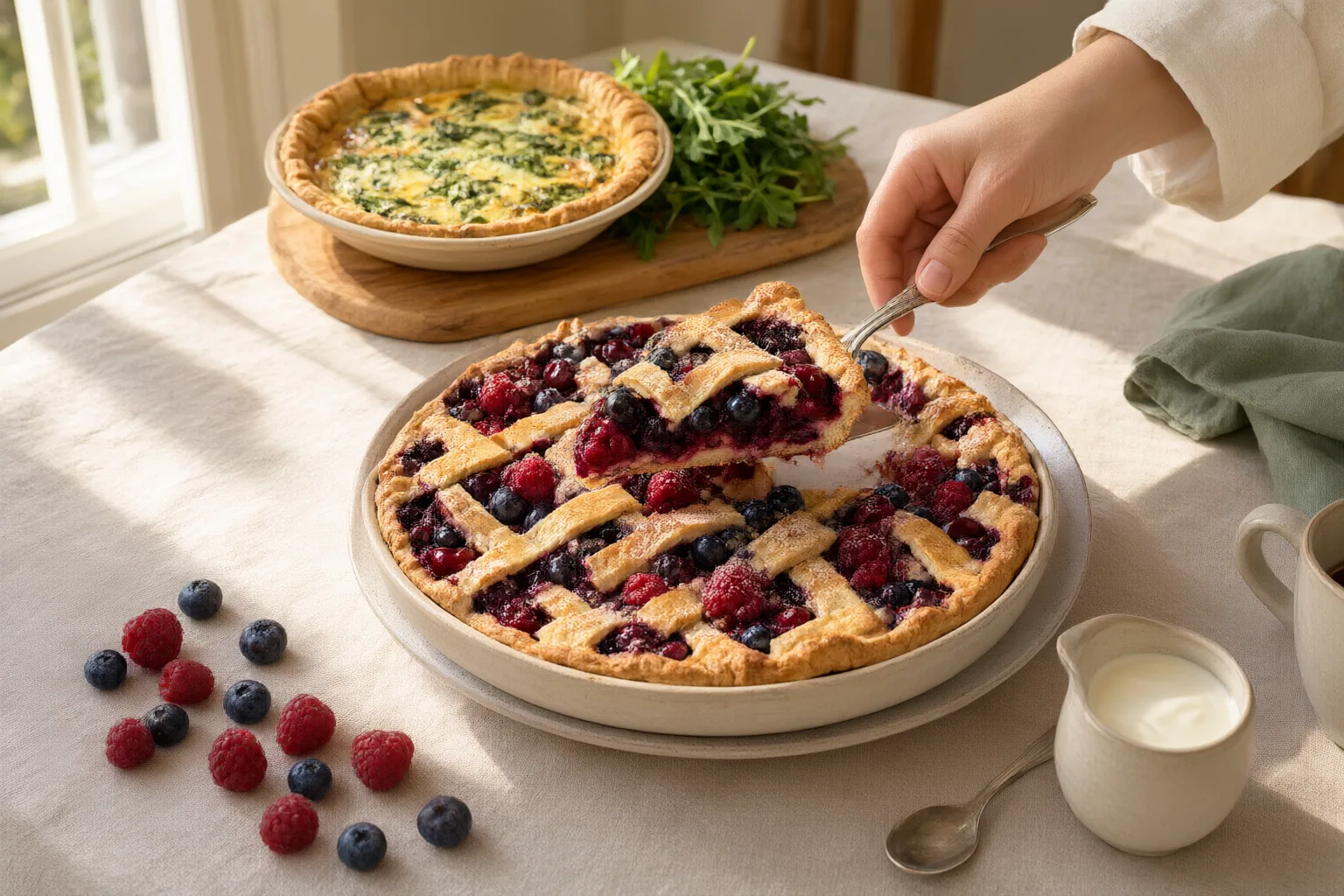
Choose the crust method according to the work you want to do before brunch. The documented no-bake tart uses a chilled granola crust, while the fruit parfait pie uses a baked oat-and-oat-flour crust. The sources do not establish that either is generally superior; they simply provide two workable preparation patterns.
For the no-bake tart, the crust and yogurt mixture can be prepared ahead, but final assembly should happen shortly before serving. The source warns that prolonged contact with the yogurt will soften the granola crust. Keep the components separate until near serving time, then add the filling and fruit.
Filling consistency also affects presentation. The no-bake recipe specifies plain full-fat Greek yogurt and cautions that low-fat yogurt will not become firm enough to retain its shape cleanly when sliced. Follow the exact recipe you select rather than assuming that yogurt types are interchangeable.
For a practical schedule, complete advance tasks first, leave assembly time in the brunch plan, and decide whether baking a crust or chilling a no-bake crust fits your kitchen workload. That choice should reflect timing and preferred recipe style, not an unsupported claim about overall quality.
Conclusion
Build the menu in sequence. First, decide whether the pie will bridge breakfast and dessert or close the meal. Next, select a documented direction: a berry-topped yogurt pie or a stone-fruit option such as peach, cherry, plum, or apricot. Then choose a chilled granola crust or baked oat crust according to your schedule.
Keep any savory pairings simple and recognize them as editorial choices rather than source-tested combinations. If using the no-bake yogurt tart, reserve time for assembly shortly before serving so the crust is not left beneath the filling for too long. Write the pie and its serving time into your menu plan now, then arrange the savory dishes around those two decisions.
Disclosures and limitations
- This article was prepared with AI assistance from the supplied recipe and editorial sources; specific savory suggestions are labeled as editorial judgment because the sources did not test complete menus.
- No products or affiliate offers are recommended in this article.
Related reading
Sources
- Everyone Likes Parfait, But Everyone LOVES My No-Bake Parfait Pie — Delish
- Stone fruit pies for summer brunch desserts — Brunch Daily Recipes
- Fruit Parfait Pie – A Teaspoon of Home — A Teaspoon of Home