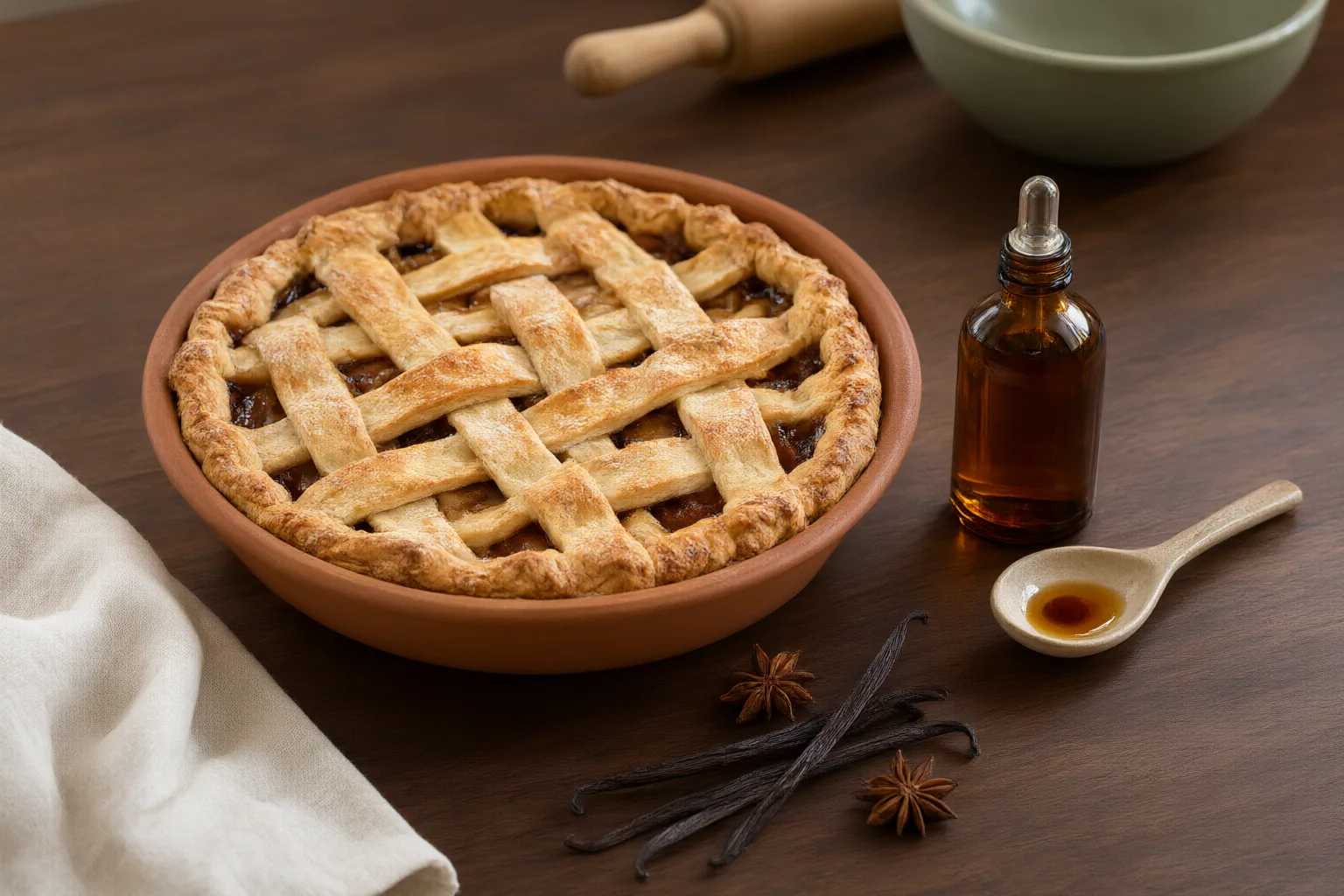
Tell the recipient exactly which flavoring or alcohol-containing ingredient you used, based on its product label. Do not assume that a spirit-associated flavor name proves alcohol content, and do not claim that baking removed some or all of the alcohol. A short ingredient note and a direct conversation about the recipient’s preferences provide useful clarity without presenting beverage-labeling rules as rules for homemade pies.
What to Check Before Writing the Gift Note
Start with the exact container or package for the flavoring. Record its product name and any ingredient information relevant to alcohol rather than relying on a name such as rum, bourbon, or another spirit-associated flavor.
That distinction matters because Flavor Dynamics separately describes flavorings for alcoholic-beverage applications and non-alcoholic beverage flavors. This supplier material does not establish the contents of every flavoring, but it demonstrates why a flavor profile alone is insufficient evidence of alcohol content.
If the label does not answer your question, do not guess or turn an uncertain assumption into a definitive statement. You can instead tell the recipient precisely what product you used and allow them to make a decision based on that information.
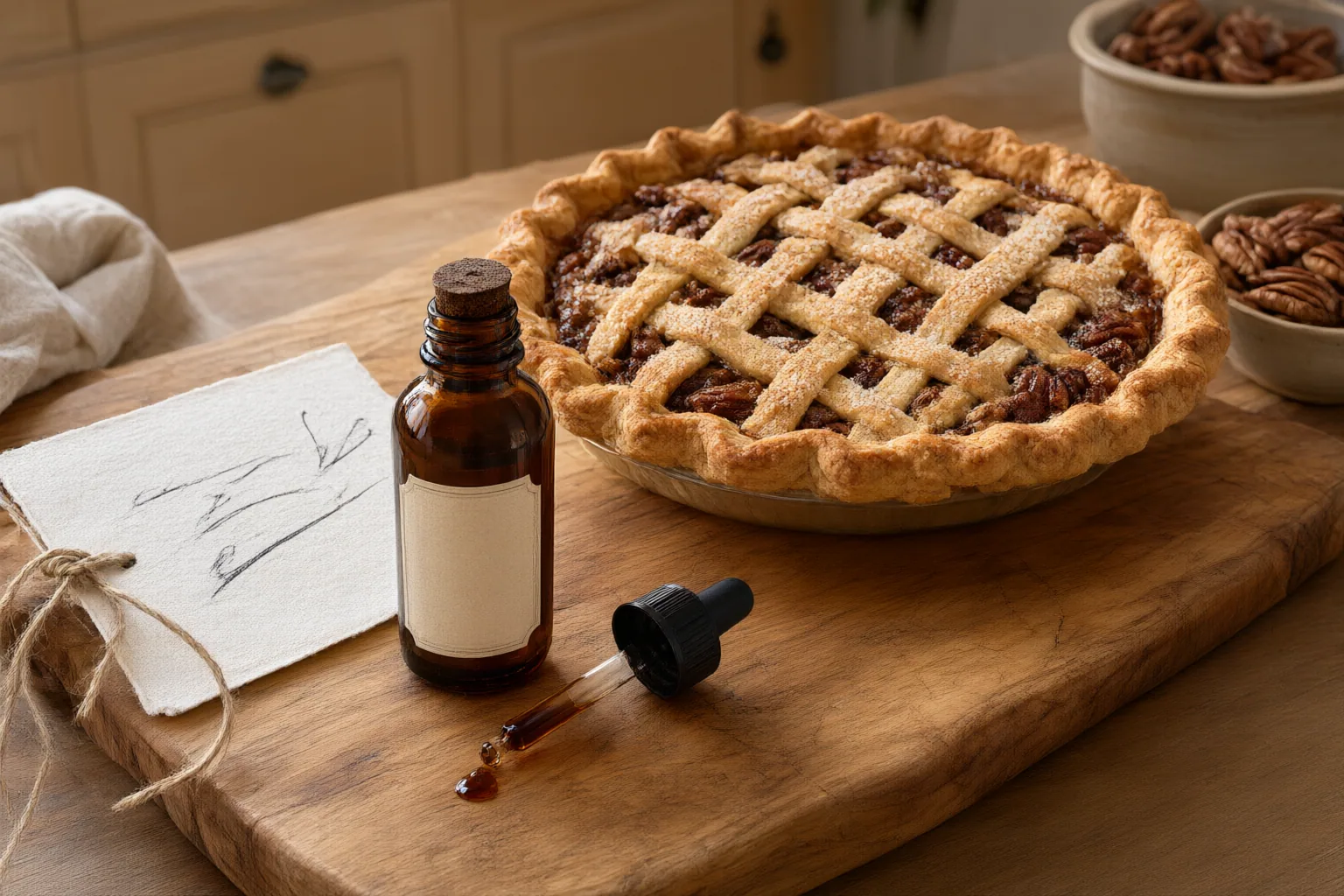
What the Disclosure Should Say
Keep the gift note factual and easy to notice. A practical note can include:
- The type of pie.
- The exact name of the flavoring or alcohol-containing ingredient as shown on its label.
- A plain statement that the ingredient was used in the pie.
- An invitation for the recipient to ask about the ingredient list before eating or serving it.
For example: “This pie was made with [exact labeled product or ingredient name]. Please check with me about the ingredients before serving if alcohol is a concern.” Only fill in the bracket with information supported by the actual label.
Do not say that the alcohol “burned off,” that the pie is alcohol-free, or that a particular amount remains. The supplied evidence does not establish alcohol retention after baking. Clear, neutral communication is worthwhile because recipients can have alcohol-related concerns. As context, the FDA reports a SAMHSA estimate that 28.9 million Americans had alcohol use disorder in 2023; that statistic supports sensitivity, not a pie-labeling requirement.
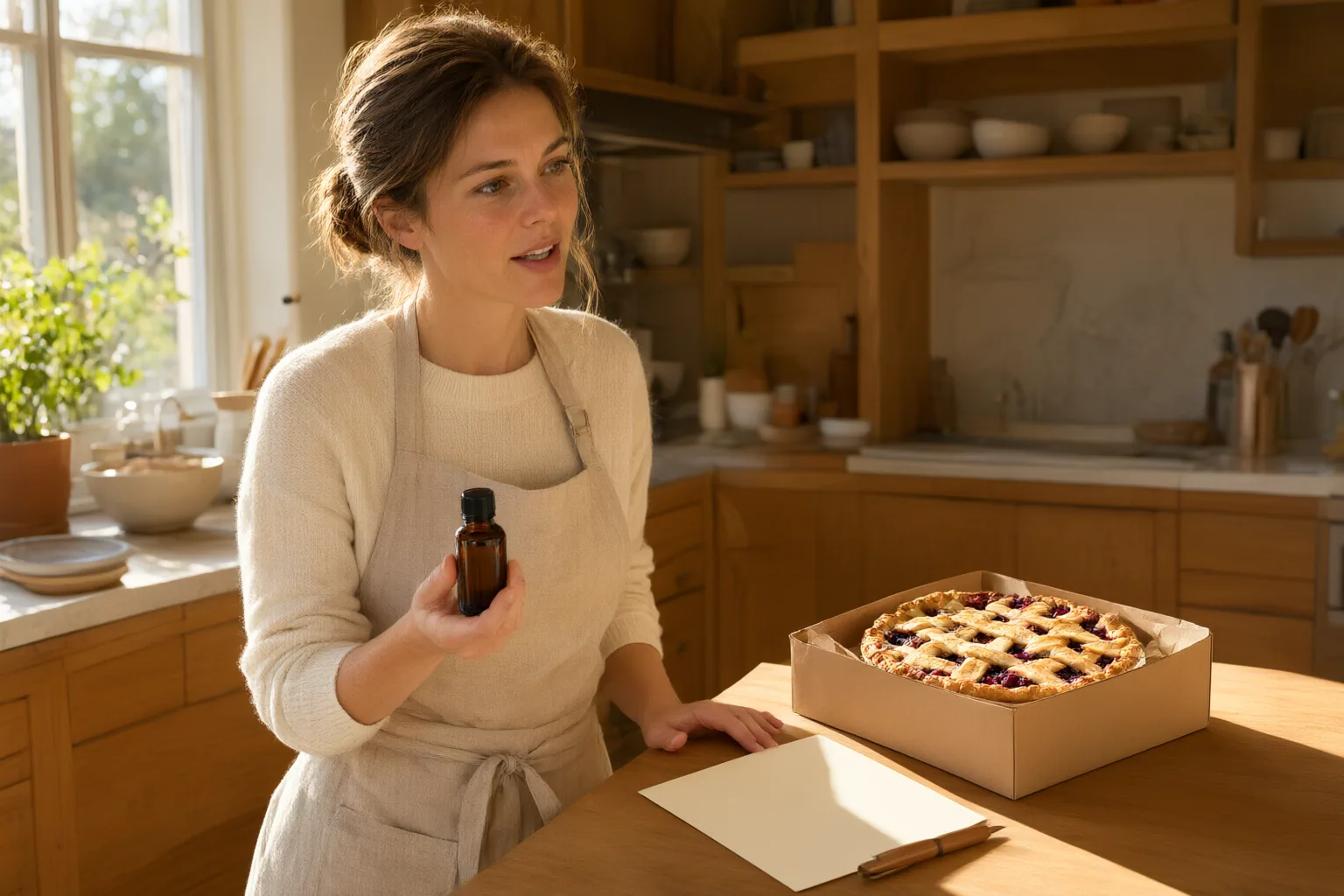
Why Alcohol-Beverage Labeling Rules Are Not a Pie Rule
The cited TTB guidance concerns regulated alcohol beverages. TTB says the Federal Alcohol Administration Act covers wine containing at least 7% alcohol by volume, distilled spirits, and malt beverages. Its labeling standards are intended to prevent deception and provide information about matters including product identity, quality, and alcohol content.
That framework should not be presented as governing a homemade pie gift. The supplied sources do not establish a federal or state rule specifically requiring disclosure of alcohol-based flavorings in a gifted homemade pie.
The distinction also matters for allergens. TTB states that its current regulations do not require major-food-allergen disclosure on alcohol-beverage labels, although an interim rule sets standards for optional allergen statements. That fact describes beverage labeling; it does not resolve what information a homemade-food giver should provide. An ingredient note should therefore be treated as practical recipient communication, not proof of legal compliance.
Conclusion
A careful disclosure begins with verification, not inference. Read the flavoring’s exact label, name the product or alcohol-containing ingredient plainly, and avoid unsupported statements about whether alcohol remains after baking. Because alcohol-beverage regulations address specified beverages rather than homemade pie gifts, do not describe the TTB framework as a rule for your pie.
Recipient preferences may be more restrictive than any assumption a giver could make. Ask about alcohol-related preferences before presenting the gift, and provide enough ingredient information for an informed choice. Before giving the pie, prepare a visible ingredient note with the exact labeled name of the flavoring and invite the recipient to ask questions before eating or serving it.
Disclosures and limitations
- This article was prepared with AI assistance from the supplied TTB, FDA, and Flavor Dynamics research sources. It offers source-bounded editorial guidance, not legal or medical advice, and contains no product endorsement or affiliate recommendation.
Related reading
Sources
- FDA qualifies drug development tool to facilitate clinical trial resea — U.S. Food and Drug Administration
- Alcohol Beverage Labeling and Advertising | TTB: Alcohol and Tobacco Tax and Trade Bureau — ttb.gov
- TTB Flavors for Alcohol – Flavor Dynamics — Flavor Dynamics